
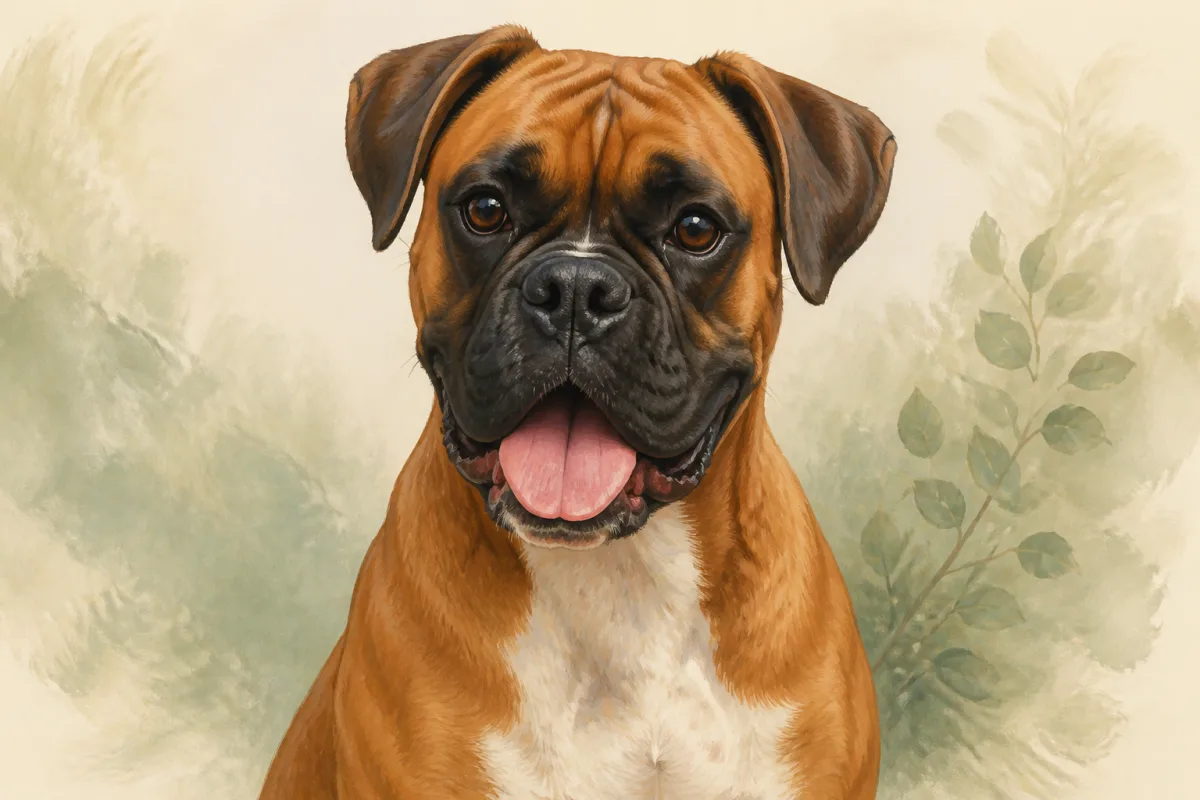
Boxer breed illustration

Breed profile

Boxer

  • Working
  • Large
  • Germany

Playful, loyal, and famously goofy with their people, Boxers are athletic working dogs that stay puppyish longer than many breeds — and need owners ready for energy, training, and breed-aware health care.

Size
Large
Weight
50–80 lbs
Lifespan
10–12 years
Origin
Germany
AKC
Fully recognized

At a glance

How this breed typically shows up day to day.

  • Energy High
  • Shedding Moderate
  • Trainability Moderate
  • Apartment fit Fair

Breed details

Boxers are working dogs that never fully got the memo about becoming dignified adults. Playful, loyal, and often slapstick indoors, they can be wonderful family athletes — and overwhelming adolescents — depending on whether their people planned for energy and training.

Originating in Germany from bulldog- and mastiff-type ancestors used in hunting and later as utility dogs, Boxers brought courage and strength into a more companionable modern role. Today’s best Boxers are people-oriented and expressive, with a strong desire to be in the middle of family life. They notice strangers, but many are more clown than fortress unless breeding and handling push them that way.

Exercise and heat management define daily success. Young Boxers need substantial play and training; under-exercised dogs bounce off walls and guests. Their shorter muzzle means warm weather workouts require caution. Short coats keep grooming simple, which sometimes fools buyers into thinking the whole breed is low maintenance. Coat care is easy; impulse control training is the real work.

Honest health conversations include cardiac screening and cancer awareness, along with orthopedic and bloat considerations common to deep-chested breeds. Lifespan expectations should be realistic. Reputable breeders discuss hearts and longevity, not only flashy movement in the ring.

Boxers fit active, patient households that enjoy a goofy loyal partner and will stay consistent through a long puppyhood. They are a weaker choice for heat-heavy outdoor lifestyles without cooling options, or for people seeking a calm low-energy apartment statue. Matched well, few breeds offer more heart-on-sleeve companionship.

Temperament

Boxers are exuberant, people-oriented, and often clownish at home. They typically adore their family, remain playful well into adulthood, and can be both affectionate and boisterous.

They are watchful without usually being heavy-handed guardians. Training helps channel enthusiasm so jumping, mouthiness, and zoomies do not run the household.

Patience through adolescence is part of the deal — Boxers mature slowly in body and manners.

Exercise needs

High daily exercise needs: brisk walks, play sessions, training games, and room to move. Young Boxers can be relentless without structured outlets.

They are brachycephalic enough that heat and intense exercise need caution. Prefer cooler hours and watch breathing effort.

Mental work softens the edges; under-stimulated Boxers invent chaos.

Grooming needs

Short coat: weekly brushing, baths as needed, and routine nail, ear, and dental care. Shedding is moderate.

Wipe the face as needed; check skin folds if present. Keep the coat clean after muddy play — Boxers often find dirt magnetically.

Overall grooming is simpler than coat care for double-coated breeds.

Common characteristics

Square, muscular working dog with a distinctive undershot jaw and often a black mask.

Fawn or brindle coats, with or without white markings; white Boxers exist and may have different hearing/eye risk profiles in some cases.

High play drive and strong people focus.

Known for a long adolescent “puppy” phase.

Common health concerns

Cardiac disease (including arrhythmogenic right ventricular cardiomyopathy and other heart conditions) is a major screening topic. Cancer rates are a sober conversation in the breed as well.

Hip dysplasia, hypothyroidism, and bloating risk in deep-chested dogs also matter. Heat intolerance related to shorter muzzles deserves respect.

Ask for cardiac evaluation history and work with a veterinarian on lifelong monitoring.

Children & family suitability

Boxers can be wonderful with active families, especially when kids are taught not to encourage jumping games. Supervise around toddlers — exuberance can bowl small children over.

Best for homes that want a playful athlete, not a quiet couch statue.

Other-pet compatibility

Many do well with other dogs when socialized, though same-sex friction can appear in adulthood. Prey drive varies; cats often succeed with early respectful introductions.

Manage resources and keep play styles matched.

Climate considerations

Heat is the bigger risk. Limit intense exercise in warm weather, provide shade and water, and never leave a Boxer in a hot car.

Cold is manageable with a coat for longer outdoor time. They are indoor family dogs, not outdoor kennel dogs.

The honest ledger

Pros and cons

What this breed gives — and what it asks back.

Keep

The upside

  1. 01 Loyal and playful family companion
  2. 02 Athletic and fun-loving
  3. 03 Moderate grooming needs
  4. 04 Affectionate with their people

Weigh

The trade-offs

  1. 01 High energy through a long adolescence
  2. 02 Heat sensitivity
  3. 03 Important heart and cancer awareness
  4. 04 Can be boisterous without training