
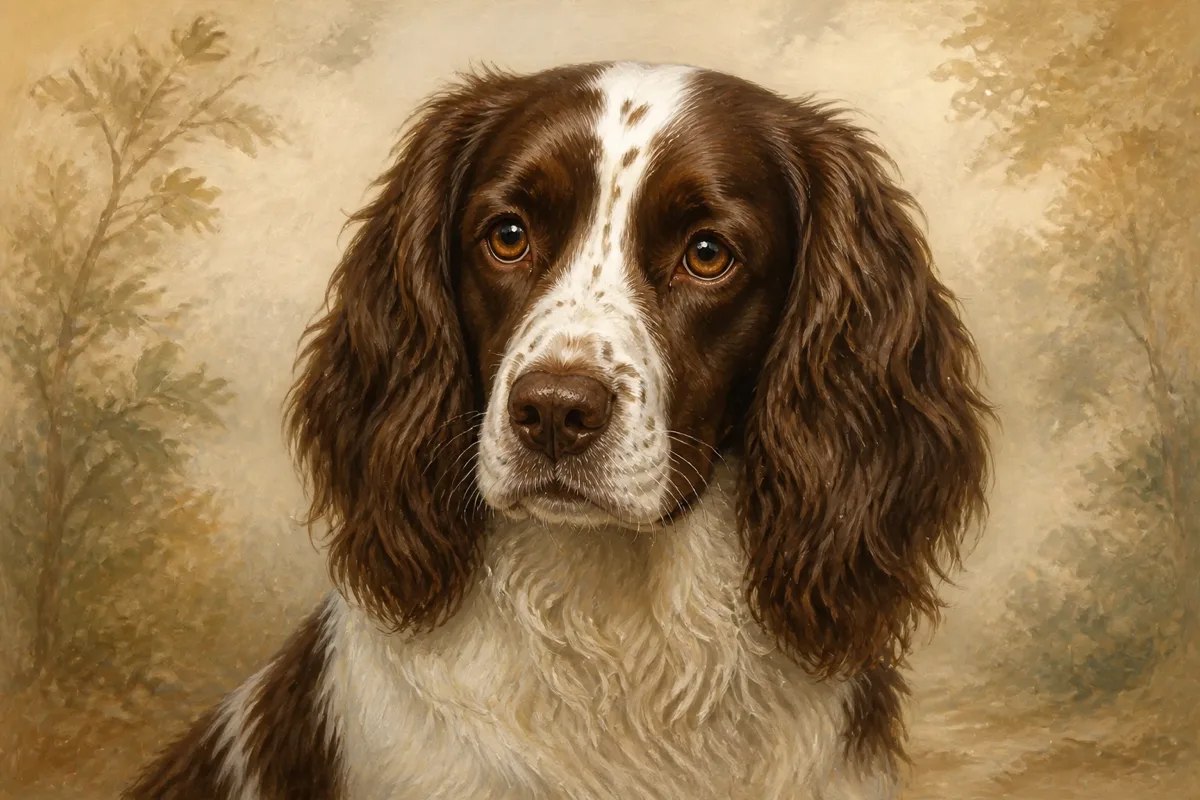
English Springer Spaniel breed illustration

Breed profile

English Springer Spaniel

Also known as Springer · ESS

  • Sporting
  • Medium
  • England

Merry, driven, and built to flush and retrieve, the English Springer Spaniel is an affectionate sporting companion that needs real daily outlets — not just a pretty feathered coat and a weekend hike.

Size
Medium
Weight
40–50 lbs
Lifespan
12–14 years
Origin
England
AKC
Fully recognized

At a glance

How this breed typically shows up day to day.

  • Energy High
  • Shedding Moderate
  • Trainability High
  • Apartment fit Fair

Breed details

English Springer Spaniels were built to spring game from cover and retrieve with enthusiasm — which still explains the merry attitude, the busy nose, and the need for real daily outlets. They are affectionate family dogs for active homes, not feathered sofa decorations.

Developed in England as dual-purpose sporting spaniels, Springers split over time into field and show orientations. Field dogs often bring more drive; show lines may be softer companions with still-substantial energy. Either way, under-exercised adolescents chew, counter-surf, and turn exuberance into chaos. Households that hike, swim, train, or play retrieve regularly usually love them.

Coat and ear care define ownership logistics. Feathering mats without brushing, and those long ears need routine checks — especially after water work. They are typically people-oriented and trainable with positive methods, forming strong household bonds when included in daily life rather than left to invent hobbies.

Health literacy includes hips, eyes, ears, and line-specific screening such as PFK in some programs. Keep Springers lean. Field athletes face soft-tissue injury risk if weekend warriors go from couch to cover without conditioning.

Springers fit active families that will groom and exercise consistently. They are a weaker match for quiet low-mileage homes or anyone seeking a wash-and-wear coat. Give them work for body and nose, and you get one of the most affectionate sporting companions around.

Temperament

Springers are typically friendly, eager, and people-oriented, with a sporting dog’s enthusiasm for scent and movement. Many are soft-mouthed, affectionate, and happiest when included in family activity.

Field and show lines can feel different: field dogs often bring more drive and intensity. Either way, under-exercised Springers can become restless, mouthy, or destructive.

They usually respond well to positive, consistent training and form strong household bonds.

Exercise needs

High daily needs: brisk walks, hiking, swimming, retrieve games, and training. A bored Springer invents projects involving shoes, counters, or the garden.

Mental work — scent games, obedience, and retrieve drills — helps settle them as much as mileage.

Manage puppy exercise to protect growing joints; channel drive into short, frequent sessions.

Grooming needs

The medium-length coat and feathering need regular brushing to prevent mats, especially behind ears, on legs, and in the britches. Many owners schedule professional grooming periodically.

Ears are long and furry — check and clean routinely to reduce infection risk, especially after swimming. Shed is moderate and noticeable.

Keep nails trimmed and teeth cleaned as part of the baseline routine.

Common characteristics

Medium sporting spaniel built to spring game and retrieve on land and water.

Commonly liver-and-white or black-and-white, with feathering on ears, chest, and legs.

Friendly, energetic, and typically eager to work with people.

Strong nose and retrieving instinct.

Common health concerns

Ear infections are common due to anatomy and outdoor work. Hip dysplasia, eye conditions, and certain autoimmune skin issues appear in breed discussions — ask for relevant clearances.

Phosphofructokinase (PFK) deficiency and other inherited conditions are screened in some programs. Keep Springers lean to support joints and stamina.

Field dogs may face higher injury risk; condition gradually and check paws after rough terrain.

Children & family suitability

Often excellent with active families that will train manners around exuberant greetings. They usually enjoy children when play is supervised and polite.

Less ideal for quiet, low-exercise households or anyone wanting a low-grooming coat.

Other-pet compatibility

Generally good with other dogs when socialized. Bird and small-animal interest can be strong — manage accordingly.

Cats often succeed with early respectful introductions and solid impulse control.

Climate considerations

Handle cool and wet weather well with proper drying afterward. In heat, schedule intense work for cooler hours and watch for overheating during vigorous retrieve play.

Dry ears and feathering thoroughly after water work.

The honest ledger

Pros and cons

What this breed gives — and what it asks back.

Keep

The upside

  1. 01 Affectionate and trainable sporting dog
  2. 02 Great outdoor adventure partner
  3. 03 Friendly family temperament
  4. 04 Versatile on land and water

Weigh

The trade-offs

  1. 01 High exercise needs
  2. 02 Coat and ear maintenance required
  3. 03 Can be destructive if bored
  4. 04 Field lines may be too intense for casual homes