
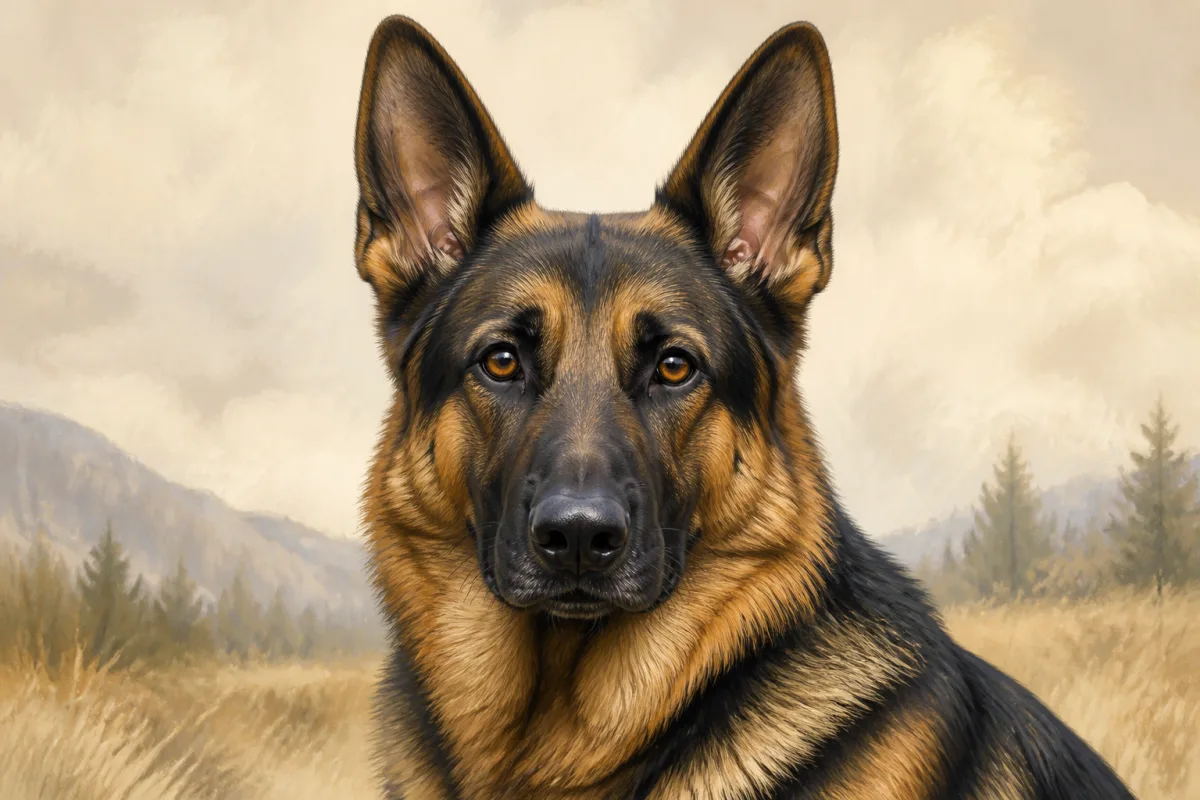
The German Shepherd Dog is built for purpose. Intelligence, loyalty, and athletic ability made the breed a cornerstone of police, military, service, and sport work — and those same traits demand structure in a family home. A German Shepherd without a job often invents one, and not always one you will like.
Originating in late 19th-century Germany as a herding and all-purpose working dog, the GSD was refined for trainability, courage, and endurance. Modern lines vary widely: some lean toward high-drive working temperaments, others toward calmer show or companion profiles. Meeting parents, asking about purpose, and being honest about your experience level matter more with this breed than with many others.
Day-to-day life with a German Shepherd usually includes training as a lifestyle, not a puppy-class checkbox. They notice patterns, protect thresholds, and bond deeply. Early socialization — people, places, handling, other dogs — is essential so watchfulness does not tip into reactivity. Physical exercise helps, but mental work (obedience, scent, puzzle tasks, structured walks) is what settles many GSDs.
Coat care is straightforward in technique and relentless in volume. The double coat sheds heavily; “German Shepherd glitter” is real. Orthopedic health, digestive sensitivity in some dogs, and degenerative myelopathy awareness belong in every ownership plan. Keeping the dog lean and conditioned supports both soundness and temperament.
German Shepherds are an outstanding match for committed owners who enjoy training and can provide consistent leadership without harshness. They are a risky impulse buy for first-time owners seeking a casual pet, or for households that cannot invest time in socialization and daily engagement. Done right, the GSD is a profound working companion and a fiercely devoted family dog.