
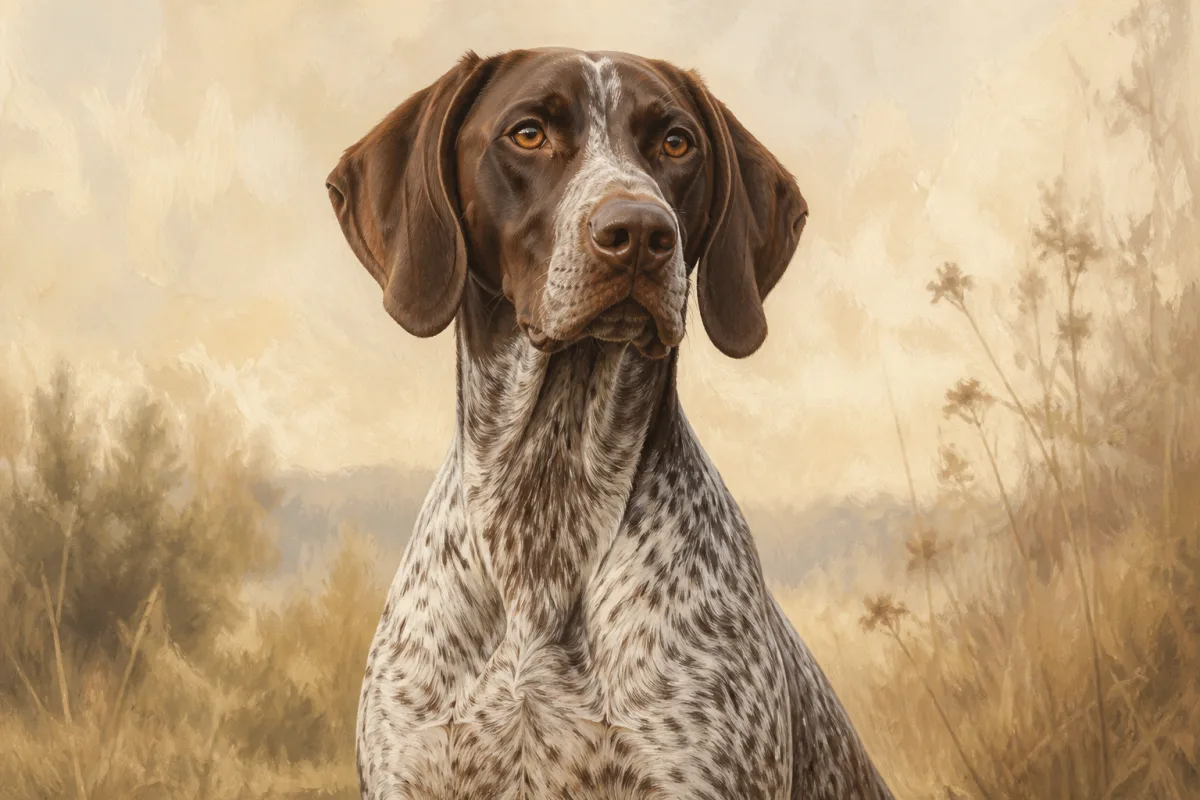
German Shorthaired Pointer breed illustration

Breed profile

German Shorthaired Pointer

Also known as GSP · German Shorthair

  • Sporting
  • Large
  • Germany

Athletic, affectionate, and almost endlessly energetic, German Shorthaired Pointers are versatile hunting companions that need serious daily outlets to thrive in a home.

Size
Large
Weight
45–70 lbs
Lifespan
10–12 years
Origin
Germany
AKC
Fully recognized

At a glance

How this breed typically shows up day to day.

  • Energy Very High
  • Shedding Moderate
  • Trainability High
  • Apartment fit Poor

Breed details

German Shorthaired Pointers are the opposite of a weekend hobby dog. Bred as versatile hunters capable of pointing and retrieving on land and water, GSPs bring stamina, heart, and an almost relentless desire to move. For the right outdoor household they are magical. For a sedentary one they are a project with teeth marks.

Developed in Germany as an all-purpose gundog, the GSP was meant to cover ground, find birds, and still be a pleasant house companion at the end of the day. That dual expectation still holds: many GSPs are affectionate “Velcro” dogs indoors after they have worked their body and brain. Skip the work, and the affection can arrive packaged with restlessness, barking, and destruction.

Exercise expectations should be honest. A couple of polite neighborhood strolls rarely satisfy a young adult GSP. Running, hiking, swimming, field work, or high-intensity fetch — often daily — is the usual prescription. Training softens the edges; these dogs are typically eager and sensitive, responding best to upbeat, consistent methods rather than heavy-handed corrections.

The short coat is easy to maintain, which sometimes fools people into thinking the whole breed is low maintenance. Coat care is simple; energy management is not. Secure fencing matters because prey drive and curiosity can send a GSP over or through weak boundaries. Apartments can work only with an extreme exercise plan and realistic neighbors.

Choose a German Shorthaired Pointer if your lifestyle already includes serious outdoor time and you want a trainable sporting partner who loves family life. Look elsewhere if you want a chill companion for short walks and long Netflix nights. Matched to an active home, the GSP is one of the most loyal and capable adventure dogs you can share a life with.

Temperament

GSPs are friendly, eager, and intensely people-oriented for a high-drive sporting dog. Many want to be involved in everything you do.

They are typically soft to corrections and respond best to upbeat, consistent training.

Without enough work, that enthusiasm becomes restlessness, destructive chewing, or vocal frustration.

Exercise needs

Very high. Plan on running, hiking, swimming, field work, or vigorous fetch — often more than one session a day for young adults.

Mental work (obedience, scent, retrieve drills) helps, but does not replace aerobic exercise.

This is a poor match for sedentary households or small apartments without an extreme exercise plan.

Grooming needs

Short coat: weekly brushing and occasional baths. They shed, but coat care is straightforward.

Check ears, paws, and skin after fieldwork. Keep nails trimmed for traction and joint health.

Common characteristics

Lean, athletic build with a short coat often in liver, liver-and-white, or ticked patterns.

Versatile hunter: pointing, retrieving, and working in water.

High stamina and a strong desire to run.

Affectionate “Velcro” tendencies in many lines.

Common health concerns

Hip dysplasia, certain eye conditions, and lymphoedema in some lines are known concerns. Ask for health clearances.

Active dogs face higher injury risk — condition gradually and warm up before intense work.

Bloat risk exists in deep-chested breeds; discuss feeding practices with your vet.

Children & family suitability

Excellent for active families who hike, run, or train regularly. Great with kids when taught polite manners around exuberant greetings.

Not ideal if your lifestyle is mostly evenings on the couch.

Other-pet compatibility

Often good with dogs. Prey drive can be significant with birds and small animals — manage accordingly.

Climate considerations

Short coats need cold-weather protection. In heat, schedule intense work for cooler hours and watch for overheating.

The honest ledger

Pros and cons

What this breed gives — and what it asks back.

Keep

The upside

  1. 01 Extremely athletic and versatile
  2. 02 Affectionate with family
  3. 03 Highly trainable
  4. 04 Great outdoor adventure partner

Weigh

The trade-offs

  1. 01 Very high exercise needs
  2. 02 Can be destructive if underworked
  3. 03 Poor apartment fit for most homes
  4. 04 Needs secure fencing / leash habits