
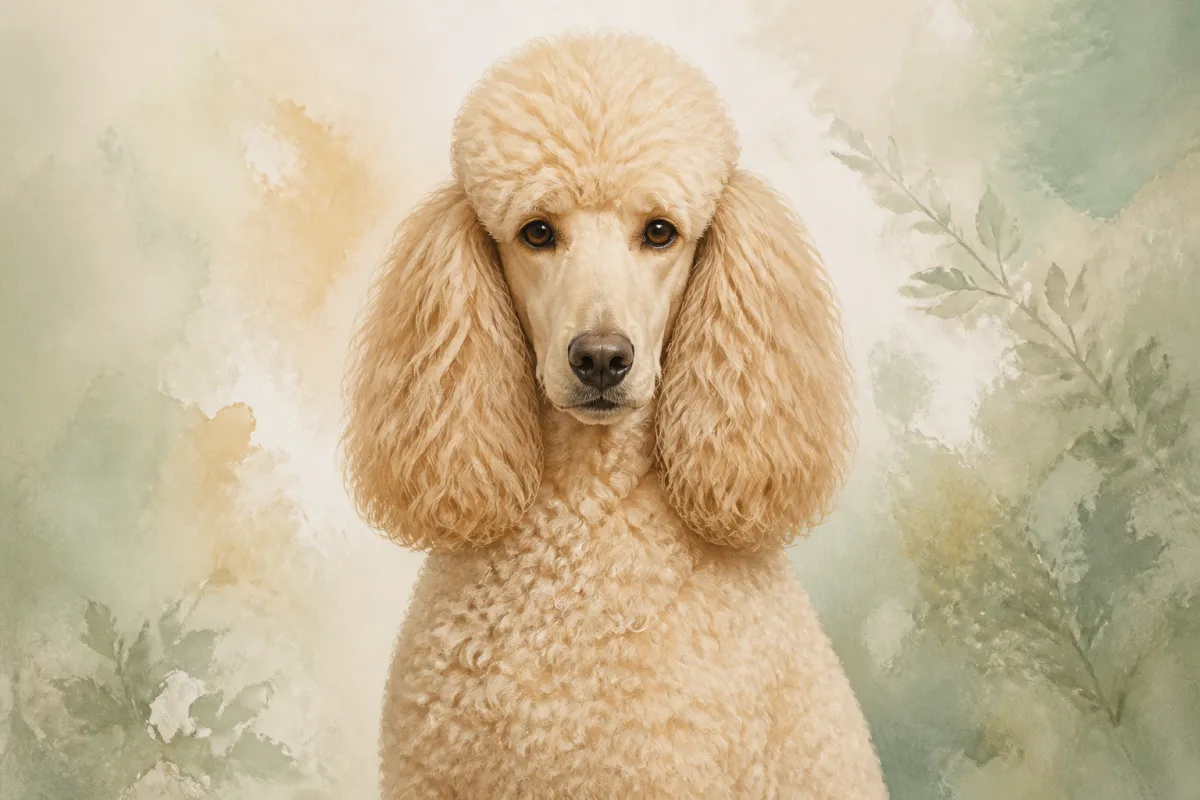
Poodle breed illustration

Breed profile

Poodle

Also known as Standard Poodle · Miniature Poodle · Toy Poodle

  • Non-Sporting
  • Medium
  • Germany / France

Poodles are athletic, highly trainable, and famously low-shedding — a versatile family of sizes that rewards grooming commitment and daily mental work.

Size
Medium
Weight
Toy 4–6 lbs; Miniature 10–15 lbs; Standard 40–70 lbs
Lifespan
12–15 years
Origin
Germany / France
AKC
Fully recognized

At a glance

How this breed typically shows up day to day.

  • Energy High
  • Shedding Low
  • Trainability High
  • Apartment fit Good

Breed details

Poodles are often misunderstood as fancy salon dogs. In reality they are athletes and problem-solvers wearing a high-maintenance coat. Available in toy, miniature, and standard sizes, the Poodle family offers unusual flexibility — with a shared need for grooming, training, and mental work.

Historically used as water retrievers in Germany and popularized in France, Poodles were bred for swimming ability, intelligence, and a dense curly coat that protected joints in cold water. That working brain never left. Modern Poodles excel in obedience, agility, service roles, and household life when they are given something to do. Understimulated Poodles can become barky, restless, or anxious.

The famous low-shedding coat is a trade, not a free lunch. Mats form quickly without brushing, and professional grooming every 4–8 weeks is normal. People who choose Poodles for allergy friendliness still need to test their own sensitivities and commit to coat care. Clip style affects comfort in heat and cold; a good groomer is part of the care team.

Size changes the lifestyle math. Standards need substantial exercise and space to move. Miniatures fit more homes but still want walks and training games. Toys can be wonderful companions yet are physically fragile around young children and rough play. Across sizes, early socialization matters: smart, sensitive dogs notice the world closely and do best when introduced thoughtfully.

Choose a Poodle if you value trainability, want lower shedding, and will fund/time the grooming schedule. Skip the breed if you want a wash-and-wear coat or a dog that entertains itself for hours without interaction. Matched to the right size and schedule, Poodles are among the most capable and affectionate companions in dogdom.

Temperament

Poodles are bright, people-focused, and often sensitive. They learn quickly and notice household patterns — for better and worse.

Properly socialized Poodles are affectionate companions and impressive performance dogs. Under-socialized ones can become wary or reactive.

Expect a dog that wants engagement. Boredom shows up as barking, restlessness, or creative mischief.

Exercise needs

Standards need substantial daily exercise; miniatures and toys still need meaningful walks and play, just scaled to size.

Training games, agility, retrieve, and swimming (for many standards) are excellent outlets.

Mental fatigue is as important as physical fatigue for this breed.

Grooming needs

Professional grooming every 4–8 weeks is typical, plus home brushing to prevent mats.

The coat is low-shedding but high-maintenance. Skipping grooming is not optional.

Keep ears clean and hair around eyes trimmed for comfort and health.

Common characteristics

Dense curly coat in many colors; traditionally associated with low shedding and often considered more allergy-friendly (individual responses vary).

Three AKC sizes: Toy, Miniature, and Standard — temperament themes are similar, energy and exercise scale with size.

Exceptional trainability and working history as water retrievers.

Elegant outline with athletic capability underneath the salon clips.

Common health concerns

Size influences risk profile. Standards: hip dysplasia, bloat, certain eye diseases, and Addison’s disease in some lines. Toys/miniatures: patellar luxation, dental crowding, and tracheal issues.

Progressive retinal atrophy and other inherited conditions appear across sizes — ask for relevant clearances.

Ear infections can be more common due to hair in ear canals; ask your groomer and vet about safe ear care.

Children & family suitability

Excellent family dogs when exercise and grooming budgets match the size you choose. Standards suit active homes; toys need careful handling around young children.

Other-pet compatibility

Usually good with other dogs and cats when socialized. Individual prey drive is typically moderate.

Climate considerations

Coat length affects comfort. A shorter summer clip can help in heat; protect from cold after heavy clipping.

Never shave to the skin without professional guidance — coat function and regrowth can be affected.

The honest ledger

Pros and cons

What this breed gives — and what it asks back.

Keep

The upside

  1. 01 Highly trainable and versatile
  2. 02 Low shedding coat
  3. 03 Multiple size options
  4. 04 Strong human partnership

Weigh

The trade-offs

  1. 01 High grooming cost/time
  2. 02 Needs mental stimulation
  3. 03 Can be sensitive/reactive if under-socialized
  4. 04 Not a low-maintenance dog