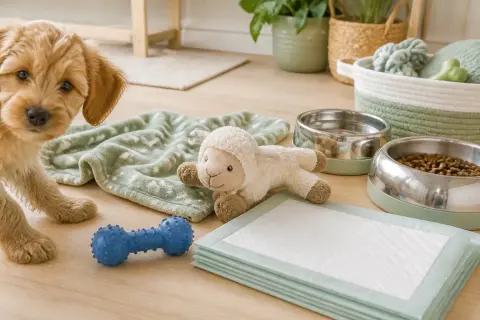

Puppy bowls should be the boring heroes of your kitchen: easy to wash, hard to tip into performance art, and sized for the meal you actually feed — not the meal your optimism imagines.
This guide sits under our Complete Guide to Puppy Supplies. It pairs with starter kits and prep guides so mealtime gear arrives before the puppy does.
What to look for
- Stainless steel — cleans well, resists odors better than many plastics
- Non-slip base — reduces the skateboarding-bowl dinner show
- Right capacity — big enough for the meal, not a swimming pool
- Dishwasher-friendly — puppy mouths are enthusiastic science experiments
- Simple shapes — ornate ridges are great for slow feeders, annoying if you never scrub them
Stainless starter set
A two-pack covers food and water without buying matching ceramic that shatters during zoomies.
Top pick: PEGGY11 Nonslip Stainless Dog Bowls (2-Pack).
When to add a slow feeder
If meals disappear in three seconds and your puppy looks like they swallowed a weather system, a maze bowl slows the sport. Introduce gradually — some puppies find new dishware suspicious.
Top pick: Outward Hound Fun Feeder Slo Bowl (Medium).
Elevated bowls: usually later
Elevated feeders are a “maybe later” for many puppies. Prioritize washable floor bowls first. Revisit height once adult size and vet guidance are clear — especially for giant breeds and dogs with medical feeding notes.
Mealtime habits that matter more than bowls
- Measure food; free-pouring creates surprise teenagers.
- Use the puppy food your vet/breeder/rescue recommends during transitions.
- Fresh water always — wash bowls often.
- Separate chew toys from meal stations if your puppy tries to dunk everything.
- Keep feeding calm; chaos at the bowl becomes a lifestyle.
Our recommendations
Shop puppy supplies. Links may earn a commission — advertising disclosure.
- PEGGY11 Stainless 2-Pack — Everyday food + water.
- Fun Feeder Medium — Slows gulpers.
- KONG Puppy — Optional food-stuffed enrichment between meals.
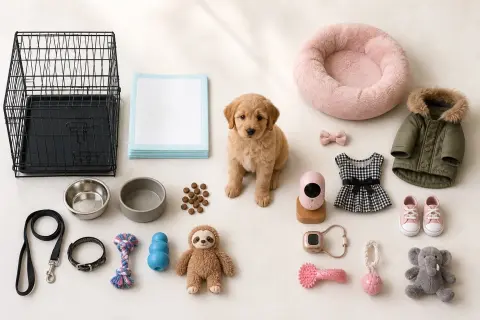
Build the full week-one stack with Best Puppy Starter Kits, then return to the Puppy Supplies hub.