
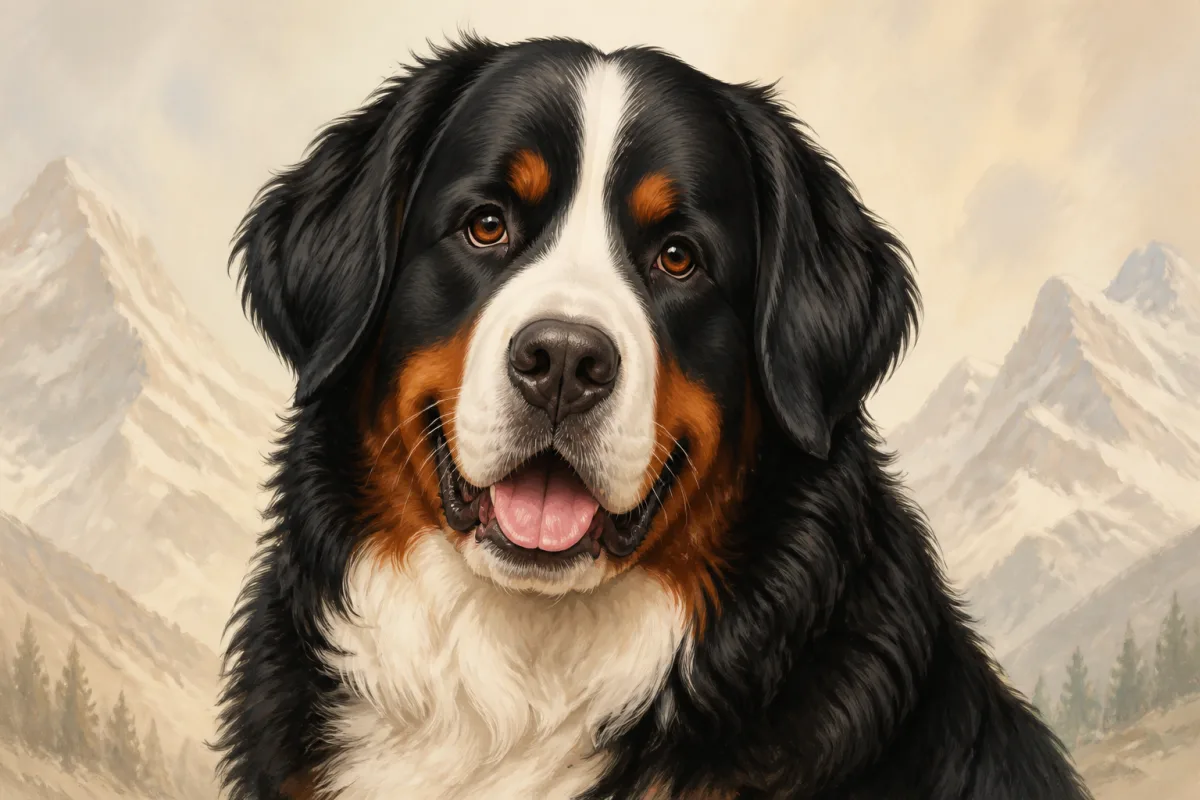
Bernese Mountain Dog breed illustration

Breed profile

Bernese Mountain Dog

Also known as Berner · Bernese

  • Working
  • Giant
  • Switzerland

Gentle, striking, and people-devoted, the Bernese Mountain Dog is a giant Swiss farm companion that offers profound loyalty — alongside heavy shedding, space needs, and a soberly short average lifespan.

Size
Giant
Weight
70–115 lbs
Lifespan
7–10 years
Origin
Switzerland
AKC
Fully recognized

At a glance

How this breed typically shows up day to day.

  • Energy Moderate
  • Shedding High
  • Trainability High
  • Apartment fit Poor

Breed details

Bernese Mountain Dogs ask for an emotional honesty rare in breed shopping: they are gorgeous, gentle, and people-devoted — and their average lifespan is heartbreakingly short compared with many companions. Anyone considering a Berner should love the dog in front of them and accept the statistical reality of giant working-breed longevity.

Bred as Swiss farm dogs for drafting, driving, and companionship, Berners retain a soft family temperament and a desire to be near their people. They are often calm indoors when mature, but puppies are large, slow-maturing, and capable of accidental demolition. Training with patience beats harsh corrections; many Berners are sensitive under the fluffy exterior.

Coat and climate dominate logistics. The long tri-color double coat sheds heavily and needs frequent brushing. Heat is poorly tolerated — these are cool-weather dogs. Moderate exercise suits adults; overworking growing joints is a common mistake. They want a job and a household more than a lonely acreage.

Health conversations must include orthopedic clearances, bloat awareness, and candid talk about cancer risk in the breed. Ethical breeders discuss longevity and screening without sales gloss. Budget for large-breed veterinary care and the practical costs of feeding and housing a giant dog.

Bernese Mountain Dogs fit families with space, coat tolerance, cool-climate sense, and eyes open about lifespan. They are a poor match for hot apartments, shedding-intolerant homes, or anyone wanting a 14-year toy-breed timeline. For the right household, a Berner’s devotion is profound — which is exactly why the goodbye hurts.

Temperament

Berners are typically soft-natured, loyal, and deeply attached to their people. Many are calm with family, polite when well socialized, and happiest when included in daily life rather than isolated outdoors.

They can be sensitive and slow to mature. Harsh training backfires; patient, consistent methods work better. Some are reserved with strangers without being aggressive.

Expect a giant Velcro dog that notices your mood and your schedule.

Exercise needs

Moderate daily exercise suits most adults: walks, gentle hikes, and training games. They are working farm dogs historically, not marathon athletes, and over-exercise of growing puppies is risky.

They enjoy having a job — carting, nose work, or basic obedience — more than endless high-impact fetch.

Heat limits activity; cool climates and cooler hours are kinder.

Grooming needs

The long double coat sheds heavily year-round and massively seasonally. Plan on frequent brushing and a strong vacuum strategy.

Bathe as needed; dry thoroughly. Check ears, keep feathering clean, and maintain nails and teeth. Mats form behind ears and in pantaloons if neglected.

Grooming is a real time commitment for this breed.

Common characteristics

Large, sturdy tri-colored mountain dog (black, white, and rust) with a soft expression.

People-oriented temperament and strong desire for companionship.

Heavy shedding double coat.

Slower maturation and a generally gentle giant demeanor when well bred.

Common health concerns

Cancer is a leading and heartbreaking topic in Bernese Mountain Dogs; owners should go in with eyes open about average lifespan. Orthopedic disease (hips and elbows) and bloat are also important.

Ask breeders about health clearances, longevity in the line, and cancer history with as much transparency as possible.

Keep the dog lean, condition carefully, and budget for large-breed veterinary care.

Children & family suitability

Often excellent with gentle families and respectful children. Their size means supervision around toddlers is still essential — a friendly bump is still a bump.

Best for homes with space, coat tolerance, and emotional readiness for a giant breed’s shorter lifespan.

Other-pet compatibility

Many live peacefully with other dogs and cats when raised together. Individual prey drive is usually moderate, but introductions still deserve care.

Provide enough space and resources so a giant dog does not accidentally overwhelm smaller pets.

Climate considerations

Bred for cooler Alpine conditions. Heat is poorly tolerated — prioritize shade, water, AC in warm climates, and cool-hour exercise.

They generally love cold weather, but wet heavy coats need drying to protect skin.

The honest ledger

Pros and cons

What this breed gives — and what it asks back.

Keep

The upside

  1. 01 Gentle, devoted family companion
  2. 02 Striking and trainable
  3. 03 Moderate adult exercise needs
  4. 04 Affectionate “Velcro” temperament

Weigh

The trade-offs

  1. 01 Heavy shedding and grooming load
  2. 02 Short average lifespan
  3. 03 Poor heat tolerance
  4. 04 Needs space; poor apartment fit