
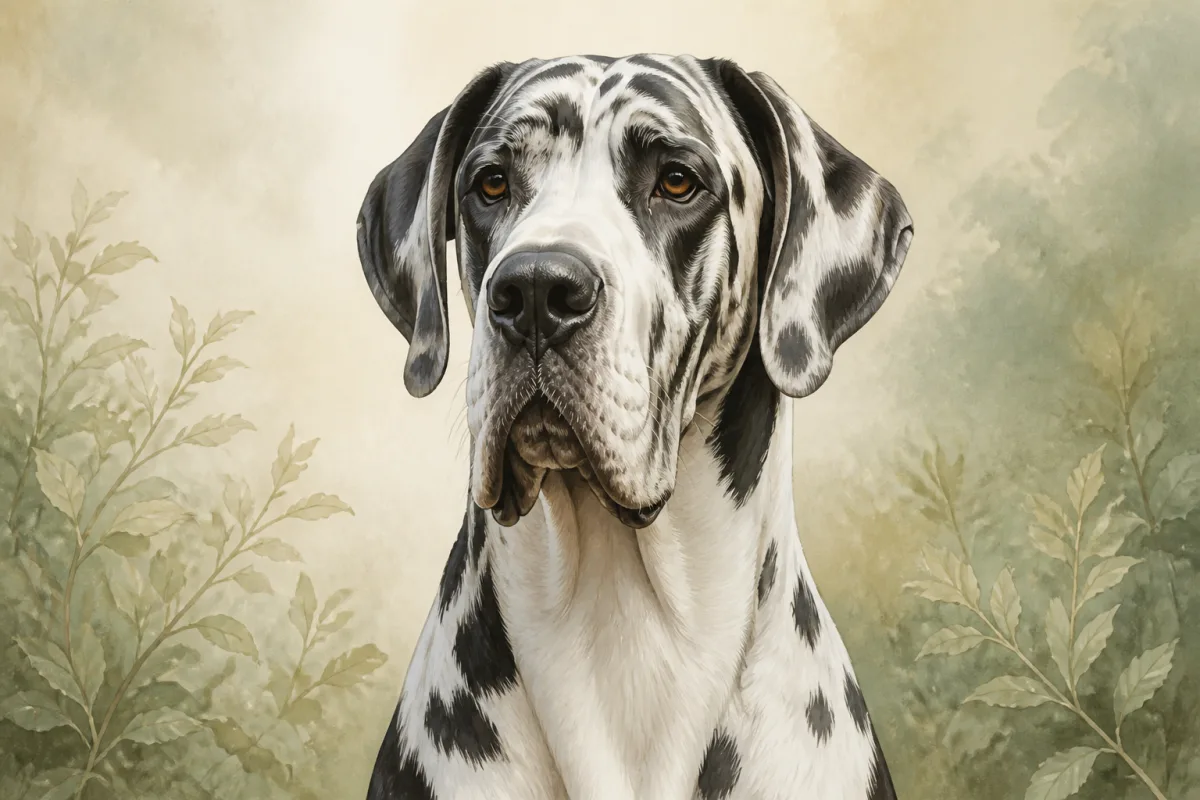
Great Dane breed illustration

Breed profile

Great Dane

Also known as Dane · Deutsche Dogge

  • Working
  • Giant
  • Germany

Towering yet often soft-hearted, the Great Dane is a giant companion that needs space, training, and owners prepared for the logistics — and shorter lifespan — of a very large dog.

Size
Giant
Weight
110–175 lbs
Lifespan
7–10 years
Origin
Germany
AKC
Fully recognized

At a glance

How this breed typically shows up day to day.

  • Energy Moderate
  • Shedding Moderate
  • Trainability Moderate
  • Apartment fit Poor

Breed details

Great Danes compress the giant-breed experience into a short, intense chapter: immense presence, often soft temperament, serious logistics, and a lifespan that demands emotional preparedness. They can be extraordinary companions. They are never “just a big Lab.”

Developed in Germany as formidable hunting and estate dogs, modern Danes are more often gentle household shadows than working hunters. Many are affectionate, people-dependent, and calm indoors once grown — after an adolescence measured in elbows, zoomies, and broken coffee tables. Training early, while you can still physically guide the puppy, is a gift to your future self.

Space and planning matter more than raw acreage. A Dane needs room to turn, lie down, and share a home without constant collision. Apartments are usually a poor fit. Exercise for adults is moderate; the danger is over-exercising puppies on hard surfaces and under-training manners. Short coats simplify grooming and complicate cold weather — these are indoor dogs.

Bloat awareness should be automatic in deep-chested giants, along with cardiac screening conversations. Orthopedic soundness and realistic longevity expectations belong in every purchase or adoption decision. The food bill, medication dosing, and vehicle logistics are part of the breed, not surprises.

Choose a Great Dane if you have space, experience with large dogs or a strong willingness to learn, and readiness for a shorter lifespan. Look elsewhere if you need a long-lived jogging partner or a compact low-cost pet. For the right home, a well-bred Dane is a towering, tender companion that fills a room — and a life — completely.

Temperament

Great Danes are frequently gentle, people-oriented, and surprisingly dependent on human company for such a massive dog. Many are calm indoors once mature, with a goofy streak that owners love.

Puppies and adolescents are another story: large, clumsy, and capable of accidental damage. Early training, leash manners, and socialization are essential while the dog is still manageable.

They are companions first — not livestock guardians — and usually want to share the couch, whether they fit or not.

Exercise needs

Moderate exercise for adults: daily walks and light play. They are not typically high-mileage running partners, and over-exercising growing puppies risks orthopedic harm.

Mental training and calm leash skills matter more than extreme athletics. Avoid forced jogging on hard surfaces with adolescents.

Provide enough space to turn around comfortably at home — giant breeds need footprint, not necessarily acreage, but apartments are usually a poor fit.

Grooming needs

Short coat: weekly brushing, baths as needed, and diligent nail, ear, and dental care. Shedding is moderate but noticeable simply because of body size.

Drool management is real for many Danes — keep towels handy. Check skin and pressure points if the dog lies on hard floors often.

Overall coat care is simpler than for long double coats.

Common characteristics

Giant, elegant sighthound-adjacent working dog silhouette with a rectangular frame.

Short coat in many colors including fawn, brindle, blue, black, harlequin, and mantle.

People-focused temperament; often called a gentle giant when well bred and raised.

Significant space, food, and logistical needs.

Common health concerns

Bloat (GDV) is a critical emergency risk in deep-chested giants — know the signs and discuss prevention strategies with your vet. Cardiomyopathy and other heart conditions are major screening topics.

Orthopedic disease, Wobbler syndrome in some dogs, and a relatively short lifespan are honest parts of Dane ownership. Ask about cardiac and hip evaluations.

Raising a Dane slowly and keeping adult weight appropriate supports soundness.

Children & family suitability

Can be wonderful with families that have space and will train a giant puppy before it outweighs the handler. Supervise around small children — size alone creates risk even with a sweet temperament.

Emotional readiness for a shorter lifespan should be part of the decision.

Other-pet compatibility

Many live well with other dogs and cats when socialized, though size differences require careful play management.

A friendly Dane can still injure a small pet accidentally — structure and supervision matter.

Climate considerations

Short coats offer limited insulation. Provide coats in cold weather and avoid prolonged outdoor living. In heat, offer shade, water, and cool surfaces — large bodies retain heat.

Never leave a Dane in a hot car; giant breeds can decline quickly in heat stress.

The honest ledger

Pros and cons

What this breed gives — and what it asks back.

Keep

The upside

  1. 01 Gentle, people-oriented companion
  2. 02 Moderate adult exercise needs
  3. 03 Simple short-coat care
  4. 04 Impressive and affectionate presence

Weigh

The trade-offs

  1. 01 Giant size logistics and cost
  2. 02 Short average lifespan
  3. 03 Bloat and cardiac risks
  4. 04 Awkward, powerful adolescence