
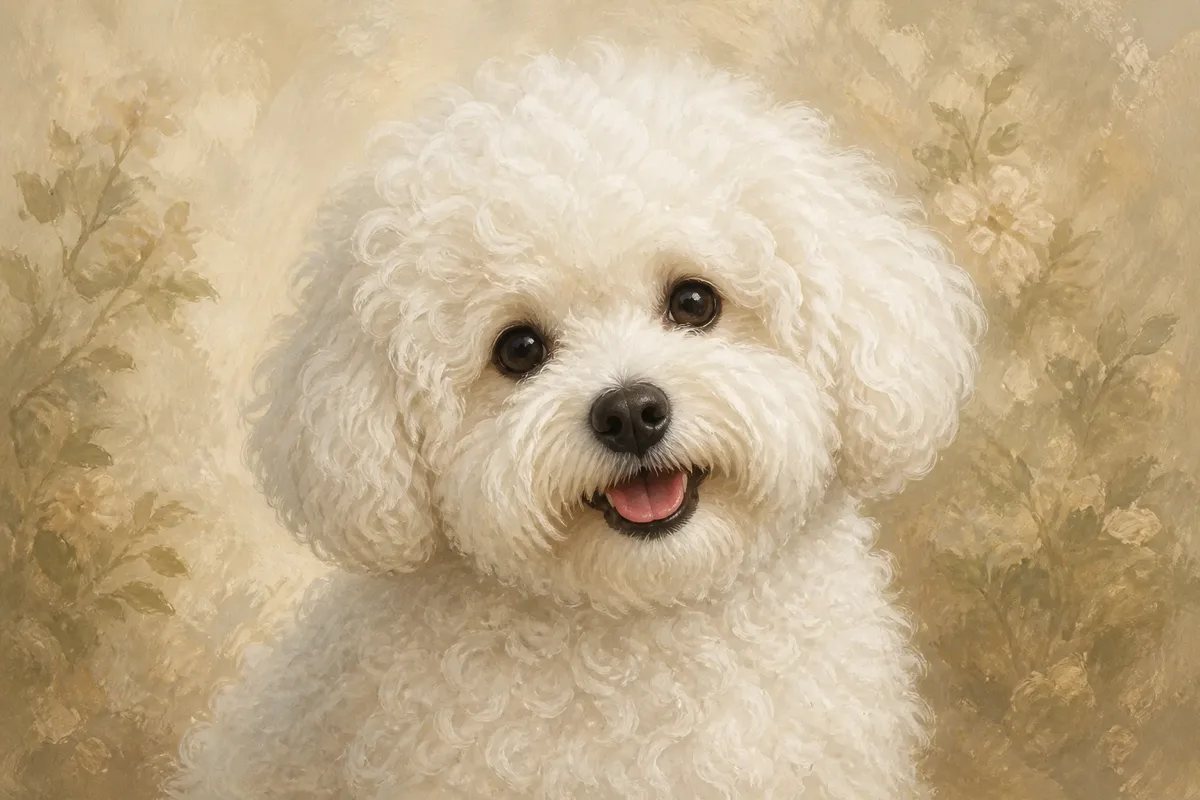
Bichon Frise breed illustration

Breed profile

Bichon Frise

Also known as Bichon

  • Non-Sporting
  • Small
  • Mediterranean / France

Cheerful, sturdy for a small companion, and famously low-shedding, the Bichon Frise thrives on human company and professional-level coat care — a happy apartment dog when grooming is taken seriously.

Size
Small
Weight
12–18 lbs
Lifespan
14–15 years
Origin
Mediterranean / France
AKC
Fully recognized

At a glance

How this breed typically shows up day to day.

  • Energy Moderate
  • Shedding Low
  • Trainability High
  • Apartment fit Excellent

Breed details

Bichons Frises were bred to charm — Mediterranean companion dogs refined in France into powder-puff entertainers that live for people. That design still holds. They are sturdy for a small companion, typically cheerful, and miserable when treated as optional furniture in an empty house.

Coat care is the central trade for low shedding. Daily brushing or a short maintenance clip plus frequent professional grooming keeps mats from becoming pain. Eyes and teeth need routine attention. People who want low shed without grooming effort are shopping for marketing, not a Bichon.

Exercise needs are moderate and flexible: walks, play, and training games. Housetraining can take patience. Early manners around barking and demanding attention create a polished little companion rather than a cute alarm system.

Allergies, kneecaps, dental disease, and bladder topics appear in breed health conversations. Longevity is often good when care is consistent. Keep them lean and work with a vet on skin issues early if itching starts.

Bichons fit owners who want an affectionate apartment companion and will commit to coat care and company. They are a weaker choice for long solitude or wash-and-wear fantasies. Matched well, they are sunny, trainable little partners with a long tradition of making households happier.

Temperament

Bichons are typically playful, affectionate, and people-oriented. Many are outgoing with guests, clownish at home, and happiest when included in daily life rather than left alone for long stretches.

They are usually trainable and food-motivated, though housetraining can take patience. Early manners keep barking and demanding behavior in check.

Expect a companion dog first — not an independent outdoor worker.

Exercise needs

Moderate daily walks and play usually suffice. They enjoy games and short training sessions more than intense sport.

Mental enrichment helps apartment living. Weather extremes shorten outings — coat care after rain matters.

They can keep up with family activity without needing high-mileage running partners.

Grooming needs

The curly white coat is low-shedding and high-maintenance: daily brushing for longer coats, or a regular round trim plus professional grooming every 4–6 weeks. Mats form quickly if ignored.

Eyes may need wiping. Keep ears clean and prioritize dental care. Many owners choose a practical pet trim for daily life.

Low shed is purchased with brush time or groomer bills — plan for it.

Common characteristics

Small, sturdy white companion dog with a powder-puff curly coat.

Cheerful, people-focused temperament.

Low shedding with high coat-care needs.

Excellent apartment potential with grooming commitment.

Common health concerns

Allergies, patellar luxation, dental disease, and bladder issues appear in breed discussions. Some lines see cataracts or other eye conditions.

Ask breeders about health testing and skin/allergy history. Keep weight ideal to protect joints.

Longevity is often a strength when dental and coat care are consistent.

Children & family suitability

Often excellent with families and respectful children because they are sturdier than the tiniest toys and usually people-loving.

Still supervise with toddlers. Best when someone is home enough to meet companionship needs.

Other-pet compatibility

Generally strong with other dogs and cats when socialized. They are companions more than hunters.

Protect them from rough large-dog play.

Climate considerations

Adaptable with common sense. In heat, avoid midday intensity. In cold or wet weather, a coat and thorough drying help, especially for clipped dogs.

White coats can sunburn on thin-haired areas — use judgment outdoors.

The honest ledger

Pros and cons

What this breed gives — and what it asks back.

Keep

The upside

  1. 01 Friendly, trainable companion
  2. 02 Excellent apartment dog
  3. 03 Low shedding with proper coat care
  4. 04 Long lifespan potential

Weigh

The trade-offs

  1. 01 High grooming needs
  2. 02 Can struggle with long solitude
  3. 03 Housetraining patience required
  4. 04 Not a wash-and-wear coat