
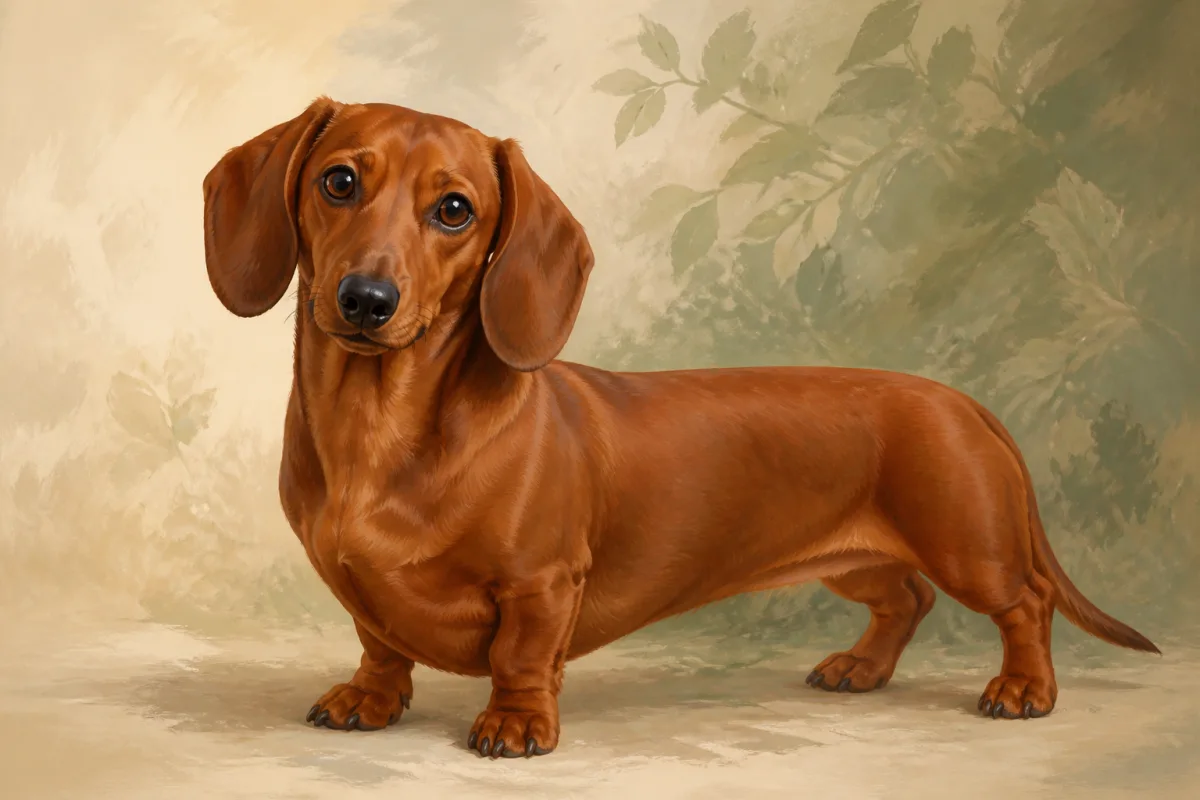
Dachshund breed illustration

Breed profile

Dachshund

Also known as Wiener dog · Doxie · Dachshund (Standard/Miniature)

  • Hound
  • Small
  • Germany

Bold, curious, and full of personality, Dachshunds pack hound determination into a long, low frame — charming companions that need back-aware handling for life.

Size
Small
Weight
16–32 lbs (standard); under 11 lbs (miniature)
Lifespan
12–16 years
Origin
Germany
AKC
Fully recognized

At a glance

How this breed typically shows up day to day.

  • Energy Moderate
  • Shedding Moderate
  • Trainability Moderate
  • Apartment fit Excellent

Breed details

Dachshunds prove that big personality does not require a big body. Long, low, and famously determined, they were designed to go to ground after badgers — which explains both the charming boldness and the stubborn streak owners meet at the end of a leash.

Bred in Germany, Dachshunds come in standard and miniature sizes and in smooth, longhaired, and wirehaired coats. The silhouette is unmistakable: elongated back, short legs, and an expression that often looks like they have already decided the plan for the day. That hunting heritage still shows up as barking at noises, following scent trails with tunnel vision, and treating small critters as unfinished business.

Apartment life can suit Dachshunds well because their exercise needs are moderate, but “moderate” still means daily walks and enrichment. A bored Doxie digs, barks, or invents projects. The more important management theme is spinal care. Their body shape raises intervertebral disc disease risk, so owners should keep them lean, limit high-impact jumping, use ramps where helpful, and learn to lift them with back support.

Training a Dachshund rewards creativity. They are clever and independent, not automatically eager to please like a retriever. Short sessions, good food rewards, and a sense of humor go further than repetition drills. House-training can take patience, especially in miniatures, and early manners around barking pay dividends in shared walls.

Dachshunds are excellent for people who want a companionable small dog with character and who will protect the dog’s back for life. They are less ideal for homes with very rough toddler play, owners who want effortless off-leash reliability, or anyone unwilling to manage weight and jumping. Respect the engineering of the breed, and a Dachshund can be a long-lived, entertaining partner.

Temperament

Dachshunds are clever, courageous, and often comically stubborn. Many are devoted one-household dogs with a big bark for their size.

Bred to hunt badgers, they retain independent problem-solving and a strong nose. That means training takes patience and creativity.

They can be excellent companions for people who enjoy a dog with opinions — and who will manage barking and digging tendencies early.

Exercise needs

Daily walks and sniffy enrichment usually suffice. They enjoy short play sessions more than endurance sports.

Avoid high-impact jumping on and off furniture; use ramps where possible to protect the spine.

Nose work and puzzle feeders are outstanding mental outlets for this scent-driven breed.

Grooming needs

Smooth coats need minimal brushing; longhaired and wirehaired varieties need more frequent coat care and occasional professional grooming.

Keep nails short — long nails alter gait and add stress to joints and back.

Clean ears and monitor skin, especially in wrinkles or dense furnishings.

Common characteristics

Distinctive elongated body and short legs in smooth, longhaired, or wirehaired coats.

Available in standard and miniature sizes with similar personality patterns.

Alert watchdog tendency and strong hunting heritage.

Surprisingly sturdy for size, but structurally vulnerable in the back.

Common health concerns

Intervertebral disc disease (IVDD) is the breed’s most important health conversation. Maintain lean weight, limit jumping, support the back when lifting, and learn early signs of spinal pain.

Obesity dramatically increases disc risk — portion control is preventative medicine.

Other issues can include dental disease, patellar luxation, and eye conditions depending on line.

Children & family suitability

Good with respectful older children. Very small kids may unintentionally injure a Dachshund’s back during play or lifting.

Excellent for apartment households that can manage barking and provide daily walks.

Other-pet compatibility

Often fine with other dogs; prey drive can make small pets risky. Early socialization helps, but individual hunting instinct varies.

Climate considerations

Short coats chill easily in cold; use a sweater. Hot pavement can burn paw pads — walk during cooler hours.

Long-backed dogs can overheat if overweight; keep them lean year-round.

The honest ledger

Pros and cons

What this breed gives — and what it asks back.

Keep

The upside

  1. 01 Big personality in a small package
  2. 02 Apartment-friendly size
  3. 03 Long lifespan potential
  4. 04 Entertaining companion

Weigh

The trade-offs

  1. 01 Back injury risk
  2. 02 Can be stubborn and barky
  3. 03 Prey drive in some dogs
  4. 04 Needs careful handling habits