
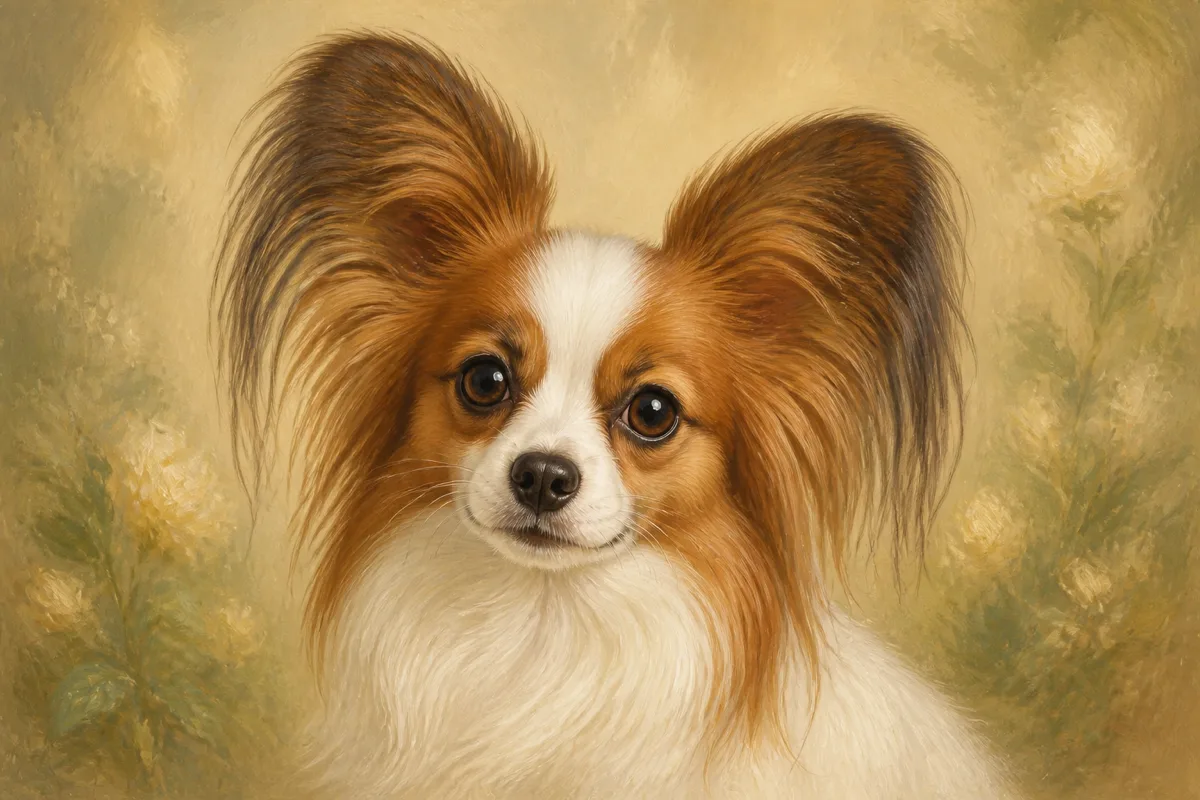
Papillon breed illustration

Breed profile

Papillon

Also known as Butterfly Dog · Phalène (drop-ear variety)

  • Toy
  • Toy
  • France / Belgium

Tiny, brilliant, and famously ear-framed, the Papillon is a toy breed that outperforms expectations in training sports — thriving with owners who respect both the brains and the fragile frame.

Size
Toy
Weight
5–10 lbs
Lifespan
14–16 years
Origin
France / Belgium
AKC
Fully recognized

At a glance

How this breed typically shows up day to day.

  • Energy High
  • Shedding Moderate
  • Trainability High
  • Apartment fit Excellent

Breed details

Papillons are butterfly-eared toy dogs that quietly embarrass larger breeds in training sports. With roots in continental companion spaniels popular in France and Belgium, they combine portable size with surprising athleticism and a sharp, ready mind. “Toy” is a weight class, not a personality cap.

Good Papillon homes train them. They excel in obedience and agility when given the chance, and they become barky little tyrants when spoiling replaces structure. Boldness around large dogs is a safety issue — confidence does not equal mass. Socialization and manners keep the spark useful.

Coat care is moderate compared with double-coated toys: regular brushing for silky furnishings, ear cleaning for those fringed butterflies, and serious dental care. Longevity is often excellent when teeth and kneecaps are managed. Fragile frames still break in falls and rough play.

They make outstanding apartment companions for adults and careful older children who enjoy a small athlete. They are a poor match for unsupervised toddlers or anyone wanting a silent ornament.

Choose a Papillon if you want a trainable, lively toy partner and will protect a tiny body while giving the brain a job. Skip the breed if you need indestructible kid chaos tolerance. Handled well, few toys offer more wit per pound.

Temperament

Papillons are bright, confident, and often surprisingly athletic. Many are affectionate with their people, alert to sounds, and eager students that excel in obedience and agility for their size.

They can be barky and bold around larger dogs — confidence that outruns safety. Early socialization and manners training keep that spark useful rather than chaotic.

Expect a busy little companion, not a silent pillow.

Exercise needs

Higher energy than many toys: daily walks, play, and training games. Mental work is especially satisfying for this clever breed.

Protect tiny bodies from jumps, rough play, and being stepped on. They can enjoy travel and city life when manners are solid.

Short sessions throughout the day often work better than one long exhausting outing.

Grooming needs

The silky single coat needs regular brushing to prevent mats behind ears and in furnishings, but it is less oppressive than many double coats. Shed is moderate.

Keep ears clean — those fringed butterfly ears collect debris. Dental care is critical in toy mouths. Nails need frequent trims.

Many owners manage coat care at home with occasional professional help.

Common characteristics

Toy spaniel-type dog with distinctive erect, fringed “butterfly” ears (or drop-eared Phalène variety).

Typically white with colored patches; fine, silky coat.

Highly trainable and often excel in dog sports.

Alert, lively temperament in a tiny frame.

Common health concerns

Dental disease, luxating patellas, and progressive retinal atrophy in some lines are common topics. Open fontanelles can appear in very small dogs — ask breeders about structure.

Keep weight ideal and avoid traumatic jumps. Use harnesses thoughtfully.

Longevity is often a strength when dental and orthopedic care are consistent.

Children & family suitability

Excellent with adults and careful older children who understand fragile-dog rules. Not ideal as a rough-and-tumble toddler companion.

Outstanding apartment dogs for people who enjoy training a small athlete.

Other-pet compatibility

Can live well with other pets when introductions are managed, but boldness around large dogs is dangerous. Supervise always.

Cats often coexist with mutual respect and separate retreats.

Climate considerations

Fine coats offer limited insulation — use sweaters in cold and limit icy outings. In heat, avoid hot pavement and overexertion.

They are indoor companions that enjoy outdoor adventures in sensible weather.

The honest ledger

Pros and cons

What this breed gives — and what it asks back.

Keep

The upside

  1. 01 Highly trainable toy athlete
  2. 02 Excellent apartment size
  3. 03 Long lifespan potential
  4. 04 Affectionate and entertaining

Weigh

The trade-offs

  1. 01 Can be barky and bold beyond size
  2. 02 Fragile toy frame
  3. 03 Dental care required
  4. 04 Not ideal with very young children