
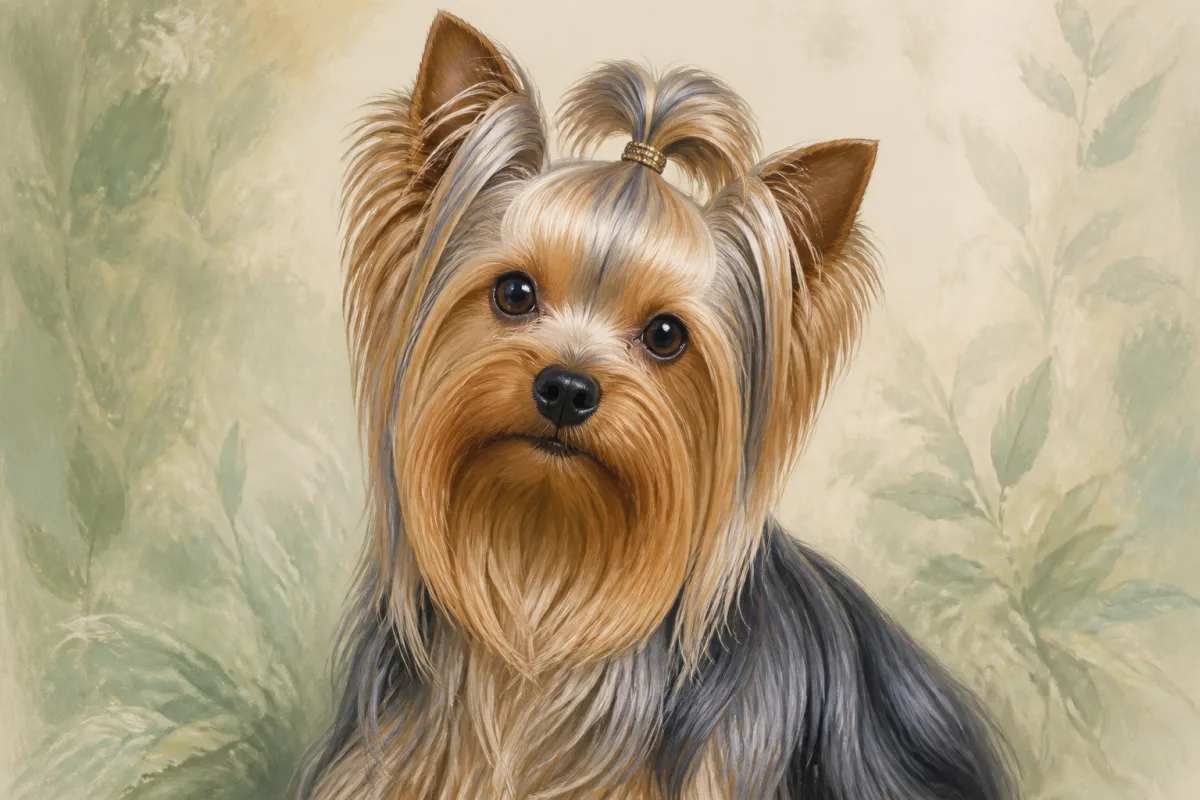
Yorkshire Terrier breed illustration

Breed profile

Yorkshire Terrier

Also known as Yorkie

  • Toy
  • Toy
  • England

Tiny, bold, and full of terrier attitude, the Yorkshire Terrier packs a big personality into a portable frame — thriving with owners who respect both the glamour and the grit.

Size
Toy
Weight
4–7 lbs
Lifespan
11–15 years
Origin
England
AKC
Fully recognized

At a glance

How this breed typically shows up day to day.

  • Energy High
  • Shedding Low
  • Trainability Moderate
  • Apartment fit Excellent

Breed details

Yorkshire Terriers prove that “toy” describes size, not attitude. Bred as ratting and companion dogs in industrial England, Yorkies still carry terrier confidence in a four-to-seven-pound frame — charming when managed, exhausting when spoiled into believing they set household law.

The glamorous floor-length coat is optional fashion; the personality is not. Many Yorkies are bright, bonded, and surprisingly sturdy in spirit while remaining physically fragile. They notice sounds, announce visitors, and form strong opinions about other dogs. Early training around barking, leash manners, and polite greetings prevents the classic tiny-tyrant trajectory.

Apartment life suits them well when exercise and enrichment are consistent. Daily walks, indoor play, and short training games usually meet needs. What does not work is treating the dog like jewelry: never touching the ground, never meeting the world, then wondering why fear or reactivity appears. Socialization for a Yorkie is safety and manners, not optional enrichment.

Ownership realities include dental disease risk, coat care (long or clipped), and protecting a tiny body from falls, rough play, and being stepped on. Harnesses, careful child supervision, and lifelong tooth care are practical, not fussy. Low shedding is real; zero maintenance is not.

Choose a Yorkshire Terrier if you want a portable, lively companion and will train with consistency rather than permissiveness. Skip the breed if your household is chaotic with unsupervised toddlers, or if you want a silent, fragile ornament. Respected as a small dog with a real brain, the Yorkie can be a long-lived, entertaining partner.

Temperament

Yorkies are confident, curious, and often convinced they are larger than they are. Many are affectionate with their people, alert to household sounds, and selective about strangers until trust is earned.

That terrier spark means they can be feisty, barky, and stubborn — especially if spoiling replaces training. Early manners around jumping, barking, and leash walking pay off for years.

Handled with consistency and humor, Yorkies become lively little companions with surprising courage and loyalty.

Exercise needs

Despite the tiny size, many Yorkies have high energy in short bursts. Daily walks, indoor play, and supervised exploration keep them content.

They tire faster than larger dogs in extreme weather, so adjust outing length for heat, cold, and icy sidewalks. Mental games matter; a bored Yorkie invents projects.

Avoid forcing long-distance running or rough play with much larger dogs.

Grooming needs

The classic floor-length coat is high maintenance: daily brushing and regular professional grooming, or keep a practical puppy clip. Either way, coat care is part of ownership.

Low shedding is a selling point, not zero grooming. Teeth need special attention — toy breeds are prone to dental disease. Clean eyes and ears as needed.

Nails grow quickly on dogs that mostly walk on soft surfaces.

Common characteristics

Toy terrier with a fine, silky coat traditionally steel blue and tan.

Bold, alert temperament in a very small body.

Often a strong watchdog bark relative to size.

Low shedding compared with many double-coated breeds, with high coat-care needs if kept long.

Common health concerns

Dental disease is extremely common in toy breeds; plan on lifelong home care and professional cleanings. Patellar luxation and tracheal sensitivity (including collar pressure concerns) are also frequent topics.

Some lines see liver shunt or other congenital issues — ask breeders about health history. Fragile toy size means injuries from falls, being stepped on, or rough play are real risks.

Use harnesses thoughtfully and keep the dog lean and well-conditioned.

Children & family suitability

Yorkies can be wonderful with gentle older children who understand fragile-dog rules. Homes with very young toddlers need close supervision — the dog can be hurt easily, and some Yorkies have low patience for grabby handling.

Best for people who want an interactive tiny companion, not a fragile ornament.

Other-pet compatibility

Many live well with other small dogs. Prey drive and big-dog play styles need management; a Yorkie’s confidence can outrun its safety.

Cats often work out with careful introductions. Supervise and provide escape routes for everyone.

Climate considerations

Tiny body mass means heat and cold hit harder. Coats help in winter; limit hot pavement and midday summer walks.

Rain and wind can chill a clipped Yorkie quickly — dry and warm them after wet outings.

The honest ledger

Pros and cons

What this breed gives — and what it asks back.

Keep

The upside

  1. 01 Portable apartment dog
  2. 02 Low shedding coat
  3. 03 Big personality and alertness
  4. 04 Long potential lifespan with good care

Weigh

The trade-offs

  1. 01 Can be barky and stubborn
  2. 02 High grooming if coat is kept long
  3. 03 Dental and toy-breed fragility issues
  4. 04 Not ideal with very rough young children