
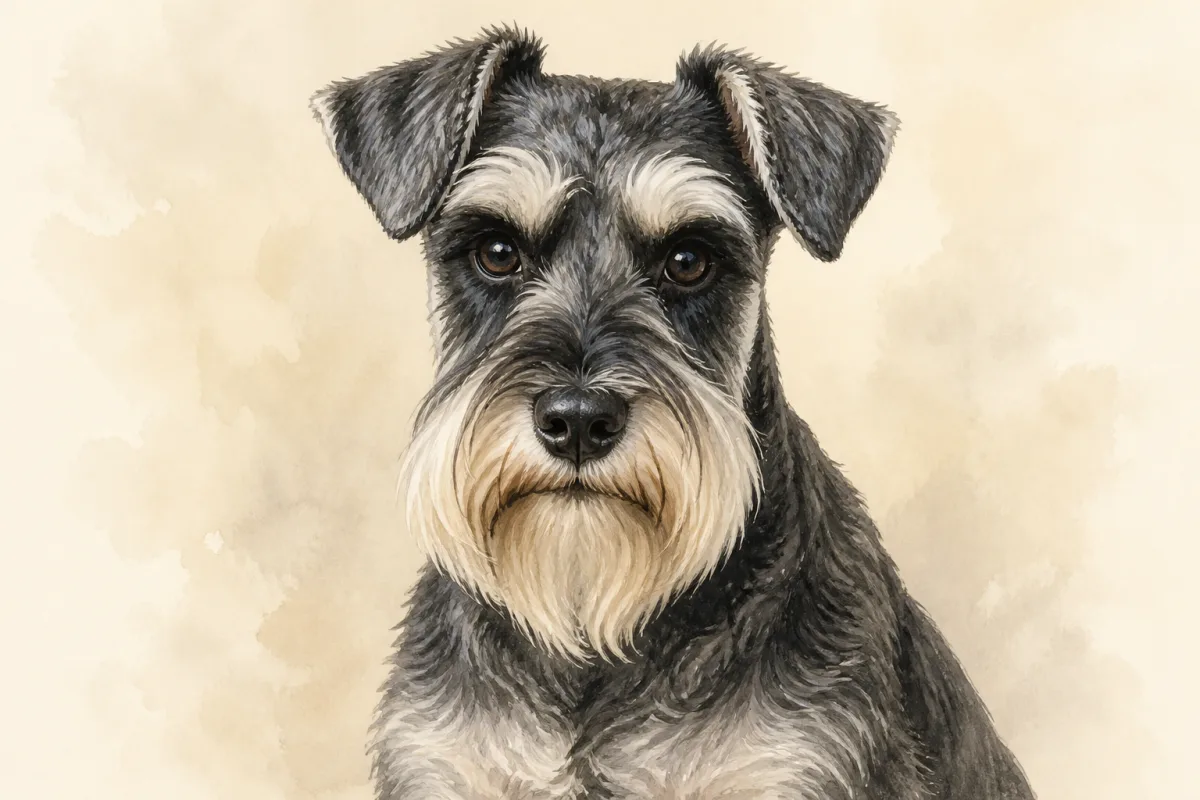
Miniature Schnauzer breed illustration

Breed profile

Miniature Schnauzer

Also known as Mini Schnauzer

  • Terrier
  • Small
  • Germany

Alert, sturdy, and often comically bearded, the Miniature Schnauzer is a compact terrier companion that offers lower shedding with higher grooming needs and a watchdog’s voice.

Size
Small
Weight
11–20 lbs
Lifespan
12–15 years
Origin
Germany
AKC
Fully recognized

At a glance

How this breed typically shows up day to day.

  • Energy High
  • Shedding Low
  • Trainability High
  • Apartment fit Good

Breed details

Miniature Schnauzers occupy a useful middle ground: small enough for city life, sturdy enough for real family chaos, and sharp enough to notice every delivery truck on the block. The beard gets the attention; the watchdog brain runs the house if you let it.

Developed in Germany as a ratting and farm companion derived from larger schnauzer types, the Mini kept terrier alertness with a more companionable size. Many are affectionate, clever, and eager to be involved. They also bark — not always from aggression, often from duty. Training an “enough” cue early is kinder to neighbors than hoping the breed outgrows its job description.

Coat care is the trade for lower shedding. Regular brushing plus clipping or hand-stripping keeps the wiry jacket functional. People who choose Minis for allergy friendliness still need to test their own sensitivities and commit to grooming schedules. A neglected schnauzer coat mats and holds debris in furnishings fast.

Health-wise, talk with your vet about diet and pancreatitis risk in susceptible dogs, urinary issues in some lines, and routine dental care. Keep them lean. “Just a little extra” on a small terrier still stresses metabolism and joints.

Miniature Schnauzers suit households that want a trainable, people-focused small dog and will manage grooming and barking. They are less ideal for anyone seeking a silent, zero-grooming pet. Give them manners and a routine, and you get a sturdy, humorous companion with lasting loyalty.

Temperament

Mini Schnauzers are spirited, affectionate, and famously alert. Many bond tightly with their household and take their watchdog role seriously — which is charming until the mail carrier arrives for the third time.

They are typically clever and trainable, though terrier independence means sessions should stay short, upbeat, and consistent. Early socialization softens suspicion of new people and dogs.

Expect a busy little personality that wants to be involved in family life.

Exercise needs

Daily walks and play usually meet needs, with extra zest for training games and sniffing adventures. They have more energy than a pure lap dog and less than a high-drive herding breed.

Without outlets, barking and busybody behavior increase. Mental enrichment helps apartment living succeed.

Keep play fair around larger dogs; Mini Schnauzers can be bold.

Grooming needs

The wiry coat is low-shedding when properly maintained, but “low shed” means regular brushing plus clipping or hand-stripping on a schedule. Professional grooming every 4–8 weeks is common.

Beard and leg furnishings collect food and debris — wipe daily. Clean ears and eyes as needed; maintain dental care.

People choosing the breed for allergy friendliness should still test their own sensitivities.

Common characteristics

Small, square terrier with distinctive eyebrows and beard.

Classic colors include salt and pepper, black and silver, and solid black.

Alert watchdog temperament in a sturdy compact body.

Lower shedding than many breeds, with higher coat-maintenance costs/time.

Common health concerns

Common topics include pancreatitis risk in some dogs (often linked with diet and lipid issues), urinary stones, and eye conditions. Dental disease deserves routine attention.

Ask breeders about relevant health testing and family history. Keep the dog lean — Mini Schnauzers can gain weight easily, which worsens metabolic and orthopedic stress.

Discuss diet fat levels with your veterinarian if your dog has a history of digestive sensitivity.

Children & family suitability

Often excellent with families that will train manners and manage barking. Sturdy enough for careful play with respectful kids.

Best when someone enjoys grooming routines or budgets for a groomer.

Other-pet compatibility

Many live well with other dogs and cats when socialized early. Terrier chase instincts can still target small pets.

Supervise introductions and reinforce calm cohabitation skills.

Climate considerations

Generally adaptable. In heat, avoid midday intensity and provide water. In cold or wet weather, the furnishings hold moisture — dry the beard and legs after walks.

Clip style can affect comfort; ask a groomer about practical trims for your climate.

The honest ledger

Pros and cons

What this breed gives — and what it asks back.

Keep

The upside

  1. 01 Trainable and affectionate
  2. 02 Lower shedding with proper coat care
  3. 03 Good apartment watchdog size
  4. 04 Sturdy small companion

Weigh

The trade-offs

  1. 01 Can be barky
  2. 02 Regular professional grooming often needed
  3. 03 Dietary/pancreatitis awareness in some dogs
  4. 04 Terrier stubbornness without training