
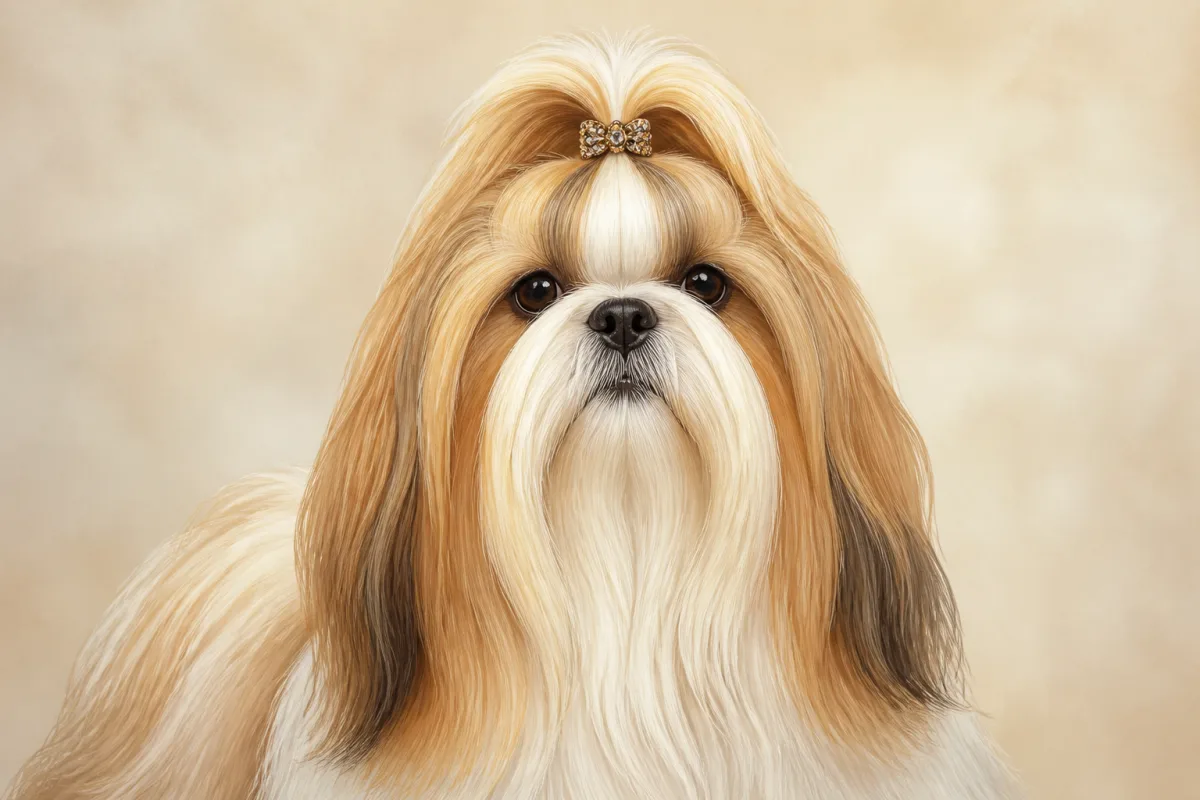
Shih Tzu breed illustration

Breed profile

Shih Tzu

Also known as Chrysanthemum Dog

  • Toy
  • Small
  • Tibet / China

A royal companion breed with a flowing coat and an outgoing little personality, the Shih Tzu is built for close human company — and for owners who will commit to grooming and short-faced care.

Size
Small
Weight
9–16 lbs
Lifespan
10–18 years
Origin
Tibet / China
AKC
Fully recognized

At a glance

How this breed typically shows up day to day.

  • Energy Moderate
  • Shedding Low
  • Trainability Moderate
  • Apartment fit Excellent

Breed details

Shih Tzus were companion dogs for Tibetan and Chinese households long before they became living room royalty in the West. That history still fits: they are people-focused, portable, and happiest as indoor partners. The flowing coat gets the Instagram credit; daily care and short-faced management keep the dog comfortable.

Temperament is usually affectionate and adaptable, with a streak of stubbornness that shows up in housetraining and selective hearing. They are not high-mileage athletes. Most want short walks, play bursts, and a lap or cushion near their person. Apartments suit them well when heat and grooming are handled thoughtfully.

Grooming is not optional theater. Long coats need daily attention; pet clips still need regular professional upkeep. Eyes require cleaning, and hair must stay out of the face. Low shedding is a genuine advantage for many households, but it is purchased with brush time or groomer bills.

Brachycephalic anatomy shapes ownership. Heat intolerance, noisy breathing, and eye vulnerability are core topics, not rare footnotes. Keep the dog lean, choose cooler walk times, and work with breeders who value functional breathing over extreme foreshortened faces. Dental care matters in small mouths packed with teeth.

Shih Tzus are excellent for companion-focused owners who will commit to coat and climate care. They are a weaker choice for runners, hot humid outdoor lifestyles without AC, or anyone seeking a truly low-maintenance dog. Understood clearly, they are sturdy little housemates with a long tradition of close human partnership.

Temperament

Shih Tzus are affectionate, often cheerful companions that usually prefer people time to solitary independence. Many are friendly, adaptable, and content as indoor dogs with a social household.

They can be stubborn, especially with house-training, and some are surprisingly lively in short play bursts. Early manners keep barking and demanding behavior in check.

They shine as companion dogs first — not as outdoor athletes or serious guard dogs.

Exercise needs

Moderate needs: daily short walks and indoor play. They enjoy sniffing and gentle outings more than long runs.

Because of the short face, avoid strenuous exercise in heat and watch for breathing effort. Keep sessions pleasant rather than intense.

Mental enrichment helps when weather keeps walks brief.

Grooming needs

Coat care is the defining maintenance task. Daily brushing for a long coat, or a regular short “puppy clip,” plus professional grooming. Eyes need frequent cleaning; hair must be kept out of the face.

Low shedding does not mean low grooming. Facial folds and ears need routine attention. Dental care is important in small mouths.

Budget time or grooming costs honestly before choosing the breed.

Common characteristics

Small, sturdy companion dog with a distinctive pushed-in face and often a long double coat.

Wide variety of colors and markings.

People-oriented temperament suited to apartment and companion lifestyles.

Brachycephalic structure affecting heat tolerance and breathing.

Common health concerns

Brachycephalic airway concerns, eye injuries (prominent eyes), ear infections, and dental disease are common topics. Intervertebral disc disease can appear in some small long-backed individuals.

Keep the dog lean, protect eyes from trauma, and discuss anesthesia and heat precautions with your veterinarian.

Choose breeders who prioritize functional breathing and eye health over extreme faces.

Children & family suitability

Often lovely with gentle families and older children. Supervise with toddlers — small dogs and grabby hands are a risky mix.

Ideal for people home enough to provide company and coat care.

Other-pet compatibility

Generally good with other dogs and cats when socialized. They are companions more than hunters, though individual personalities vary.

Protect them from rough play with much larger dogs.

Climate considerations

Heat is the primary risk. Walk in cool hours, provide AC in warm climates, and never force exercise in humidity.

Cold is usually manageable with a coat, especially if clipped short. Dry the face and coat after wet walks.

The honest ledger

Pros and cons

What this breed gives — and what it asks back.

Keep

The upside

  1. 01 Excellent apartment companion
  2. 02 Affectionate and people-focused
  3. 03 Moderate exercise needs
  4. 04 Low shedding with proper coat care

Weigh

The trade-offs

  1. 01 High grooming commitment
  2. 02 Heat and breathing sensitivity
  3. 03 Can be stubborn to house-train
  4. 04 Eye and dental care needs