
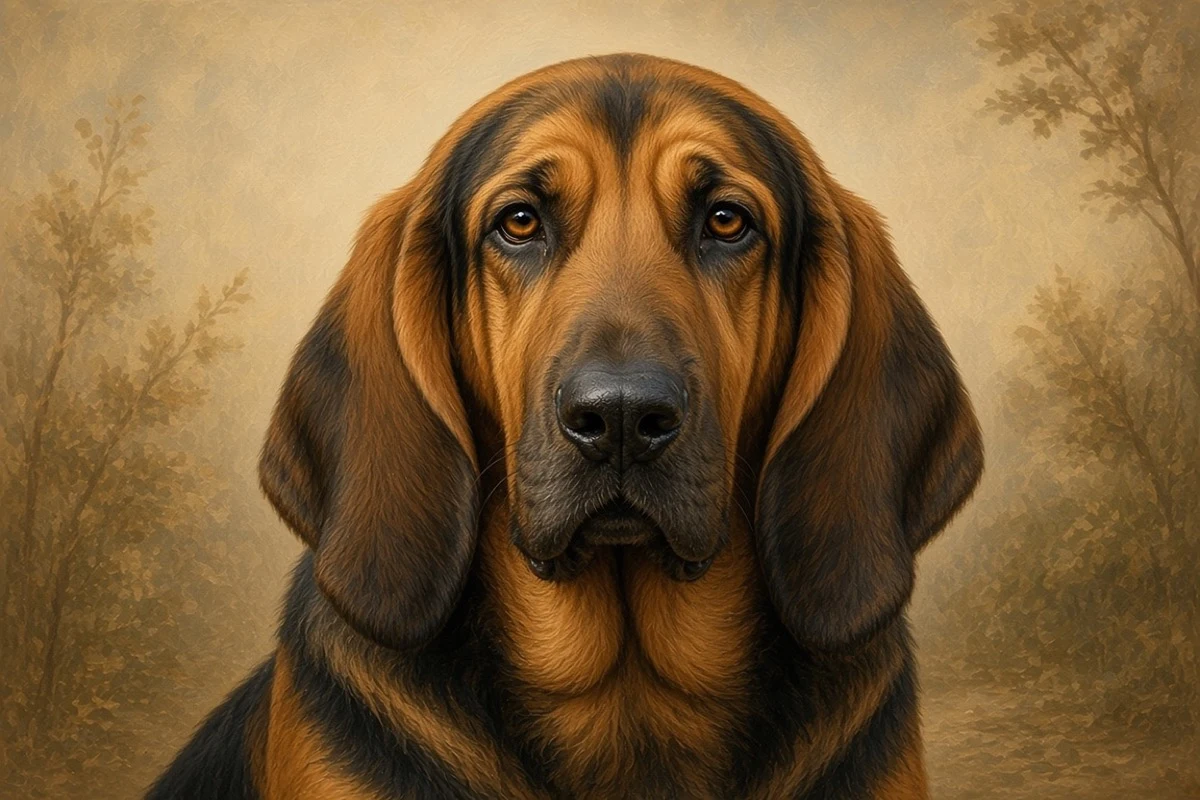
Bloodhound breed illustration

Breed profile

Bloodhound

Also known as St. Hubert Hound

  • Hound
  • Large
  • Belgium / France / England

The legendary trailing hound, the Bloodhound offers unmatched scent ability and a gentle household temperament — alongside drool, bay, and a nose that will ignore recall when a trail takes over.

Size
Large
Weight
80–110 lbs
Lifespan
10–12 years
Origin
Belgium / France / England
AKC
Fully recognized

At a glance

How this breed typically shows up day to day.

  • Energy Moderate
  • Shedding Moderate
  • Trainability Moderate
  • Apartment fit Poor

Breed details

Bloodhounds are living legends of trailing — wrinkled faces, pendulous ears, and a nose that has shaped law enforcement and search history. At home they are often gentle and affectionate. On a scent they become powerful, focused specialists who will not take your recall call as seriously as the trail.

Ownership means drool towels, ear cleaning, secure fencing, and leash skills before adolescence turns pulling into a lifestyle. Moderate-to-high walks that work the nose beat endless repetitive fetch. Large-breed joint care and bloat awareness belong on every checklist.

Choose a Bloodhound if you love hound voice and scent work and have space for a large, drippy philosopher. Look elsewhere for tidy apartments or off-leash park freedom. Matched well, Bloodhounds are soft-hearted giants with a job written into their skin.

Temperament

Bloodhounds are typically gentle, affectionate, and people-oriented at home — often surprisingly soft for such a large working hound. With family they are devoted; with strangers they are usually polite rather than sharp.

On a scent trail they become a different animal: focused, powerful, and selectively deaf. That is design, not defiance. Secure fencing and leash habits are non-negotiable.

They can be stubborn in formal obedience while brilliant at trailing work that uses the nose.

Exercise needs

Moderate-to-high needs with a scent emphasis: long walks, hiking, and trailing games beat repetitive fetch. A Bloodhound that works its nose settles better than one that only paces the yard.

They are large and strong — train loose-leash manners early before adolescent pulling becomes a lifestyle.

Avoid over-exercising growing puppies; large-breed joint care matters.

Grooming needs

The short coat needs weekly brushing. Drool management is the real housekeeping topic — towels near water bowls are practical, not optional.

Long ears need frequent cleaning to reduce infection. Facial wrinkles should stay clean and dry. Nails and teeth need routine care.

Shed is moderate; drool and ear care define daily maintenance more than coat volume.

Common characteristics

Large trailing hound with a wrinkled face, long pendulous ears, and extraordinary scenting ability.

Typically black and tan, liver and tan, or red.

Gentle with family; stubborn and nose-driven outdoors.

Distinctive bay and substantial drool are part of ownership.

Common health concerns

Bloat (GDV), hip and elbow dysplasia, and ear infections are major topics. Know bloat signs and discuss prevention with your vet.

Eyelid issues and skin fold care matter given the breed’s facial structure. Keep adults lean to support joints and reduce heat stress.

Choose breeders who health-test and prioritize sound structure over exaggerated wrinkles alone.

Children & family suitability

Often excellent with gentle families and respectful children. Size means supervision around toddlers — a friendly bump is still a bump.

Poor apartment fit for most homes due to size, voice, and scent-driven escape artistry.

Other-pet compatibility

Generally good with other dogs when socialized. Smaller pets may be safer indoors than unsupervised outdoors where trailing instinct kicks in.

Cats often coexist with early introductions and management.

Climate considerations

Handle cool weather well. In heat, schedule walks for cooler hours — heavy bodies and deep chests overheat, and bloat risk conversations intensify with stress and gulping.

Provide shade, water, and calm post-meal routines.

The honest ledger

Pros and cons

What this breed gives — and what it asks back.

Keep

The upside

  1. 01 Gentle, affectionate family hound
  2. 02 Unmatched trailing ability
  3. 03 Loyal and typically good with people
  4. 04 Unique working history and presence

Weigh

The trade-offs

  1. 01 Drool and ear maintenance
  2. 02 Strong scent drive overrides recall
  3. 03 Bloat and large-breed health risks
  4. 04 Bay and size challenge apartments