
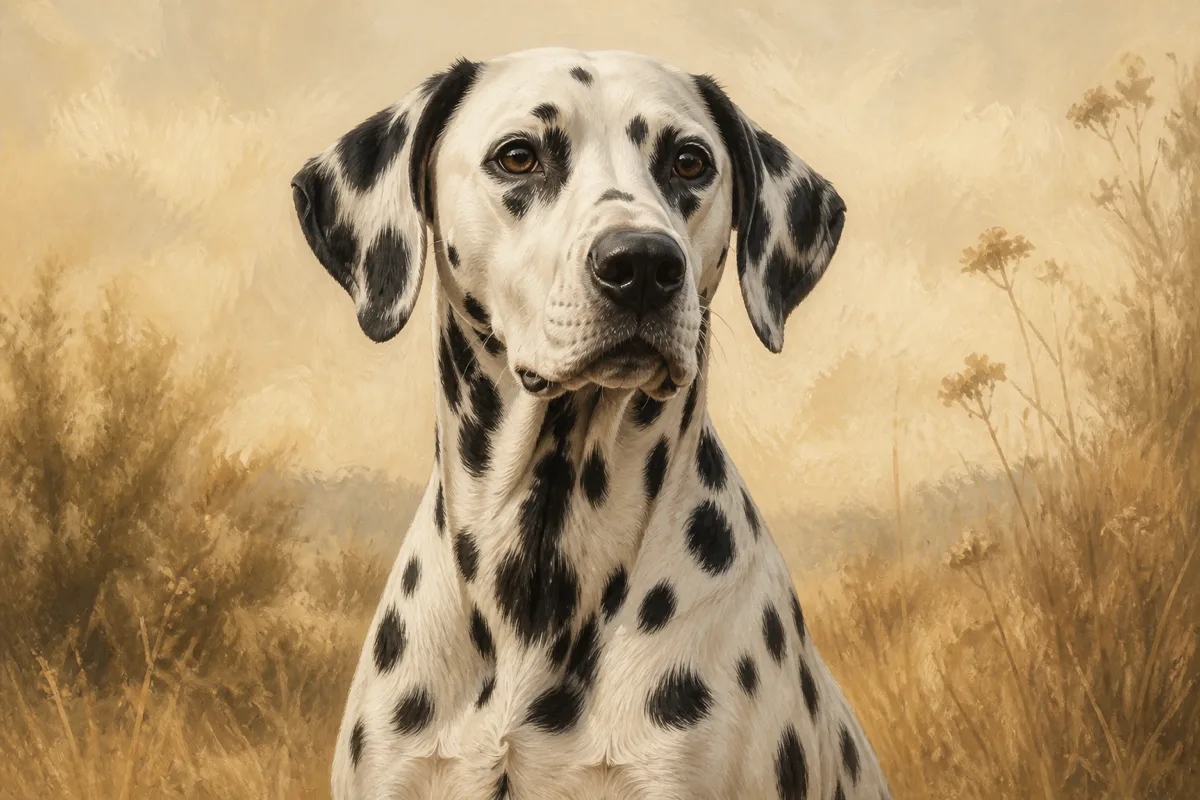
Dalmatian breed illustration

Breed profile

Dalmatian

Also known as Dal · Carriage Dog

  • Non-Sporting
  • Medium
  • Croatia / Dalmatia

Iconic, athletic, and people-oriented, the Dalmatian is a high-energy coaching dog that needs real daily outlets — plus owners ready for shedding, training consistency, and breed-aware health literacy.

Size
Medium
Weight
45–70 lbs
Lifespan
11–13 years
Origin
Croatia / Dalmatia
AKC
Fully recognized

At a glance

How this breed typically shows up day to day.

  • Energy High
  • Shedding High
  • Trainability Moderate
  • Apartment fit Fair

Breed details

Dalmatians are coaching dogs in spotted clothing — bred to run with horses and carriages, live around stables, and stay athletic enough to keep up. The Disney era made them look like easy family mascots. Real Dals need mileage, training consistency, and owners ready for shed and breed-specific health literacy.

Under-exercised Dalmatians become restless, destructive, or reactive. With running, hiking, and structured training, many are playful, people-oriented companions. They are smart without always being Lab-eager; adolescence rewards patience. Early socialization matters so watchfulness does not tip into problem behavior.

The short coat is easy to wipe and relentless to live with — white hair appears on every dark surface. “Low maintenance coat” is not “low shed.” Urinary stone risk related to uric acid metabolism is a signature topic; discuss diet and water with your veterinarian. Deafness rates are higher than in many breeds; BAER testing belongs in responsible breeding.

Keep Dals lean and well hydrated. Condition athletes gradually. Apartments can work only with a serious exercise plan and shedding acceptance.

Choose a Dalmatian if you want a striking athletic partner and will run the dog you admired in pictures. Look elsewhere for low-energy, low-shed living. Matched to an active home, the Dalmatian is a loyal, energetic companion with history in every stride.

Temperament

Dalmatians are typically outgoing, playful, and bonded to their people. Many are sensitive, clownish, and happiest when included in family activity. Under-exercised Dals can become restless, destructive, or reactive.

They are smart but not automatically eager to please like a Lab. Training takes consistency, early socialization, and enough physical outlets that the brain can settle.

Memory of firehouse and carriage work still shows as stamina and a desire to go.

Exercise needs

High daily needs: running, hiking, vigorous play, and training. A bored Dalmatian invents projects involving furniture, yards, and vocal complaints.

They can be excellent jogging partners for active owners once mature and conditioned. Puppies need managed exercise to protect growing joints.

Mental work helps but does not replace aerobic exercise.

Grooming needs

Short coat: weekly brushing — and still expect serious shedding. White hair with spots shows everywhere. Bathe as needed.

Keep nails short and check skin. Dental care matters. Overall technique is simple; volume of shed is the surprise for many owners.

“Low maintenance coat” is not the same as “low shed.”

Common characteristics

Medium, athletic spotted dog historically used as a carriage and coaching companion.

White base with black or liver spots; spots develop after birth.

High energy and strong people orientation.

Notable shedding despite short coat.

Common health concerns

Urinary stones related to uric acid metabolism are a signature breed topic — discuss diet and water intake with your veterinarian. Deafness appears at higher rates; BAER testing is important in breeding programs.

Skin allergies and hip dysplasia also appear in conversations. Keep Dals lean and well hydrated.

Ask breeders about hearing testing and urinary history in the line.

Children & family suitability

Excellent for active families that will train and exercise them. They usually enjoy children when manners around exuberance are taught.

Less ideal for sedentary homes or anyone shocked by shedding.

Other-pet compatibility

Often good with dogs when socialized. Prey drive varies; cats may succeed with early respectful introductions.

Supervise play styles and manage resources during settling-in.

Climate considerations

Short coats need cold-weather protection for longer outings. In heat, provide water, shade, and sensible exercise timing — athletic white dogs can still overheat.

They are indoor family dogs that enjoy outdoor mileage with their people.

The honest ledger

Pros and cons

What this breed gives — and what it asks back.

Keep

The upside

  1. 01 Athletic, people-oriented companion
  2. 02 Striking and trainable with consistency
  3. 03 Great partner for active lifestyles
  4. 04 Short coat care technique is simple

Weigh

The trade-offs

  1. 01 High exercise needs
  2. 02 Heavy shedding despite short coat
  3. 03 Urinary and hearing health awareness
  4. 04 Can be destructive if underworked