
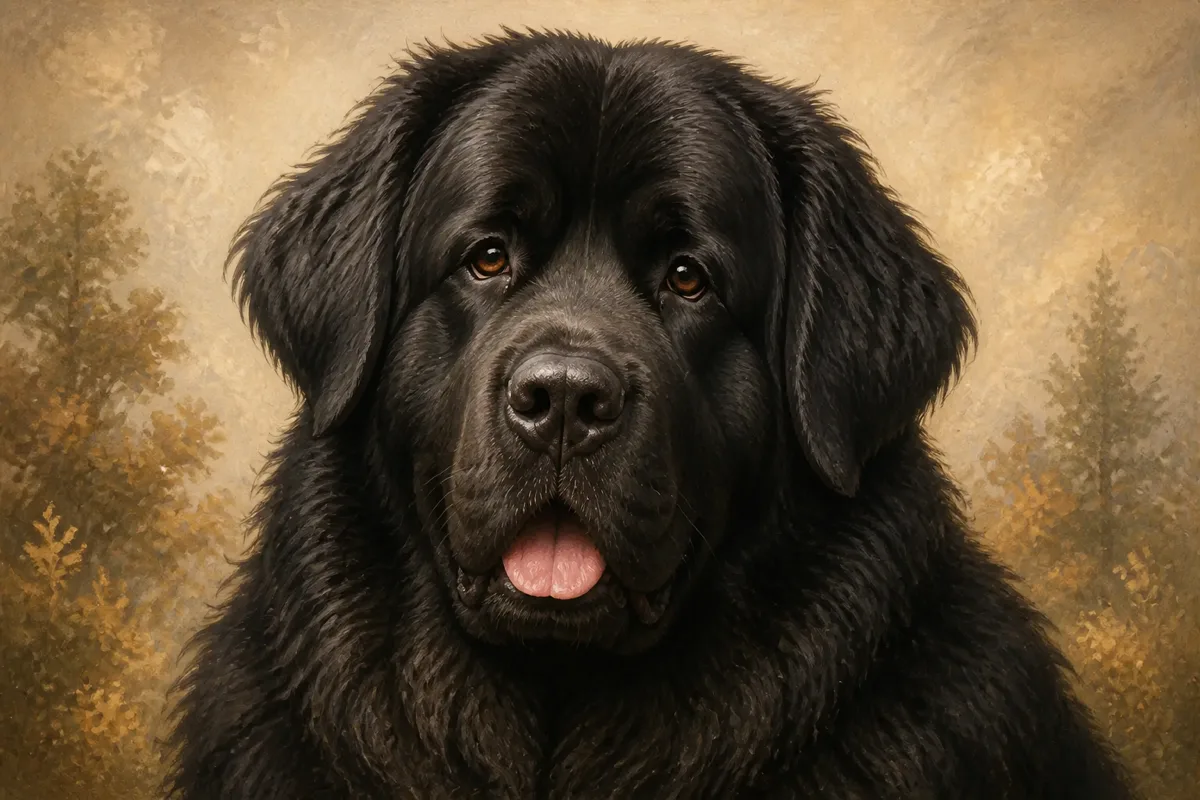
Newfoundland breed illustration

Breed profile

Newfoundland

Also known as Newfie · Newf

  • Working
  • Giant
  • Canada / Newfoundland

Gentle, massive, and famously water-loving, the Newfoundland is a soft-hearted working giant that offers profound devotion — alongside drool, heavy coat care, and giant-breed health realities.

Size
Giant
Weight
100–150 lbs
Lifespan
9–10 years
Origin
Canada / Newfoundland
AKC
Fully recognized

At a glance

How this breed typically shows up day to day.

  • Energy Moderate
  • Shedding High
  • Trainability High
  • Apartment fit Poor

Breed details

Newfoundlands were built for cold water and hard work off Canada’s Atlantic coast — drafting, retrieving, and water rescue — which still shows as swimming joy, gentle giant manners, and a coat that holds half the lake. They are profound family dogs for the right space and climate, and logistical projects for everyone else.

Temperament is typically sweet and people-devoted. Many are patient with respectful children, though size alone makes toddler supervision mandatory. They mature slowly. Train with patience; harshness damages a soft working soul. Drool and lean-ins are part of the deal.

Coat and climate dominate ownership. Heavy shedding, mats, and post-swim towel duty are normal. Heat is poorly tolerated — these are cool-weather dogs that need AC sense in warm regions. Moderate adult exercise and swimming beat forced running on hard surfaces for growing puppies.

Cardiac screening, hips, elbows, cystinuria, and bloat awareness belong in every serious conversation. Lifespan is shorter than many medium breeds; go in with eyes open. Budget for giant-breed care.

Newfs fit families with space, coat tolerance, and cool-climate realism who want a gentle working giant. They are a poor match for hot apartments or shedding-intolerant homes. For the right household, a Newfoundland’s devotion is oceanic.

Temperament

Newfoundlands are typically sweet-natured, patient, and deeply attached to their people. Many are calm with family, polite when well socialized, and happiest when included rather than isolated as yard statues.

They can be sensitive and slow to mature. Patient, consistent training works better than harsh corrections. Drool and lean-ins are part of the love language.

Expect a giant Velcro dog with a rescue-dog heritage still visible in water work.

Exercise needs

Moderate daily exercise suits most adults: walks, swimming, and gentle training games. They are working water dogs historically, not marathon runners, and over-exercising growing puppies is risky.

Swimming is often a favorite. Heat limits activity; cool climates and cooler hours are kinder.

They need space to turn and lie down — apartments are usually a poor fit.

Grooming needs

The dense double coat sheds heavily and mats if ignored. Brush several times weekly; more during seasonal blows. Plan on serious vacuuming and towel duty after water time.

Bathe as needed and dry thoroughly to the skin. Keep ears clean, nails short, and facial folds managed. Drool is real.

Grooming is a major time commitment for this breed.

Common characteristics

Giant, heavily coated water rescue and working dog with a soft expression.

Commonly black, brown, gray, or Landseer (white and black).

Gentle, people-oriented temperament and strong swimming ability.

Significant drool, shedding, and logistical needs.

Common health concerns

Hip and elbow dysplasia, cardiac disease (including subvalvular aortic stenosis in some lines), and cystinuria are important screening topics. Bloat is a risk in deep-chested giants.

Ask for health clearances and talk honestly about longevity. Keep Newfs lean and raise them slowly.

Budget for giant-breed veterinary care.

Children & family suitability

Often excellent with gentle families and respectful children — the classic “nanny” reputation has roots in patience, though size still requires supervision around toddlers.

Best for homes with space, coat tolerance, and readiness for a shorter lifespan than many medium breeds.

Other-pet compatibility

Many live peacefully with other dogs and cats when raised together. Prey drive is usually moderate, but size differences demand careful play management.

A friendly Newf can still overwhelm a small pet accidentally.

Climate considerations

Built for cold water and cool climates. Heat is poorly tolerated — prioritize shade, water, AC in warm regions, and cool-hour exercise.

They generally love cold weather, but wet heavy coats need drying to protect skin.

The honest ledger

Pros and cons

What this breed gives — and what it asks back.

Keep

The upside

  1. 01 Gentle, devoted family giant
  2. 02 Trainable and soft-tempered
  3. 03 Excellent swimming companion
  4. 04 Moderate adult exercise needs

Weigh

The trade-offs

  1. 01 Heavy shedding, drool, and grooming
  2. 02 Short average lifespan
  3. 03 Poor heat tolerance
  4. 04 Needs space; poor apartment fit