
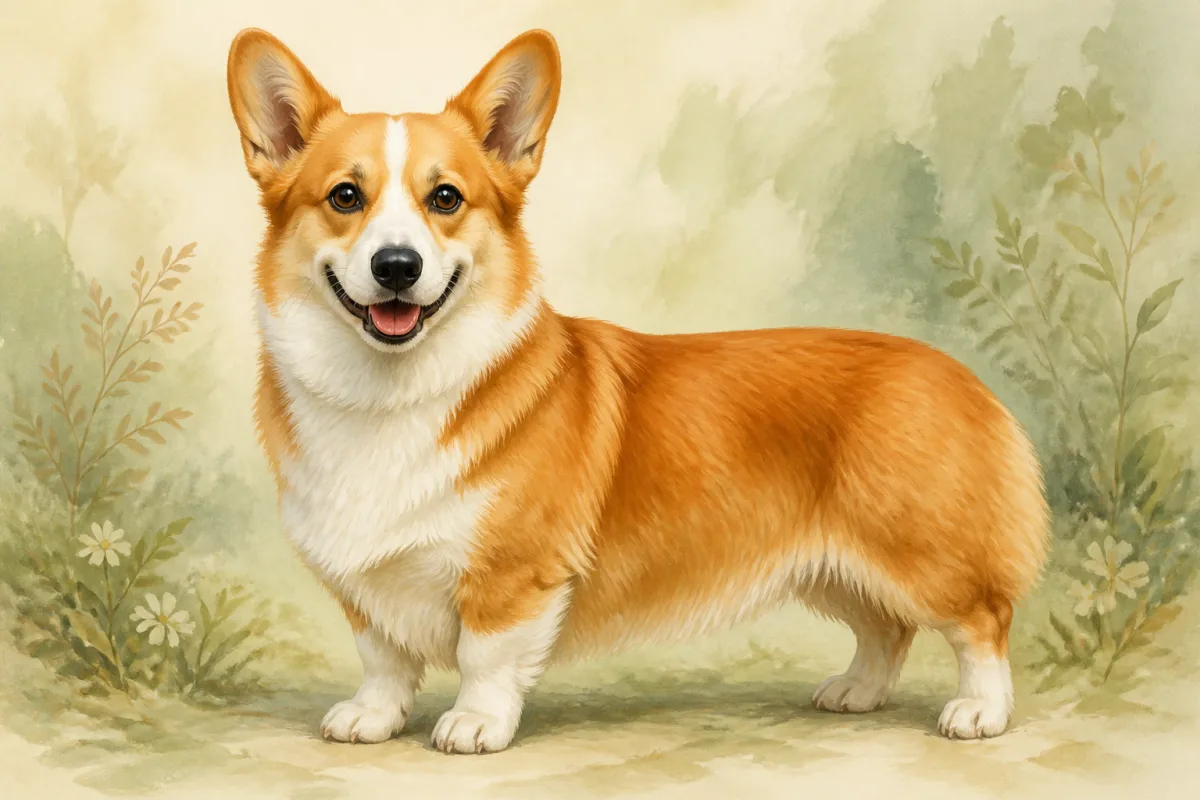
Pembroke Welsh Corgi breed illustration

Breed profile

Pembroke Welsh Corgi

Also known as Pembroke · Corgi

  • Herding
  • Small
  • Wales

Short-legged, big-brained, and famously expressive, the Pembroke Welsh Corgi is a herding dog in a compact package — charming, vocal, and happier with a job than a purely decorative life.

Size
Small
Weight
22–30 lbs
Lifespan
12–13 years
Origin
Wales
AKC
Fully recognized

At a glance

How this breed typically shows up day to day.

  • Energy High
  • Shedding High
  • Trainability High
  • Apartment fit Good

Breed details

Pembroke Welsh Corgis are easy to underestimate. Short legs and meme fame hide a cattle-herding dog with a big voice, a busy brain, and a coat that sheds like it has somewhere to be. People who want a cute low-rider lap dog are often surprised by the energy and opinions.

Bred in Wales to move cattle by working heels, Pembrokes retain herding instincts and an alert, food-motivated cleverness. That makes them highly trainable and also excellent at training their owners. Barking, herding children, and counter interest show up when manners and outlets are missing. They are companionable, but they are not passive.

Daily life should include walks, training games, and back-conscious management. The long body and short legs raise intervertebral disc disease risk, so weight control and jump management are lifelong habits, not occasional worries. Apartments can work if exercise and enrichment are real; “small dog, small needs” is the wrong math.

Grooming is mostly about shedding control. The double coat blows seasonally in impressive volume. Owners who enjoy brushing — or at least accept vacuuming as a hobby — do better than those shocked by Corgi glitter on every dark hoodie.

Choose a Pembroke if you want a smart, entertaining herding companion in a compact footprint and will manage voice, weight, and coat. Look elsewhere if you need silence, low shed, or a truly low-energy dog. Respect the working history, and a Corgi becomes a witty, loyal housemate rather than a frustrated heel-nipper.

Temperament

Pembrokes are bright, affectionate, and often comedic — with a herding dog’s opinions intact. Many are people-oriented, food-motivated, and quick to learn both the behaviors you want and the ones you accidentally reinforce.

Barking, herding heels, and busybody energy are common without training. They bond closely and can be sensitive to isolation or chaotic handling.

Give them structure and outlets, and you get a witty, loyal companion with real working heritage.

Exercise needs

Higher energy than many people expect from a short dog. Daily walks, training games, and play are baseline; many enjoy herding trials, rally, or nose work.

Protect the long back: avoid repetitive jumping on and off furniture, and keep weight firmly in check. Enrichment that uses the brain often settles them better than endless high-impact fetch.

Puppies need measured activity — short sessions, not marathon weekends.

Grooming needs

The double coat sheds a lot, with dramatic seasonal blows. Brush several times weekly; daily during coat change.

Baths as needed. Keep nails short (long nails affect already short-legged gait), check ears, and maintain dental care.

“Corgi glitter” is not a rumor — plan for vacuuming.

Common characteristics

Low, sturdy herding dog with a fox-like expression and typically docked or naturally shorter tail in Pembrokes versus Cardigans.

Common colors include red, sable, fawn, and black-and-tan with white markings.

Vocal, intelligent, and food-driven.

Big personality in a small-to-medium footprint.

Common health concerns

Intervertebral disc disease risk is a major ownership topic because of the elongated back and short legs. Maintain lean weight, limit high-impact jumping, and use ramps where helpful.

Hip dysplasia and eye conditions appear in some lines; ask for relevant screening. Obesity is a common amplifier of orthopedic trouble.

Responsible breeders discuss structure and movement, not only “fluffy cuteness.”

Children & family suitability

Corgis often thrive with active families that will train manners and manage herding nips toward running kids. They can be great with respectful children.

Less ideal for households that want a quiet, low-shedding lap ornament with minimal walks.

Other-pet compatibility

Generally social with other dogs when raised thoughtfully, though herding and bossiness can appear. Cats and small pets need managed introductions because of chase drive.

Supervise play and teach calm greetings early.

Climate considerations

Double coats handle cool weather well. In heat, shorten intense exercise, walk on cooler surfaces, and watch for overheating — short legs put the body closer to hot pavement.

Do not shave the coat as a shortcut; proper brushing and smart scheduling work better.

The honest ledger

Pros and cons

What this breed gives — and what it asks back.

Keep

The upside

  1. 01 Smart and highly trainable
  2. 02 Portable size with big personality
  3. 03 Good apartment potential with exercise
  4. 04 Loyal and entertaining companion

Weigh

The trade-offs

  1. 01 Heavy shedding
  2. 02 Can be barky and herdy
  3. 03 Back-care and weight management required
  4. 04 Higher energy than looks suggest