
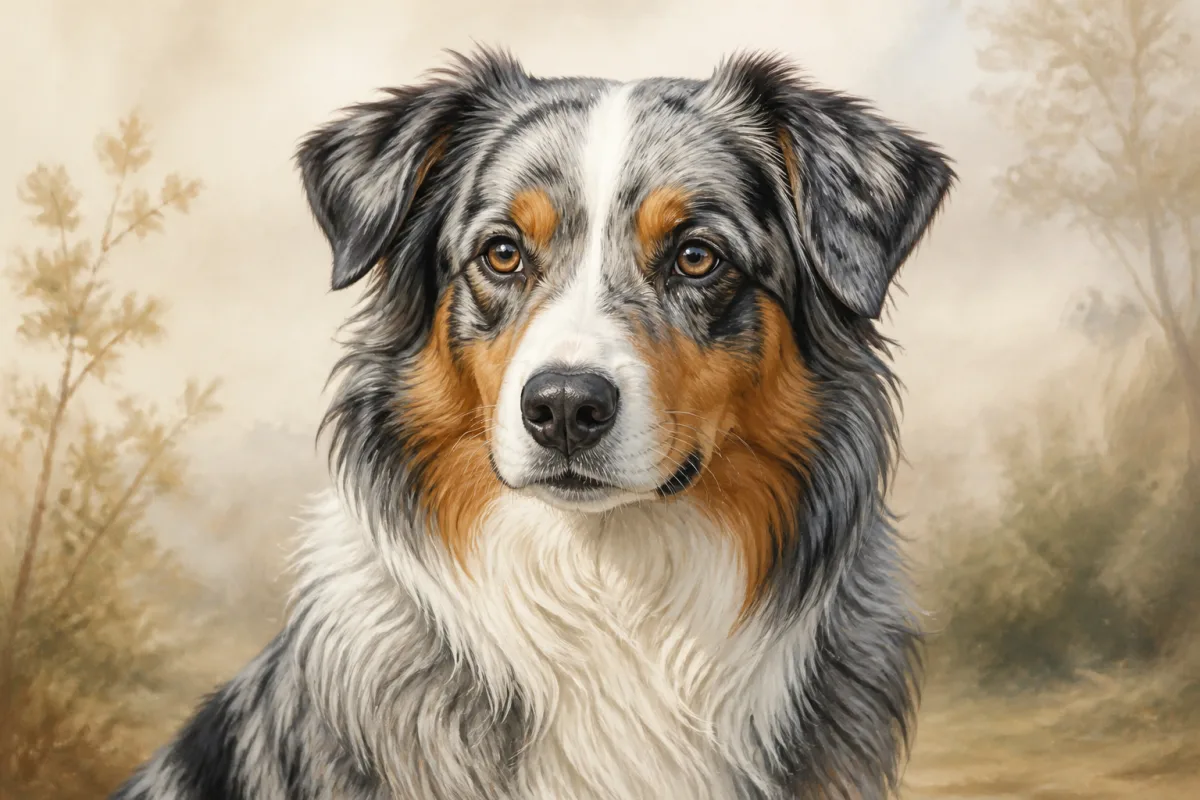
Australian Shepherds are often marketed as colorful family dogs. They are — for families that already live like active training households. Under the merle coat is a herding brain that wants movement, patterns, and a job. Without those, many Aussies invent employment you will not enjoy: heel nipping, fence running, barking, or anxious shadowing.
Despite the name, the modern Australian Shepherd was developed in the United States as a ranch and stock dog. That working history still shapes evenings on the couch: an Aussie that has worked its body and mind can be a soft, affectionate housemate. An Aussie that has only had two polite sidewalk loops often still has opinions and energy left over.
Training is a lifestyle with this breed, not a puppy-class checkbox. They learn fast, bond hard, and notice inconsistencies. Dog sports, advanced obedience, hiking, and structured play are not extras; they are how many Aussies stay mentally well. Coat care is another honesty check — heavy double-coat shedding is part of the package.
Health conversations should include eyes, hips, and MDR1 drug-sensitivity testing where relevant, plus responsible merle breeding practices. Drive and beauty mean nothing if soundness and nerves are ignored. Meet parents when possible and be frank about whether your schedule can support a high-drive herding dog.
Aussies shine with committed, active owners who enjoy training and can provide daily outlets. They are a risky impulse buy for quiet apartments, first-time owners seeking a casual pet, or anyone who wants a low-shedding, low-exercise companion. Matched well, they are brilliant, loyal partners. Matched poorly, they are a beautiful full-time project.