
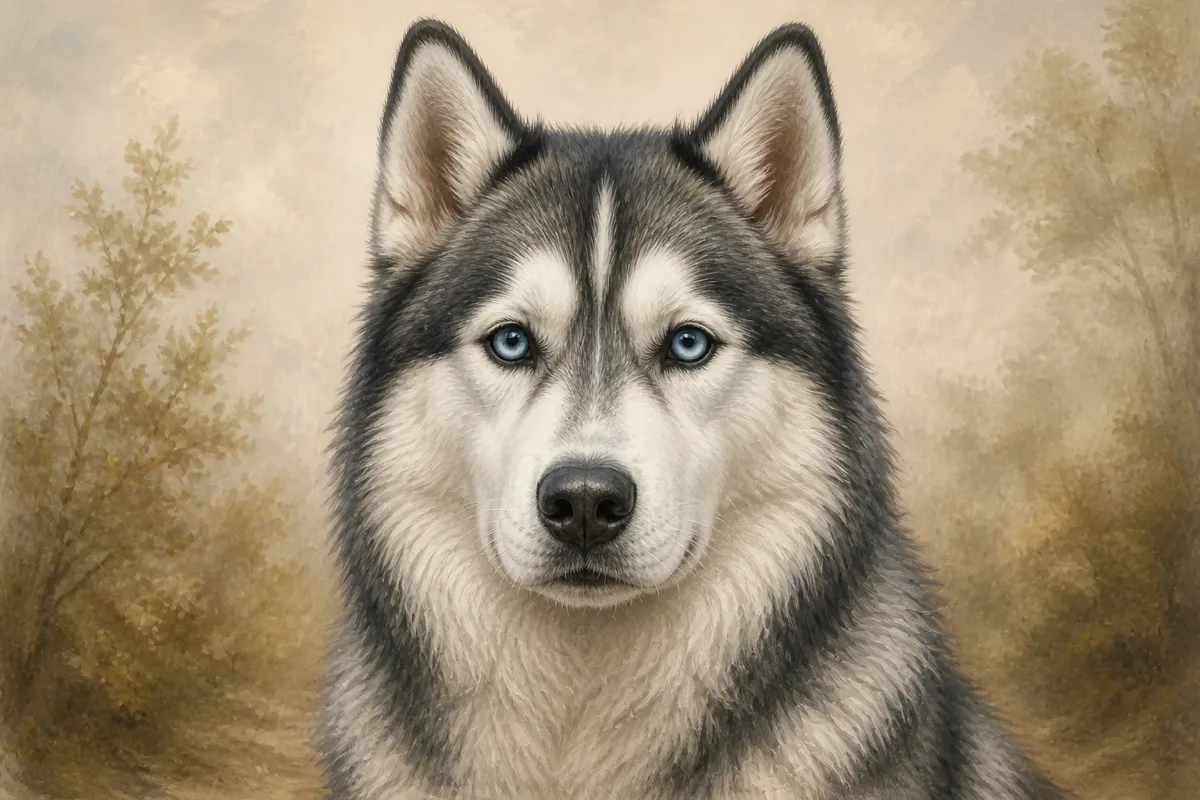
Siberian Husky breed illustration

Breed profile

Siberian Husky

Also known as Husky · Sibes

  • Working
  • Medium
  • Siberia / Russia

Athletic, social, and famously independent, the Siberian Husky is a sled dog built for endurance and pack life — gorgeous on Instagram, demanding in a house that cannot meet exercise and containment needs.

Size
Medium
Weight
35–60 lbs
Lifespan
12–14 years
Origin
Siberia / Russia
AKC
Fully recognized

At a glance

How this breed typically shows up day to day.

  • Energy High
  • Shedding High
  • Trainability Moderate
  • Apartment fit Poor

Breed details

Siberian Huskies were bred by the Chukchi people of Siberia as endurance sled dogs — social, efficient travelers built to run. That history still collides with modern suburbia: people fall for the wolfish face, then discover escape artistry, selective hearing, and a coat that redecorates the house twice a year.

Good Husky homes already live outdoors. Long runs, skijoring, canicross, hiking, and pack walks are closer to the breed’s design than two polite loops around the block. Under-exercised Huskies dig, howl, chew, and leave. Secure fencing is not optional theater; many are skilled climbers and diggers.

Temperament is usually friendly and pack-oriented rather than one-person clingy or heavy-handed guardian. They often love people and dogs more than they love precision obedience. Training works with realistic goals: manners yes, bombproof off-leash recall in open spaces rarely. Prey drive toward small animals deserves honest assessment.

Coat care is volume work. Seasonal blows are dramatic; shaving for summer is a poor default. Heat is harder on them than cold — cool-hour exercise, shade, water, and indoor cooling matter in warm climates. Eye screening and hip evaluations belong in responsible breeding conversations.

Choose a Siberian if you want an athletic northern partner and can contain, exercise, and vacuum accordingly. Look elsewhere for apartments, hot sedentary lifestyles, or owners needing a reliable off-leash obedience dog. Matched well, Huskies are joyful endurance companions. Matched poorly, they are beautiful full-time escape projects.

Temperament

Huskies are friendly, outgoing, and often more pack-oriented than one-person clingy. Many are mischievous, vocal (talking and howling more than sharp guarding barks), and selectively obedient when a scent or adventure calls.

They were bred to run and make decisions in harness, not to wait politely for cues like a retriever. Training works, but expectations should be honest: reliability off-leash in open areas is uncommon.

They usually love people and other dogs more than they love being backyard ornaments.

Exercise needs

High endurance needs: long runs, hikes, skijoring, canicross, or vigorous play — often daily. A under-exercised Husky digs, howls, chews, and escapes.

Mental enrichment helps, but does not replace aerobic work. Secure fencing is mandatory; many are skilled jumpers, diggers, and climbers.

Puppies need managed exercise; adults need a lifestyle that already includes serious outdoor time.

Grooming needs

The dense double coat sheds heavily and “blows” dramatically once or twice a year. Brush often; daily during coat change. Expect hair everywhere.

Bathe sparingly unless dirty — over-bathing can strip oils. Keep nails short and check paws after winter salt or rough trails.

Do not shave the coat for summer; it provides insulation against heat and cold when properly maintained.

Common characteristics

Medium, athletic northern sled dog with erect ears and a brush tail.

Wide variety of coat colors and striking eye colors, including blue, brown, or parti-colored.

Friendly, independent, and escape-prone.

Built for cold-weather endurance work, not solitary guardian duty.

Common health concerns

Eye disorders (including cataracts and corneal dystrophy in some lines) and hip dysplasia are common screening topics. Zinc-responsive dermatosis and other coat/skin issues appear in some dogs.

Ask breeders for clearances and discuss exercise-related injury prevention for high-mileage athletes.

Keep Huskies lean; excess weight is hard on working joints and heat tolerance.

Children & family suitability

Can be wonderful with active families that understand escape risk, shedding, and training realism. They often enjoy children when play is supervised.

A poor match for apartments, hot climates without a serious exercise plan, or owners seeking a reliable off-leash obedience dog.

Other-pet compatibility

Often social with dogs, especially when raised in a pack-like household. Prey drive toward small animals can be strong — cats and pocket pets need careful, honest assessment.

Never assume “friendly breed” equals safe with running small pets.

Climate considerations

Bred for cold. They generally love winter and struggle more in heat and humidity — exercise at cool hours, provide shade, water, and never leave them in hot cars or poorly ventilated spaces.

They are poor outdoor-only dogs in warm climates; indoor cooling matters.

The honest ledger

Pros and cons

What this breed gives — and what it asks back.

Keep

The upside

  1. 01 Athletic endurance partner
  2. 02 Friendly and pack-oriented
  3. 03 Striking appearance
  4. 04 Generally good with people

Weigh

The trade-offs

  1. 01 High exercise and escape risk
  2. 02 Heavy seasonal shedding
  3. 03 Independent / challenging recall
  4. 04 Poor heat and apartment fit for most homes