
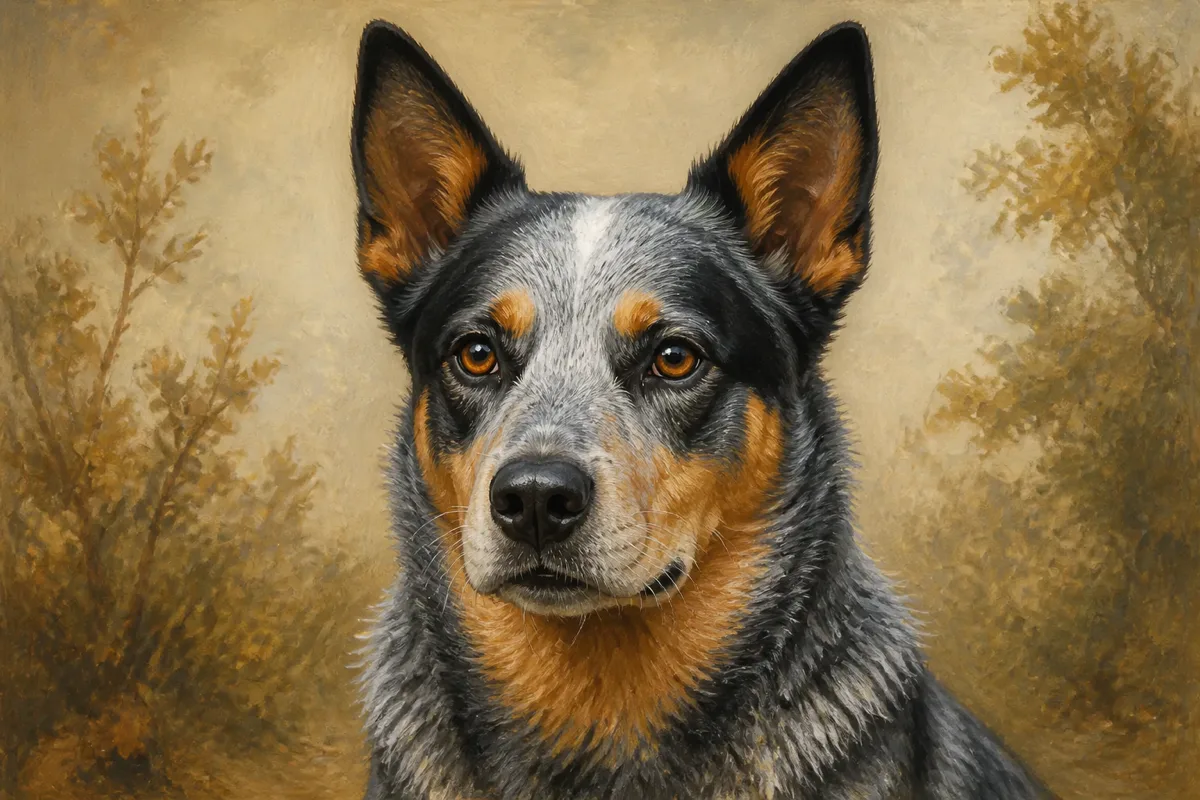
Australian Cattle Dog breed illustration

Breed profile

Australian Cattle Dog

Also known as Blue Heeler · Red Heeler · ACD · Heeler

  • Herding
  • Medium
  • Australia

Tough, tireless, and intensely loyal, the Australian Cattle Dog is a working heeler that thrives on jobs — and can become a nippy, restless problem in under-stimulated pet homes.

Size
Medium
Weight
35–50 lbs
Lifespan
12–16 years
Origin
Australia
AKC
Fully recognized

At a glance

How this breed typically shows up day to day.

  • Energy Very High
  • Shedding Moderate
  • Trainability High
  • Apartment fit Poor

Breed details

Australian Cattle Dogs — blue and red heelers — were forged to move cattle across rough Australian country with toughness, bite, and brains. That job description does not retire when the dog moves to a suburb. Understimulated heelers invent employment: nipping heels, chasing cars, shredding drywall, or obsessively patrolling fences.

They are intensely loyal and often reserved with strangers. Training and jobs are not optional enrichment; they are how many Cattle Dogs stay mentally well. Agility, herding, advanced obedience, running, and problem-solving work better than hoping a backyard tire them out alone. Puppies need measured exercise so drive does not trash developing joints.

Coat care is relatively simple. Hearing testing (BAER), eyes, and hips matter in breeding programs, especially with white markings linked to deafness risk in some dogs. Keep them lean and conditioned. Ethical breeders prioritize nerves as much as color.

Family success depends on teaching alternate behaviors to herding kids and bikes early. This is a poor first dog for most casual owners and a poor apartment dog without an extreme plan.

Choose an Australian Cattle Dog if you want a serious working partner and will train daily. Look elsewhere for a low-key pet. Matched well, heelers are courageous, brilliant, and almost endlessly capable. Matched poorly, they are a beautiful full-time crisis.

Temperament

Cattle Dogs are sharp, courageous, and deeply bonded to their people. Many are reserved with strangers and serious about work. Heel-nipping heritage still shows up as herding children, bikes, and other pets if untrained.

They are not casual companion dogs. Without daily jobs, many become destructive, noisy, or obsessive. With training sports, ranch work, or advanced obedience, they are extraordinarily capable partners.

Temperament quality and drive vary — meet parents and be honest about your schedule.

Exercise needs

Very high physical and mental needs. Plan on serious daily work: herding, agility, running, hiking, advanced training, and problem-solving games. Neighborhood strolls rarely suffice.

Mental fatigue is mandatory. A Cattle Dog that has only burned legs often still has a busy brain and a plan you will not like.

Protect growing joints with measured puppy exercise.

Grooming needs

The weather-resistant short double coat sheds moderately year-round and more seasonally. Weekly brushing helps; expect seasonal blows.

Bathe as needed. Check paws after rough terrain. Nail, ear, and dental care complete the basics.

Coat care is simple relative to the training commitment.

Common characteristics

Compact, muscular herding dog bred to drive cattle by heeling.

Blue or red speckled/mottled coats, often with masks and markings.

High drive, high trainability, and strong loyalty.

Requires experienced, active ownership.

Common health concerns

Hip dysplasia, progressive retinal atrophy, and deafness (especially in heavily white-marked dogs) are important screening topics. Ask about BAER testing where relevant.

Keep Cattle Dogs lean and conditioned. Working injuries happen — warm up and condition thoughtfully.

Ethical breeders prioritize nerves and soundness, not only flashy color.

Children & family suitability

Can be outstanding with active, training-oriented families. They may try to herd running kids — teach alternate behaviors early and supervise.

A poor match for sedentary homes, first-time owners seeking an easy pet, or apartments without an extreme exercise plan.

Other-pet compatibility

Variable. Many live with other dogs when raised carefully; herding and chase instincts complicate life with cats and small pets.

Train impulse control deliberately and supervise always.

Climate considerations

Tough coats handle varied weather, but heat still demands sensible scheduling, water, and shade during intense work.

They are working partners that need recovery and indoor rest — not endless outdoor exile.

The honest ledger

Pros and cons

What this breed gives — and what it asks back.

Keep

The upside

  1. 01 Extremely trainable working partner
  2. 02 Loyal and courageous
  3. 03 Long working lifespan potential
  4. 04 Thrives with purposeful jobs

Weigh

The trade-offs

  1. 01 Very high exercise and mental needs
  2. 02 Can nip and herd children
  3. 03 Poor apartment fit for most homes
  4. 04 Too intense for casual pet ownership