
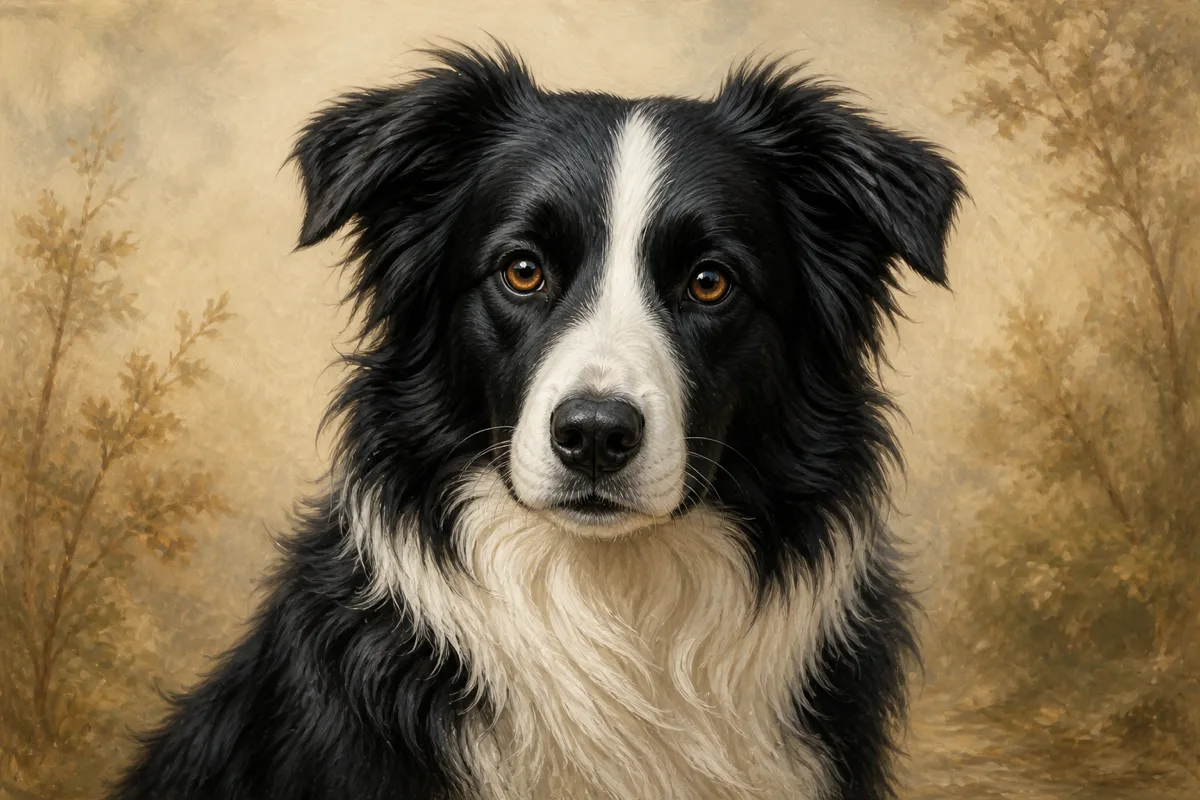
Border Collie breed illustration

Breed profile

Border Collie

  • Herding
  • Medium
  • UK

Often called the world’s smartest dog, the Border Collie is a high-drive herding athlete that thrives on work — and can unravel in homes that offer only casual walks and weekend affection.

Size
Medium
Weight
30–55 lbs
Lifespan
12–15 years
Origin
UK
AKC
Fully recognized

At a glance

How this breed typically shows up day to day.

  • Energy Very High
  • Shedding Moderate
  • Trainability High
  • Apartment fit Poor

Breed details

Border Collies sit at the extreme end of canine focus. Bred on the England–Scotland border to move sheep with eye, stance, and intelligence rather than sheer force, they still treat motion as a job opportunity. That brilliance is why they dominate herding trials and dog sports — and why casual pet homes so often struggle.

Day-to-day life works when the dog has purposeful work: herding, agility, advanced obedience, scent games, or long structured adventures with a handler who enjoys training. A Border Collie that only gets polite sidewalk loops often invents employment — staring, stalking, barking, obsessive fetch, or anxious shadowing. Intelligence without outlets is not a personality quirk; it is a welfare problem.

They bond tightly and notice inconsistencies. Soft, clear training usually outperforms heavy-handed methods, but “soft” does not mean unstructured. These dogs need rules, jobs, and rest skills. Line differences matter: working-bred dogs can feel like a different species from calmer companion lines, though low drive is still relative.

Health conversations should include hips, eyes (including CEA), and epilepsy awareness, plus MDR1 testing where relevant. Keep them lean and protect growing joints. Obsessive behaviors sometimes need a trainer and veterinary partnership, not endless tennis balls that reinforce fixation.

Choose a Border Collie if you want a working partner and already live like a training household. Look elsewhere if you want an easy family pet for short walks and long Netflix nights. Matched well, few breeds offer a more responsive partnership. Matched poorly, few breeds unravel a household faster.

Temperament

Border Collies are intense, brilliant, and deeply focused. Many bond tightly to their handlers and notice every movement — livestock, children, joggers, leaves. That focus is the breed’s genius and its daily management challenge.

They are not casual pets. Without purposeful work, many become restless, obsessive, barky, or anxious. With training sports, herding, or advanced obedience, they are extraordinarily responsive partners.

Temperament and drive vary by line; working-bred dogs often need more outlet than companion-bred ones, but “low drive Border Collie” is still a relative phrase.

Exercise needs

Very high physical and mental needs. Plan on serious daily work: herding, agility, advanced training, long runs or hikes, plus problem-solving games. Neighborhood strolls rarely suffice.

Mental fatigue matters as much as mileage. A Border Collie that has only burned legs often still has a busy brain. Structure and jobs prevent the “stare, stalk, invent chaos” loop.

Protect growing joints in puppies with short, frequent sessions rather than endless hard play.

Grooming needs

The double coat sheds moderately year-round and more seasonally. Brush several times a week; more during coat change. Rough and smooth coats both need routine care.

Bathe as needed. Check ears, keep nails short, and maintain dental care. Feathering can collect burrs after fieldwork.

Coat care is manageable; energy management is the harder ownership task.

Common characteristics

Medium athletic herding dog with a keen, focused expression.

Typically black and white, though many colors and patterns exist.

Exceptional trainability and work ethic; thrives on having a job.

Sensitive and movement-obsessed; can struggle with under-stimulation.

Common health concerns

Hip dysplasia, eye disorders (including CEA — collie eye anomaly — and progressive retinal issues in some lines), and epilepsy appear in breed health conversations. Ask for relevant screening.

MDR1 drug-sensitivity mutations can occur in related herding breeds; discuss testing where appropriate.

Keep the dog lean and conditioned. Obsessive behaviors sometimes need behavioral and veterinary partnership, not just “more fetch.”

Children & family suitability

Can be outstanding with active, training-oriented families. They may try to herd running children — teach alternate behaviors early and supervise play.

A poor match for sedentary homes, first-time owners seeking an easy pet, or apartments without an extreme exercise plan.

Other-pet compatibility

Many live with other dogs when socialized, though herding and chase instincts complicate life with cats, livestock pets, or anything that runs.

Train impulse control deliberately; do not rely on intelligence alone to equal automatic manners.

Climate considerations

Double coats handle cool weather well. In heat, schedule intense work for cooler hours, offer water and shade, and watch for overheating.

Do not shave the coat as a heat shortcut without professional guidance — brushing and smart scheduling are safer defaults.

The honest ledger

Pros and cons

What this breed gives — and what it asks back.

Keep

The upside

  1. 01 Exceptionally trainable and versatile
  2. 02 Thrives with purposeful work and sports
  3. 03 Loyal, handler-focused partner
  4. 04 Brilliant problem-solver

Weigh

The trade-offs

  1. 01 Very high exercise and mental needs
  2. 02 Can become obsessive if underworked
  3. 03 Poor apartment fit for most homes
  4. 04 May herd children and chase movement