
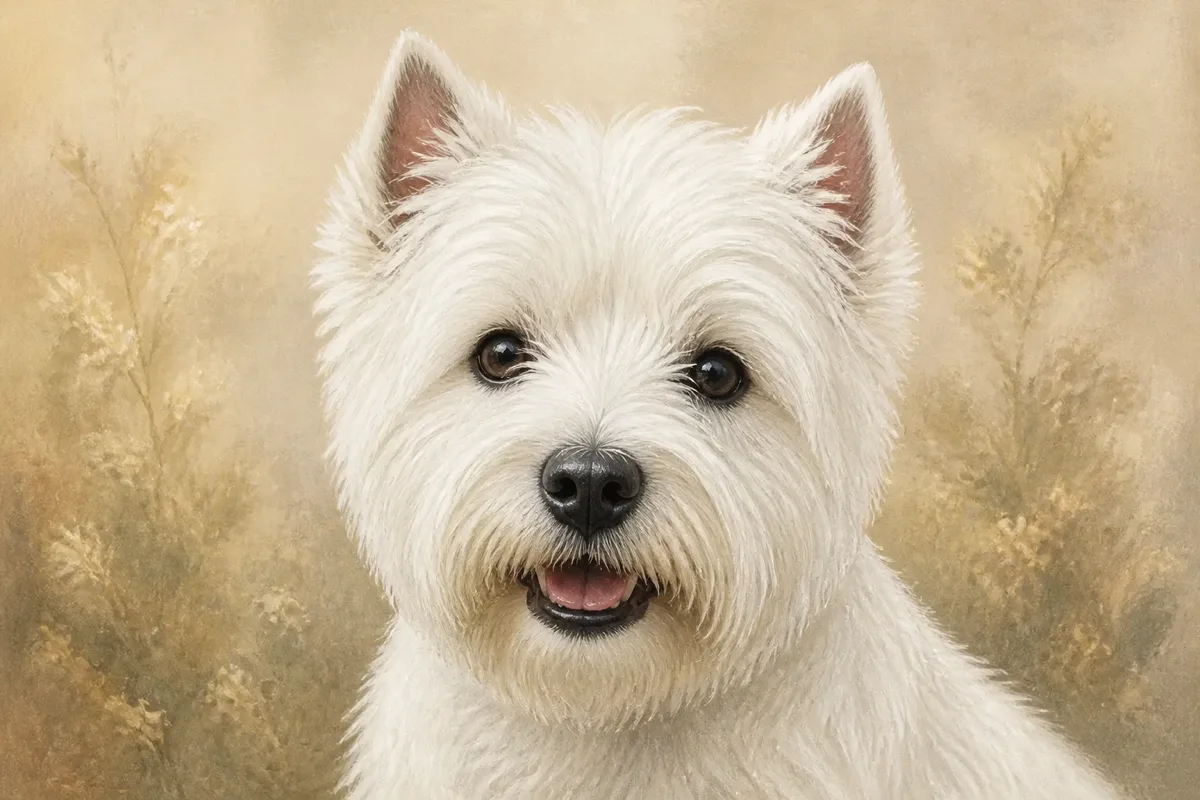
West Highland White Terrier breed illustration

Breed profile

West Highland White Terrier

Also known as Westie

  • Terrier
  • Small
  • Scotland

Hardy, confident, and snow-white, the West Highland White Terrier is a true terrier in a compact package — charming with training, stubborn without it, and happiest when allowed to use its brain and nose.

Size
Small
Weight
15–20 lbs
Lifespan
13–15 years
Origin
Scotland
AKC
Fully recognized

At a glance

How this breed typically shows up day to day.

  • Energy High
  • Shedding Low
  • Trainability Moderate
  • Apartment fit Good

Breed details

West Highland White Terriers are Scottish vermin hunters wearing a white jacket. Under the cute face is true terrier software: confidence, prey drive, and opinions. People who want a fluffy yes-dog are often surprised; people who like a sturdy small character usually stay.

Daily life should include walks, sniffing, and manners training around barking. Westies dig and chase when opportunities appear. They do well in apartments when exercise and voice management are real. Coat care — clipping or hand-stripping plus regular brushing — maintains the harsh jacket and the low-shed reputation. White coats show everything; skin allergies are a frequent ownership conversation.

Training works in short, upbeat sessions. Consistency beats lectures. Supervise around small pets and teach kids that terrier play is not endless grabby chaos. Keep them lean; itchy, overweight Westies are miserable Westies.

Ask breeders about skin history and orthopedic soundness. Partner with a vet early if itching becomes chronic rather than cycling through endless over-the-counter guesswork.

Westies fit households that want a bold compact companion and will groom and train like terrier people. They are a weaker choice for quiet-obsessed homes or anyone with unsupervised pocket pets. Respect the hunt in their history, and a Westie becomes a hardy, entertaining partner.

Temperament

Westies are spirited, self-assured, and often comically stubborn. Many are affectionate with their people, alert to household sounds, and ready to investigate anything that moves like prey.

Terrier independence means training takes consistency and short, upbeat sessions. Early manners around barking and leash walking pay off for years.

Expect a busy little character, not a passive lap ornament.

Exercise needs

Daily walks, play, and sniffing adventures meet most needs, with extra zest for training games. They have more energy than their size suggests.

Without outlets, barking and busybody behavior increase. Secure yards help — many Westies will dig or chase.

Keep play fair around larger dogs; confidence can outrun safety.

Grooming needs

The harsh white coat is low-shedding when properly maintained, but needs regular brushing plus clipping or hand-stripping. Professional grooming every 4–8 weeks is common.

White coats show dirt and may need more frequent baths than darker terriers. Keep ears clean and prioritize dental care.

Skin allergies are a practical ownership topic for many Westies — coat care and vet partnership go together.

Common characteristics

Small, sturdy white terrier with a harsh outer coat and shorter furnishings on the face.

Alert, confident temperament with classic terrier prey drive.

Lower shedding than many breeds, with higher coat-maintenance needs.

Big personality in a compact Scottish package.

Common health concerns

Skin allergies and chronic itching are widely discussed in the breed. Orthopedic issues such as Legg-Calve-Perthes and luxating patellas appear in some dogs; jaw and dental concerns also matter.

Ask breeders about skin history in the line. Keep Westies lean and work with a veterinarian early on dermatology issues.

White coats can sunburn on thin-haired areas — use common sense outdoors.

Children & family suitability

Often excellent with families that will train manners and respect terrier nature. Sturdy enough for careful play with respectful kids.

Best when someone enjoys grooming routines or budgets for a groomer.

Other-pet compatibility

Many live with other dogs when socialized, though terrier sparring can appear. Prey drive toward small pets is a real risk.

Cats may work with careful introductions — or may become unfinished business. Assess honestly.

Climate considerations

Generally adaptable. In heat, avoid midday intensity. In wet weather, dry the coat thoroughly to protect skin.

Clip style can affect comfort; ask a groomer about practical trims for your climate.

The honest ledger

Pros and cons

What this breed gives — and what it asks back.

Keep

The upside

  1. 01 Confident compact companion
  2. 02 Lower shedding with proper coat care
  3. 03 Good apartment watchdog size
  4. 04 Entertaining terrier personality

Weigh

The trade-offs

  1. 01 Can be stubborn and barky
  2. 02 Regular grooming often needed
  3. 03 Skin allergy awareness common
  4. 04 Prey drive toward small animals