
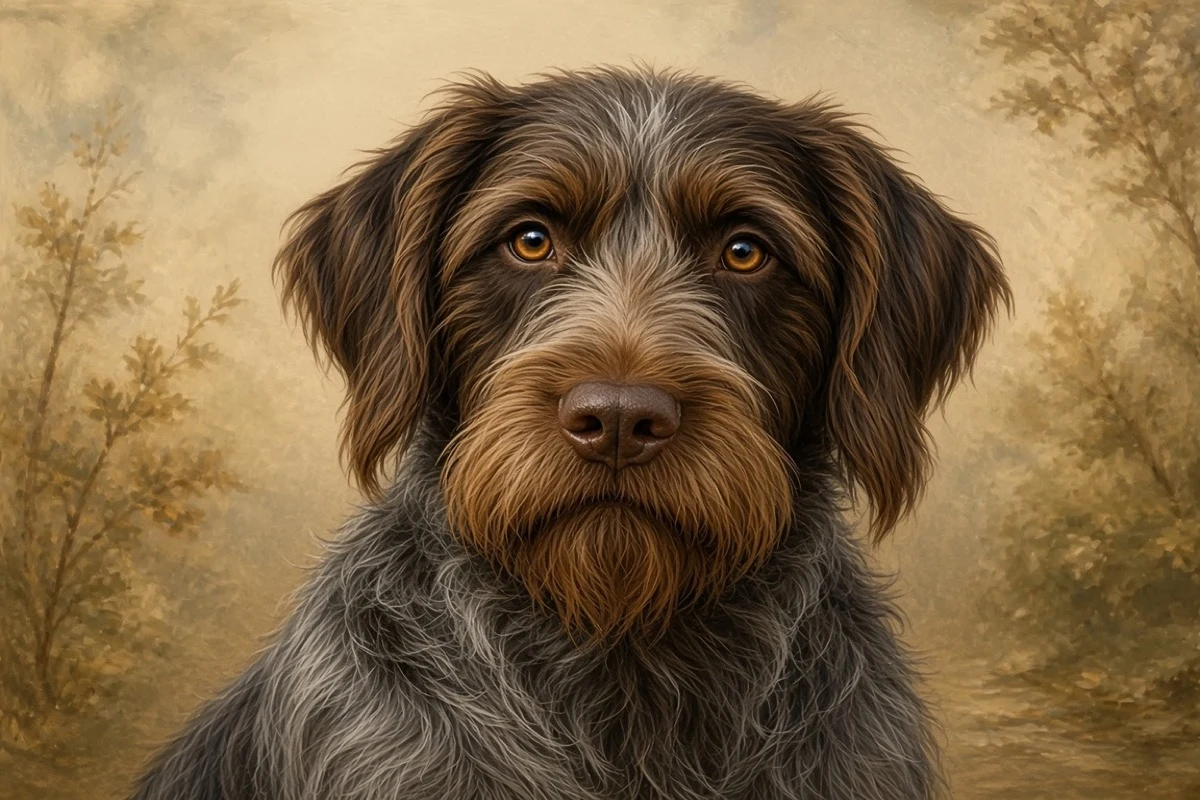
Wirehaired Pointing Griffon breed illustration

Breed profile

Wirehaired Pointing Griffon

Also known as Griffon · Korthals Griffon

  • Sporting
  • Medium
  • Netherlands / France

A versatile, weatherproof pointing breed with a distinctive wiry coat, the Wirehaired Pointing Griffon thrives with hunters and outdoor families who can give it real fieldwork — not just a weekend walk.

Size
Medium
Weight
50–70 lbs
Lifespan
12–15 years
Origin
Netherlands / France
AKC
Fully recognized

At a glance

How this breed typically shows up day to day.

  • Energy High
  • Shedding Low
  • Trainability High
  • Apartment fit Fair

Breed details

Wirehaired Pointing Griffons were built as versatile gun dogs for rough cover and wet weather — find, point, and retrieve without needing a wardrobe change between tasks. The steel-gray wiry coat and expressive beard are not fashion; they are field equipment that still needs owner maintenance.

Griffons tend to be affectionate and softer-handled than some flashier pointers, which makes them rewarding training partners for hunters and outdoor families. Under-exercised Griffons do not become decorative sofa dogs — they become restless projects. Plan on real daily outlets: fieldwork, hiking, swimming, and scent games.

Coat work is the honesty check. Hand-stripping or professional grooming keeps the harsh texture that sheds water and debris; neglect leaves mats and a softer jacket. Facial furnishings collect the day’s adventures, so wipe-downs after fieldwork are practical hygiene.

Ask breeders about hips, eyes, and temperament in working lines. Keep adults lean for joints and stamina. Choose a Griffon if you want a weatherproof sporting partner and will train the dog you bought for cover. Look elsewhere for a low-exercise apartment pet. Matched well, Griffons are loyal, capable, and quietly excellent in the field.

Temperament

Griffons are typically eager, affectionate, and keen to work with their people. Many are softer than flashier pointing breeds — responsive to fair training and happiest when included in outdoor plans.

They were built as versatile gun dogs: find, point, and retrieve in rough cover. That heritage shows up as stamina, nose drive, and a preference for purposeful activity over idle backyard life.

Early socialization keeps confidence high around new dogs, birds, and environments without tipping into overexcitement.

Exercise needs

High daily needs: long walks, hiking, swimming, field work, and retrieve games. A bored Griffon invents projects involving digging, chewing, or restless pacing.

Mental work — scent games, training drills, and pointing practice — settles them as much as mileage.

Protect growing joints in puppies with short, frequent sessions rather than endless hard play.

Grooming needs

The harsh wiry coat needs regular brushing and periodic hand-stripping or professional grooming to keep texture and weather resistance. Skipping coat work leaves mats and a soft, less functional jacket.

Facial furnishings collect debris after fieldwork — wipe the beard and check ears routinely. Shed is relatively low for a sporting dog when the coat is maintained correctly.

Keep nails trimmed and teeth cleaned as part of the baseline routine.

Common characteristics

Medium sporting dog with a distinctive steel-gray and brown wiry coat, bushy eyebrows, and beard.

Built for rough cover and wet weather — a true all-terrain pointing companion.

Typically affectionate, trainable, and people-oriented when given a job.

Strong nose and retrieving drive with a softer handling style than some continental pointers.

Common health concerns

Hip dysplasia, eye conditions, and ear infections (especially after water work) appear in breed health conversations. Ask for relevant orthopedic and eye clearances.

Keep Griffons lean to support joints and stamina. Field dogs may face higher injury risk — condition gradually and check paws after rough terrain.

Choose breeders who prioritize sound temperament and working ability alongside health testing.

Children & family suitability

Often excellent with active families that hunt, hike, or train regularly. They usually enjoy children when play is supervised and manners are taught early.

Less ideal for sedentary homes, heavy-shed intolerance (if coat is neglected), or anyone wanting a low-exercise apartment pet.

Other-pet compatibility

Generally good with other dogs when socialized. Bird and small-animal interest can be strong — manage accordingly.

Cats often succeed with early respectful introductions and solid impulse control around chase.

Climate considerations

The wiry coat handles cool and wet weather well when maintained. In heat, schedule intense work for cooler hours and watch for overheating.

Dry ears and furnishings thoroughly after water work to reduce infection risk.

The honest ledger

Pros and cons

What this breed gives — and what it asks back.

Keep

The upside

  1. 01 Versatile, trainable sporting companion
  2. 02 Weatherproof coat when maintained
  3. 03 Affectionate and people-oriented
  4. 04 Strong nose and field ability

Weigh

The trade-offs

  1. 01 High exercise and mental needs
  2. 02 Coat requires stripping or pro grooming
  3. 03 Can be restless if underworked
  4. 04 Not a casual apartment pet for most homes