
Puppy food is growth fuel with a deadline. Brains, bones, and appetite are all under construction, and the bag that worked for your last adult dog may not be the right construction crew. This guide sits under our Complete Guide to Dog Food & Treats — focused on complete puppy formulas, what “growth” on an AAFCO statement means, and how to introduce toppers without turning dinner into a dessert identity crisis.
Also useful nearby: how to choose dog food, how to transition, and training treats for soft bits that will not blow the calorie budget.
Who this guide is for
New puppy households, fosters rotating young dogs, and anyone staring at “all life stages” versus “puppy” labels like they are astrology. You want a complete growth formula, a sensible feeding schedule, and a plan for when the puppy discovers that begging is a career.
Growth fuel beats marketing buzzwords
Look past “farm-raised vibes” and find an AAFCO nutritional adequacy statement for growth (or all life stages, which includes growth). Many puppy formulas highlight DHA from fish oil for developing brains and vision — helpful marketing when it matches a complete diet, not a substitute for one. Calories per cup matter: growing dogs need enough energy, but free-feeding “until round” is not a personality trait worth cultivating.
Small-breed and large-breed puppies are not identical projects. Large-breed growth often benefits from formulas and feeding rates designed to support steady development rather than a race to adult size — your veterinarian is the right partner for breed-specific pacing, especially for giant breeds. This guide stays high-level: buy growth-appropriate food, measure portions, and recheck body condition as the puppy stretches.
Dry puppy formulas that earn the bowl
Approachable trial size: Blue Buffalo Life Protection Puppy Chicken — a 5lb bag is kinder than a warehouse sack when you are still learning how hard this puppy vacuum-eats. Chicken-forward, puppy-labeled, and easy to find.
Size-minded medium puppy pick: Royal Canin Puppy Dry (Medium) — breed-size lines exist because kibble shape, energy density, and growth curves are not one-size-fits-all. Medium is a common household lane; confirm the bag matches your puppy’s expected adult size band.
If you later move toward adult maintenance, use a proper transition — see How to Transition Dog Food. Wet vs. dry preferences for picky puppies: Wet Food vs. Dry Food.
Toppers, carefully
Freeze-dried mixers can make a new formula smell like a party. Use a light sprinkle of Stella & Chewy’s Chicken Meal Mixers and subtract those calories from the daily total. Toppers are seasoning, not a second complete diet stacked on the first. Pill-time helpers like Greenies Pill Pockets belong in the medicine routine, not as unlimited snacks.
Treats without derailing growth math
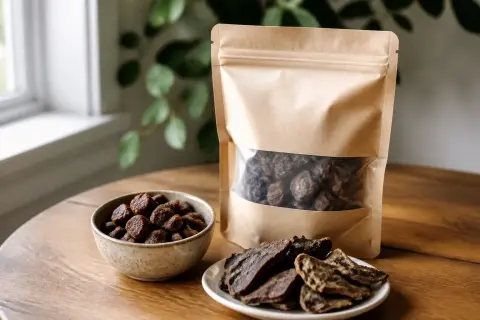
Training a puppy means soft, tiny reinforcers delivered fast. Blue Buffalo Bits are easy to break down. Save denser jackpots like Vital Essentials Beef Liver for harder outdoor lessons. Count every bit toward the day. Full treat strategy: Best Dog Treats for Training.
Transition note for new arrivals
Shelter and breeder food changes are common stress. Keep the first few days as close as practical to what the puppy already ate, then shift over 7–10 days (longer if stools go soft). Sudden bag swaps plus new home plus new schedule is a lot of plot twists for one small digestive system.
Practical tips
- Weigh the puppy periodically; adjust scoops as growth changes
- Free-feeding invites both overeating and “who ate the training treats on the counter”
- Fresh water always; wet mix-ins increase moisture but also calories
- Ask your vet before specialty diets (grain-free, limited ingredient) for young puppies — see also grain-free and LID caveats
Our recommendations
Shop food & treats. Links may earn a commission — advertising disclosure.
- Blue Buffalo Life Protection Puppy — Solid trial-size growth formula.
- Royal Canin Puppy Medium — Size-banded puppy nutrition.
- Stella & Chewy’s Mixers — Light topper for picky transition days.
- Blue Buffalo Bits — Soft training paychecks.