
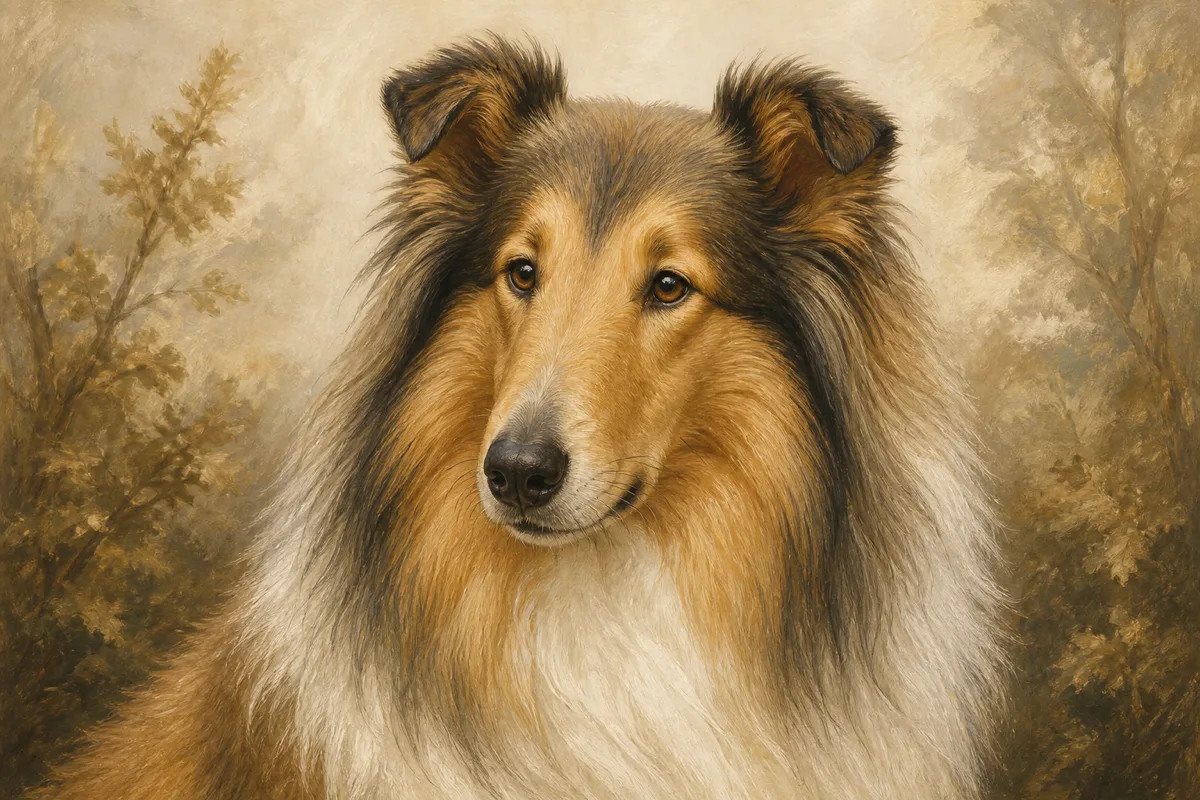
Collie breed illustration

Breed profile

Collie

Also known as Rough Collie · Lassie Collie

  • Herding
  • Large
  • Scotland

Elegant, sensitive, and famously devoted, the Rough Collie is a herding companion that offers trainability and loyalty — alongside heavy coat care and a tendency to announce the world.

Size
Large
Weight
50–75 lbs
Lifespan
12–14 years
Origin
Scotland
AKC
Fully recognized

At a glance

How this breed typically shows up day to day.

  • Energy Moderate
  • Shedding High
  • Trainability High
  • Apartment fit Fair

Breed details

Rough Collies carry one of the most recognizable silhouettes in dogdom — and a softer working tempo than Border Collies behind the Lassie myth. Developed in Scotland as herding and farm companions, they offer devotion, trainability, and sensitivity, with coat care and vocal alertness as the fine print.

Day-to-day life usually includes moderate exercise, training games, and a lot of household inclusion. Many Collies are gentle with family and reserved with strangers when socialized. They notice tone; harsh handling backfires. Barking at novelty is common — train an “enough” early rather than hoping elegance equals silence.

The Rough coat is a lifestyle. Brushing prevents mats in the mane and britches; seasonal shedding is heavy. Smooth Collies share temperament themes with less coat volume. Either way, keep them lean — fluff hides weight until joints complain.

CEA, MDR1 drug sensitivity, and hip evaluations are central screening topics. Medication safety conversations with your vet matter if MDR1 status is unknown. Ethical breeders talk eyes and nerves, not only cinematic markings.

Collies fit families that want a devoted, trainable companion and will handle coat and sensitivity honestly. They are a weaker choice for shedding-intolerant homes or chaotic environments that overwhelm soft dogs. Respect the mind under the mane, and a Collie is a profound household partner.

Temperament

Collies are typically gentle, devoted, and finely tuned to household life. Many are polite with family, reserved but civil with strangers when socialized, and eager to learn without the razor intensity of a Border Collie.

They can be vocal and sensitive. Harsh training damages trust; clear, kind structure works better. Some lines are softer or more noise-reactive than others.

Expect a partner that notices your routines and wants to be included.

Exercise needs

Moderate to moderately high needs: daily walks, play, and training games. They enjoy having a job without usually demanding Border Collie-level mileage.

Mental work and sniffing adventures help settle them. Under-stimulated Collies may bark more and invent patrol duties.

Smooth Collies share temperament themes with less coat volume; Roughs carry the heavier grooming load.

Grooming needs

The Rough coat is a serious commitment: frequent brushing to prevent mats in the mane, pants, and feathering, plus dramatic seasonal shedding.

Bathe as needed and dry thoroughly. Keep ears clean and nails trimmed. Plan for vacuuming as a lifestyle.

Owners who love the look must love the brush — or budget for professional help.

Common characteristics

Large herding dog with a refined head and, in Roughs, an abundant long coat.

Classic colors include sable and white, tricolor, blue merle, and white.

Sensitive, trainable, and often vocal.

Strong family orientation with moderate working drive compared with Border Collies.

Common health concerns

Collie eye anomaly (CEA), MDR1 drug sensitivity, and hip dysplasia are key topics. Ask about genetic testing and orthopedic clearances.

Dermatomyositis and certain sensitivities appear in some lines. Keep Collies lean under that coat — weight is easy to miss visually.

Discuss medication safety with your veterinarian if MDR1 status is unknown.

Children & family suitability

Often excellent with gentle families and respectful children. Sensitive dogs may struggle in chaotic, loud households without careful management.

Best for people who want a devoted companion and will handle coat and barking realistically.

Other-pet compatibility

Generally good with other dogs and cats when raised together. Herding instincts can still mean chase-and-organize moments.

Supervise introductions and reinforce calm manners.

Climate considerations

Heavy coats handle cold well and can be warm in summer — brush out undercoat, walk in cool hours, and provide shade and water.

Do not shave as a default heat strategy; discuss sensible trimming with a knowledgeable groomer.

The honest ledger

Pros and cons

What this breed gives — and what it asks back.

Keep

The upside

  1. 01 Devoted, trainable family companion
  2. 02 Elegant working heritage without extreme drive
  3. 03 Good with respectful households
  4. 04 Responsive to kind training

Weigh

The trade-offs

  1. 01 Heavy shedding and coat care
  2. 02 Can be barky
  3. 03 Sensitive to harsh handling
  4. 04 MDR1 and eye screening important