
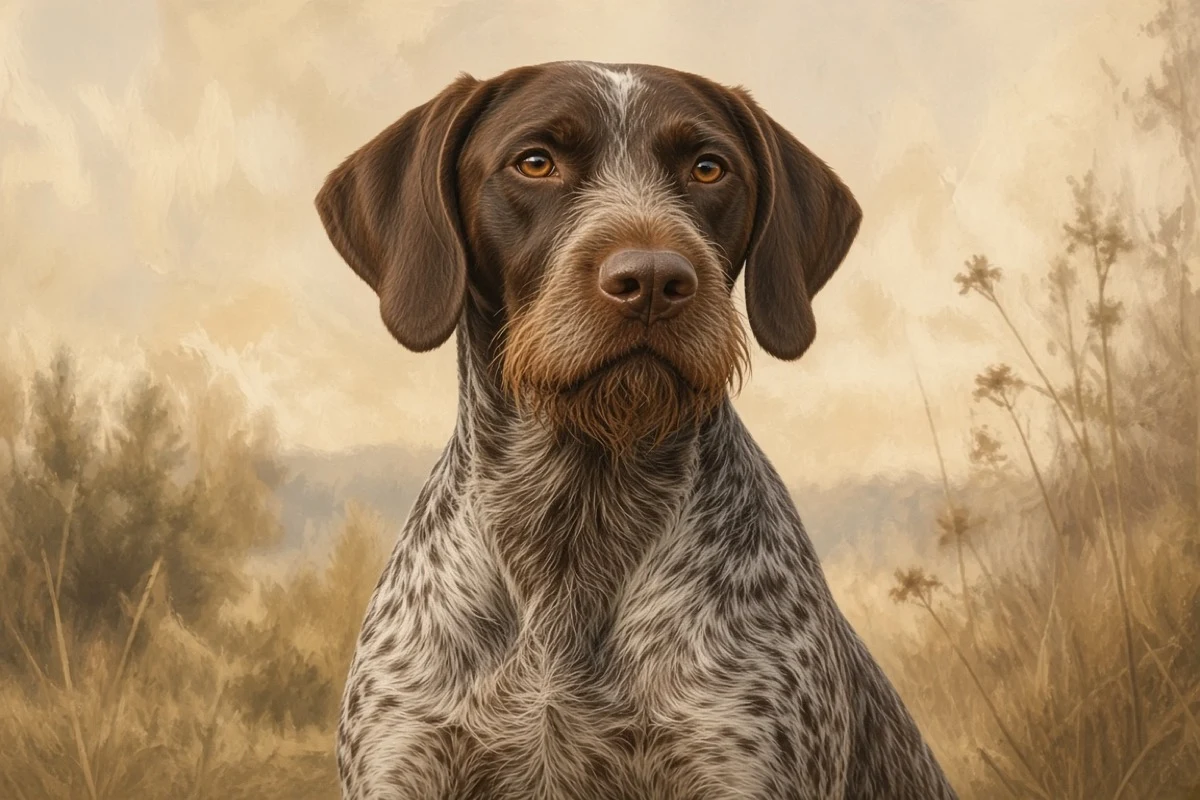
German Wirehaired Pointer breed illustration

Breed profile

German Wirehaired Pointer

Also known as GWP · Wirehair

  • Sporting
  • Large
  • Germany

A rugged, versatile hunting breed with a harsh coat and serious drive, the German Wirehaired Pointer thrives with active hunters and sport homes — and struggles as a low-exercise suburban pet.

Size
Large
Weight
50–70 lbs
Lifespan
12–14 years
Origin
Germany
AKC
Fully recognized

At a glance

How this breed typically shows up day to day.

  • Energy Very High
  • Shedding Moderate
  • Trainability High
  • Apartment fit Poor

Breed details

German Wirehaired Pointers are continental gun dogs built for versatility: point, retrieve, track, and push through rough cover in a harsh coat that earns its keep. They tend to bond tightly to handlers and can be more reserved with strangers than their shorthaired cousins — affection at home, thoughtfulness at the door.

Very high drive means fieldwork, running, swimming, and training are daily requirements, not weekend bonuses. Underworked Wirehairs invent chaos. Coat stripping or professional maintenance preserves weather resistance; neglected furnishings mat and soften.

Ask for health clearances, keep adults lean, and dry ears after water work. Choose a GWP if you hunt or train seriously and want a loyal outdoor athlete. Look elsewhere for a casual suburban pet. Matched well, Wirehairs are brilliant, rugged partners that make hard days in the field look like the point of owning a dog.

Temperament

GWPs are typically loyal, intelligent, and deeply oriented to their handlers. Many are more reserved with strangers than German Shorthaired Pointers — affectionate with family, thoughtful with guests.

They were bred as all-purpose gun dogs: point, retrieve, track, and work rough cover. That versatility comes with high drive. Underworked Wirehairs become restless, destructive, or vocal.

Consistent training and early socialization produce a remarkable field and family partner.

Exercise needs

Very high needs: fieldwork, running, swimming, hiking, and advanced training. Casual leash walks do not meet the job description.

Mental work — scent, retrieve, and obedience — is as important as mileage for settling an adult GWP.

Protect puppy joints with measured sessions while still feeding the brain.

Grooming needs

The harsh wire coat needs regular brushing and periodic stripping or professional maintenance to keep weather resistance and texture. Facial beard collects debris after fieldwork.

Shed is moderate. Check ears after water work and keep nails short.

Coat work is part of ownership — skipping it softens the jacket and invites mats in furnishings.

Common characteristics

Large continental pointing dog with a distinctive wiry coat, beard, and eyebrows.

Versatile hunter: pointing, retrieving, and tracking in rough terrain.

Loyal and often reserved with strangers; bonds tightly to handlers.

High stamina and drive; thrives with purposeful outdoor work.

Common health concerns

Hip dysplasia, eye conditions, and certain genetic disorders screened in responsible programs belong in purchase conversations.

Ear infections can follow swimming — dry and monitor. Keep the dog lean for joint and heat health.

Field injuries happen; condition gradually and check paws after rough cover.

Children & family suitability

Excellent with active, training-oriented families, especially hunting households. They can be great with kids when manners are taught early.

A poor match for sedentary homes, long solitary days, or apartments without an extreme exercise plan.

Other-pet compatibility

Bird and small-animal drive is strong. Other dogs often work with socialization; cats require careful management.

Do not assume pointing-breed friendliness equals automatic off-leash reliability around wildlife.

Climate considerations

The wire coat handles cool and wet weather well when maintained. In heat, work early or late and watch for overheating.

Dry beard and ears thoroughly after water retrieves.

The honest ledger

Pros and cons

What this breed gives — and what it asks back.

Keep

The upside

  1. 01 Versatile, highly trainable hunting partner
  2. 02 Loyal and handler-focused
  3. 03 Weather-resistant coat when maintained
  4. 04 Outstanding outdoor athlete

Weigh

The trade-offs

  1. 01 Very high exercise needs
  2. 02 Coat stripping/grooming required
  3. 03 Can be destructive if underworked
  4. 04 Too much drive for casual pet homes