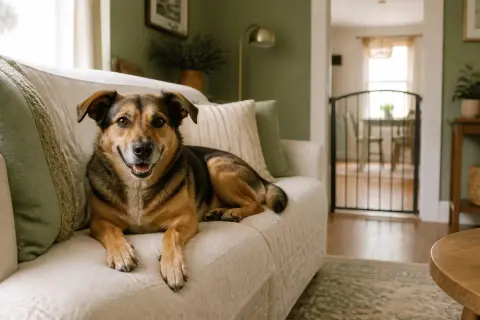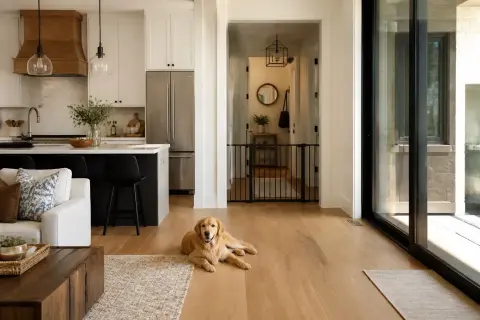
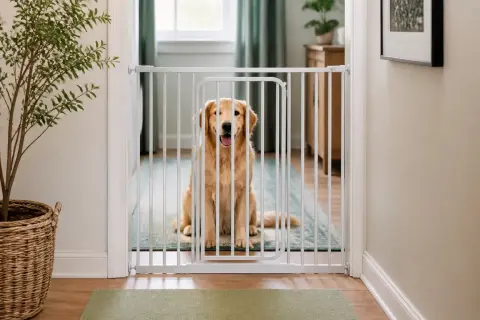
Dog gates are the polite “not this room” of home life — less dramatic than a locked door, more effective than hoping your dog reads the furniture brochure. The right gate buys you kitchen focus, staircase safety, and guest-arrival calm without turning the house into a kennel floor plan.
This guide sits under our Complete Guide to Dog-Friendly Homes. Pair it with How to Dog-Proof Your Home so barriers and hazard removal argue on the same side.
Who actually needs a gate
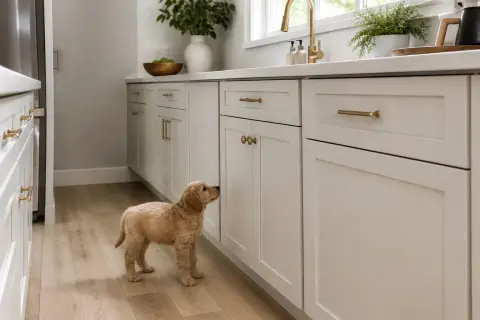
Puppies mid-heist era, seniors who forget stairs exist, multi-dog households with food drama, jumpy greeters who treat the front door like a launching pad, and anyone cooking with ingredients that look like toys. You do not need a gate in every doorway — you need gates where mistakes are expensive or dangerous.
Measure like you mean it
Openings lie. Baseboards, trim, and “it looked about three feet” invent return labels. Measure width at the narrowest point and height against your dog’s enthusiasm, not your optimism. Check the brand’s fit chart twice — some widths fall in dead zones where neither the stock gate nor the extension quite works.
Pressure-mounted walk-through gates
Pressure mounts are renter-friendly and fast: tension against the jamb, walk-through door for humans, no drill for many installs. They shine in hallways and room divides where a fall would be annoying, not catastrophic.
Hardware mounts earn their bolts at stairs, uneven trim, and anywhere a tipped gate equals a fall. When in doubt at the top of stairs, drill. Gravity does not negotiate, and a tipped gate is a story you only want once.
Top pick for width: Carlson Extra Wide Walk-Through Pet Gate — people door, small pet door option, everyday doorway workhorse when your opening fits.
Top pick for height: Carlson Extra Tall Walk-Through Pet Gate — for dogs who treat a 30-inch barrier like a polite suggestion.
Jumpers, climbers, and “tall enough”
Athletic adolescents and large breeds often need height before hardware. If your dog clears the short gate for sport, stop buying hope and buy vertical margin. Determined climbers can still invent parkour — gates manage space; training manages decisions.
Combine barriers with settle cues and enrichment so the gate is Plan A, not the whole personality plan. A bored jumper will audition every fence you own.
Pens as a flexible alternative
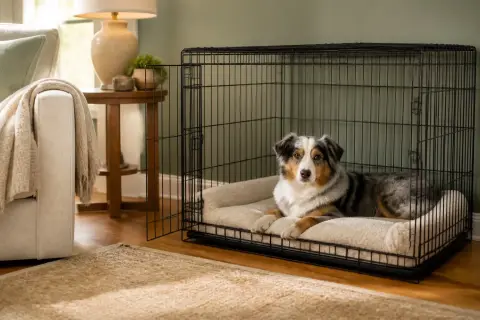
When you need a safe island instead of a hallway wall, an MidWest exercise pen creates a puppy-proof (or chaos-proof) zone for play, chewing, and “I am cooking and cannot narrate a heist.” Pens flex; gates divide. Many homes use both — gate the stairs, pen the living-room island.
Training still matters
- Practice walk-through manners so humans are not the automatic “gate is open” party invitation
- Reward calm on the allowed side; do not turn every blocked doorway into a barking contest
- Never leave a dog unsupervised at a stair gate if the fall risk is real
- Teach an alternative settle spot — bed, mat, crate — so the gate is not the only off-switch
Install notes that save return labels
Use wall cups or hardware kits where the manufacturer recommends them — especially at stairs. Check tension weekly; humidity and enthusiastic leaners loosen pressure mounts. If your dog body-slams the gate for sport, you need training and possibly a different mount, not a tighter screw and crossed fingers.
Multi-pet homes: lock or unlock the small pet door intentionally. Cats with VIP privileges are great until the puppy learns the same portal exists.
Our recommendations
Shop home. Links may earn a commission — advertising disclosure.
- Carlson Extra Wide — Everyday walk-through pressure gate.
- Carlson Extra Tall — Height for jumpers and tall breeds.
- MidWest Exercise Pen — Portable safe zone when a doorway is not the job.
Proof the rooms behind the barriers with Best Dog Proofing Tips, then return to the Home hub.