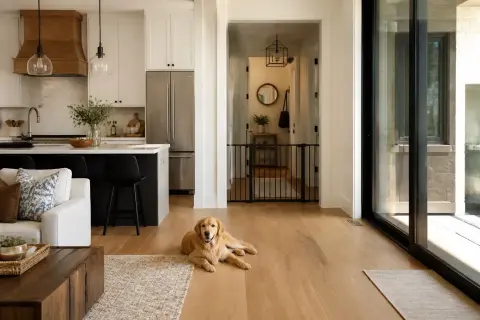
Open floor plans look gorgeous in listing photos and chaotic when a puppy, a guest, and a roast chicken share one continuous rectangle. Zoning is not anti-design — it is how dogs learn where jobs live, where rest happens, and where the kitchen is temporarily closed for renovations (emotional ones).
This comparison sits under our Complete Guide to Dog-Friendly Homes. Hardware that draws the lines lives in Best Dog Gates.
When open plans win
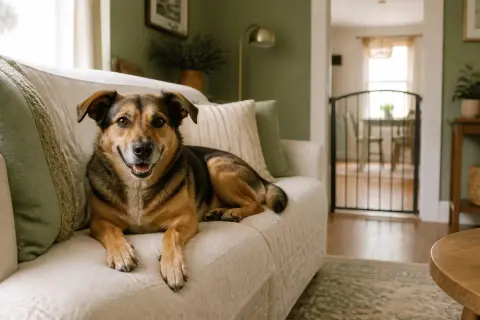
Open layouts shine for well-trained adults who settle on a mat, ignore counters, and do not rehearse door dashes. You can supervise from one vantage point, keep social dogs near the family, and avoid a house that feels like a kennel corridor.
If your dog already has an off-switch, openness is a feature — not a bug waiting to happen. Celebrate that. Do not invent gates for vibes alone.
When zones win
- Puppies — freedom is earned in square footage, not gifted on move-in day
- Multi-dog homes — food, toys, and rest spots need borders to reduce conflict
- Guests and parties — a calm room beats “everyone meet the jumpy greeter at once”
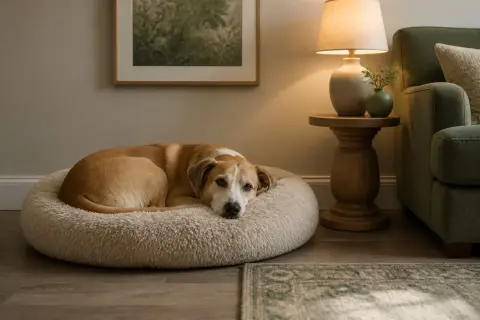
- Anxiety — a defined den away from door traffic can lower rehearsal of panic
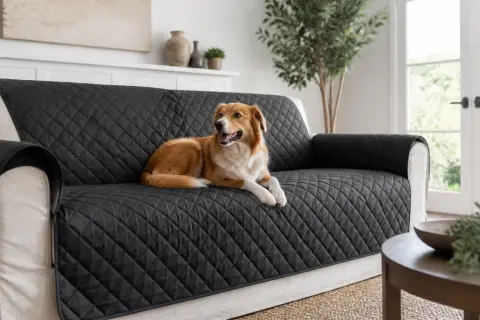
- Stairs and hazards — physics and toxins do not care about your aesthetic
- Remote work days — a gated quiet zone beats laptop-charmer rehearsals every Zoom call
The hybrid most homes actually need
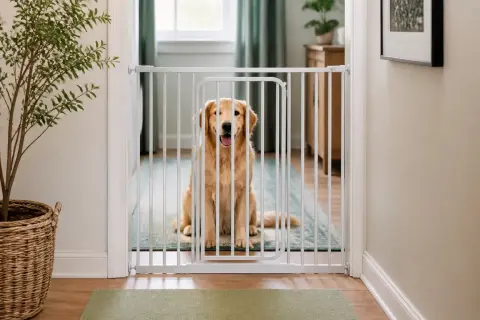
Live open when you can supervise. Gate when you cannot. A pressure-mounted walk-through like the Carlson Extra Wide or height for jumpers via the Carlson Extra Tall lets humans move while dogs respect temporary borders. An exercise pen creates a portable zone without remodeling.
Hybrid is not indecision — it is matching borders to the hour of the day.
Multi-dog and guest logistics
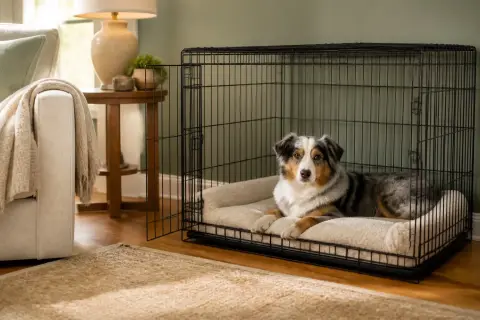
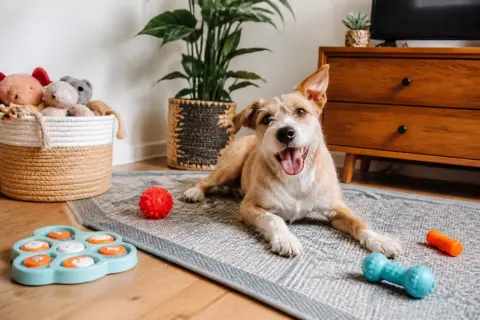
Feed separately or with clear stations. Give each dog a rest option — crate or bed — so “open” does not mean “compete for the same cushion forever.” When guests arrive, park greeters behind a gate with a stuffed toy instead of rehearsing the full-contact welcome committee.
Anxiety and the illusion of more space
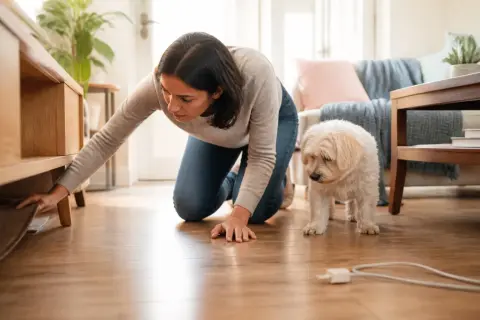
Bigger open rooms can feel louder: more sightlines, more triggers, more places to pace. Pair zoning with a true calm corner — How to Create a Calm Dog Space — and proof hazards so closed rooms are safe, not mysterious. Tip sheet: Best Dog Proofing Tips.
How to decide this month
- List the failure modes: counters, doors, stairs, sibling squabbles, guest overwhelm
- Gate the expensive mistakes first
- Train settle on a mat in the open area you want to keep
- Expand freedom as reliability shows up — not as a New Year’s resolution
Design without pretending dogs are décor
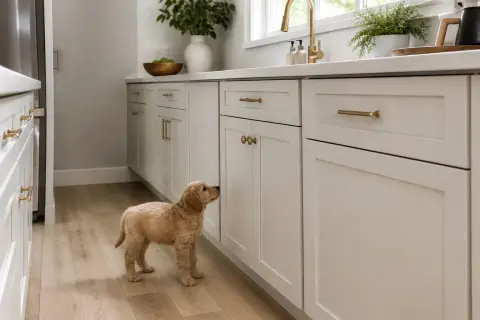
You can keep an open living room and still gate the kitchen during dinner prep. You can love sightlines and still close bedrooms when guests need a break. Aesthetic and safety are not enemies — unsupervised access to hazards is. Proof the rooms behind your borders with How to Dog-Proof Your Home so “closed” means safe, not mysteriously dangerous.
Our recommendations
Shop home. Links may earn a commission — advertising disclosure.
- Carlson Extra Wide — Everyday temporary walls.
- Carlson Extra Tall — Height for athletic dogs.
- MidWest Exercise Pen — Portable zone without architecture.
Return to the Home hub for the full map — then draw borders your dog can actually understand.