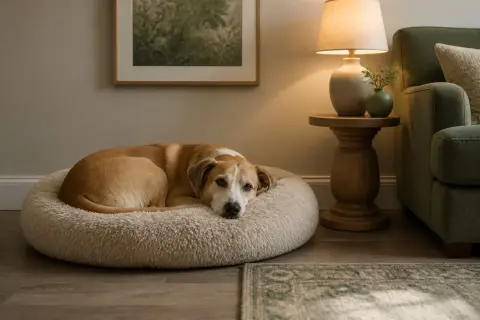
Every dog needs a place that means “off duty” — not another stage for doorbell theater. A calm space is a corner with clear rules, soft footing, and fewer reasons to rehearse panic. It is training architecture, not a spa brochure.
This how-to sits under our Complete Guide to Dog-Friendly Homes. Situational calming tools (with training still required) live in Best Calming Aids for Dogs.
Pick the quiet corner
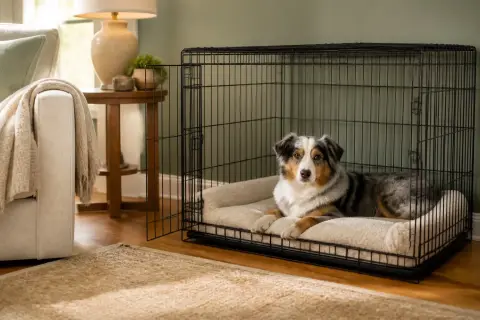
Choose a spot away from the front door, the kitchen runway, and the hallway everyone uses as a racetrack. Visual privacy helps: a partial wall, a covered crate, or furniture that blocks the constant parade.
If the “calm” corner faces the window where delivery trucks audition daily, you have built a lookout, not a den. Move it. Sightlines that rehearse barking are not rest infrastructure.
Bed or crate — pick the off-switch that fits
Some dogs settle on an open bed; others need the defined edges of a crate. A nest-style option like the Bedsure Calming Donut Dog Bed (Medium) invites curl-up rest for many dogs. Pair with crate skills from Best Dog Crates if your dog needs a door for true downtime.
Wash bedding on a schedule. A dank “calm” bed becomes a place dogs avoid, which defeats the entire architecture. Size the bed so your dog can curl without cascading onto the hardwood mid-dream.
Sound, light, and traffic
- White noise or a fan can soften street chaos and apartment bass
- Dimmer light for rest; save bright overheads for play stations
- Teach family: calm corner = no teasing, no chase invitations
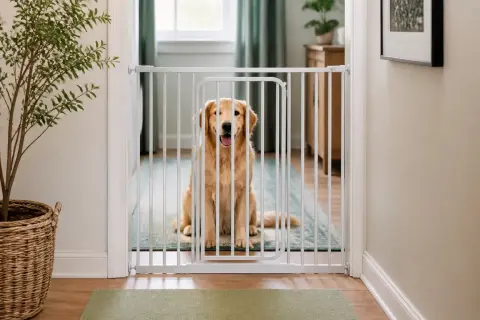
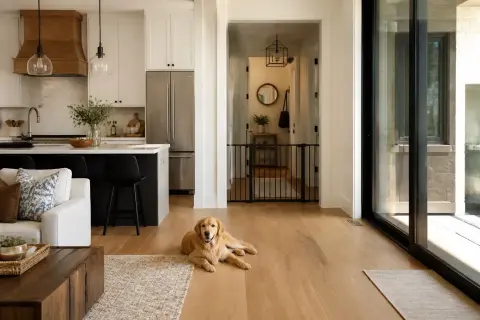
- Gate the path if kids or guests keep “just saying hi” every ninety seconds — gates guide
- Keep water nearby so rest is not interrupted by a kitchen pilgrimage
Calming aids are helpers, not magic
Pressure wraps and similar tools can help some dogs through storms, fireworks, or travel practice — they are not sedation and not a substitute for a plan. Browse options and caveats in Best Calming Aids for Dogs, then practice short positive wears before the first thunderstorm matinee.
Routine that makes the corner mean rest
- Cue a settle with a stuffed toy or chew reserved for this spot
- Reward quiet; do not throw a party every time they look at you
- Use the space after walks and play so arousal has a landing pad — see indoor play setups
- Keep sessions realistic; forced long isolations invent protest hobbies
What does not belong in the calm corner
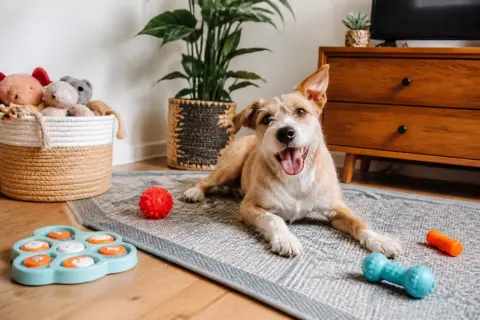
Doorbell rehearsals, kids’ chase invitations, the vacuum’s parking spot, and a pile of high-arousal toys that scream “party.” Keep enrichment at the play station; keep rest boring in the best way. If anxiety is clinical — destruction, self-injury, nonstop panic — get professional help. Home design supports training; it does not replace veterinary or behavior care.
Our recommendations
Shop home. Links may earn a commission — advertising disclosure.
- Bedsure Calming Donut Bed — Soft nest for many curl-up sleepers.
- MidWest iCrate — Defined den when sized correctly.
- MidWest Exercise Pen — Quiet island when a full room is too much.
Zone the rest of the house with Open Floor Plans vs. Zoned Spaces, then return to the Home hub.