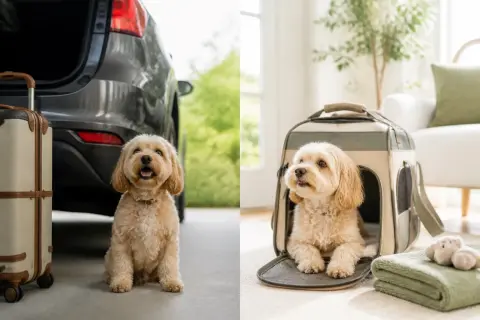
Airline travel with dogs is a paperwork sport with a soft-sided final exam. Policies differ by airline, route, season, aircraft, and whether your dog flies in cabin or cargo. This guide is practical orientation with a sense of humor — not a substitute for the carrier’s current rules written in the font of destiny on their website.
It sits under our Complete Guide to Traveling with Dogs. Compare modes in Flying vs. Driving with Dogs before you emotionally commit to a nonrefundable itinerary.
Who this guide is for
Owners considering cabin travel for small dogs, anyone staring at cargo options with healthy skepticism, and planners who want fewer gate surprises. If your dog has never practiced a carrier longer than a photo op, start with How to Prep a Dog for Travel and Best Dog Carriers before you buy tickets.
Before you book (the adulting chapter)
- Confirm the airline accepts pets on your exact itinerary — connections matter
- Check breed, snub-nose, weight, temperature, and seasonal embargoes
- Reserve the pet spot early; cabin slots are not infinite goodwill
- Budget fees like they are real (because they are, and they stack)
- Know whether your dog is cabin-eligible or cargo-only
- Read the carrier dimension rules for under-seat fit, not vibes
- Have a backup plan if weather or policy cancels the pet reservation
Screenshot or save the policy page with a date. Policies migrate. Arguments at counters rarely rewrite software.
Carrier realities
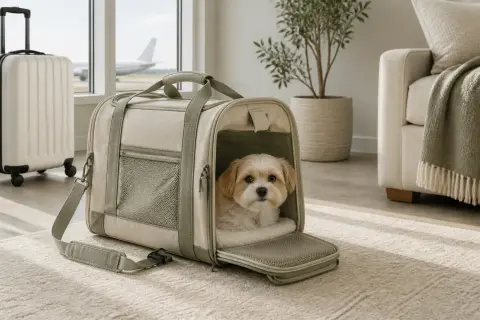
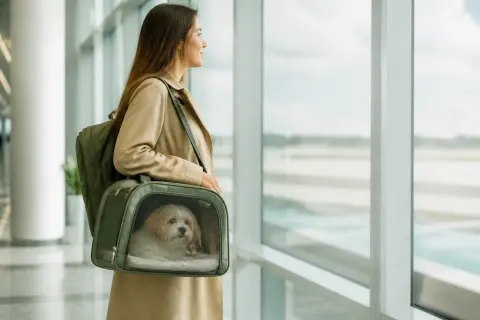
Soft carriers such as the Sherpa Original Deluxe or Sleepypod Air must fit under the seat with your dog able to stand and turn per airline guidance. Measure the dog and the carrier. “Looks medium” is not a dimension. “My influencer used this bag” is not a certificate.
Train until the carrier is boring. Zipper wars at security are a special kind of public theater. Details and training steps: Best Dog Carriers.
Documents and health (unsexy, decisive)
- ID tags + microchip registered to a phone that you actually answer
- Vaccine records and any required health certificates
- Ask your vet about timing — certificates often have short validity windows
- Medications only with veterinary guidance — never guess sedation from a forum
- International travel adds layers; start earlier than your optimism suggests
If your dog is brachycephalic, senior, or medically complicated, talk to your vet before you romanticize altitude.
Day-of-travel tips (survive the gauntlet)
- Arrive early; pet check-in is not the express lane of joy.
- Potty immediately before security when possible — grass now beats drama later.
- Keep the carrier familiar; a worn-in blanket can help.
- Pack absorbent backups — XL travel pads.
- Carry a collapsible bowl — Quencher — for water after you clear the maze.
- Stay calm in your voice. Dogs borrow our panic like free samples.
- Know where relief areas are after security when airports provide them.
Cabin vs. cargo in plain language
Cabin keeps your dog with you under the seat when rules allow — still noisy, weird, and constrained, but you are present. Cargo adds handling, temperature, and “out of your hands” variables. Some dogs and routes only have cargo options; that does not make cargo automatically fine. Confirm restrictions and talk with your vet for higher-risk dogs.
Common gate tragedies (avoid these plotlines)
- Carrier slightly too tall — refused boarding, ruined day
- Pet reservation never actually confirmed
- Health certificate expired by twelve hours
- Dog’s first closed-carrier experience is the TSA line
- Sedation experiments without veterinary oversight
Our recommendations
Shop travel. Links may earn a commission — advertising disclosure.
- Sherpa Deluxe Carrier — Classic cabin-style bag when it fits policy.
- Sleepypod Air — Premium structured carrier for frequent flyers.
- XL Pads 15-Pack — Travel accidents kit without a giant home box.
- Ruffwear Quencher — Post-flight water without improvisation.
Prep the timeline with How to Prep a Dog for Travel, then return to the Travel hub.