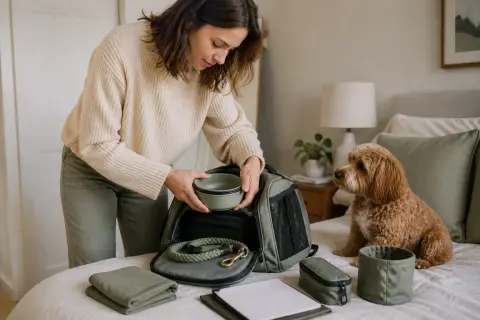
Travel prep is training wearing a packing list. The week before should include carrier or harness practice, a vet check if certificates are needed, and a dry run that is shorter than your ego wants. Surprise debuts at the airport are how soft carriers become regret sculptures and how road trips begin with a dog who thinks the car is a haunted carnival.
This how-to sits under our Complete Guide to Traveling with Dogs. Mode choice lives in Flying vs. Driving with Dogs.
Who this guide is for
First-time pet travelers, “we fly every year but the dog still loses his mind” households, and planners who love checklists more than chaos. If your dog already travels like a seasoned consultant, use this as a refresh — especially for paperwork and heat.
Two weeks out: decisions before packages
- Confirm lodging and airline/pet policies in writing (save the page)
- Book vet paperwork windows if flying — certificates expire on petty schedules
- Update ID tags and microchip contacts to a phone you answer
- Start daily carrier or car-harness sessions (short, positive, boring)
- Decide who handles potty stops, night duty, and “dog cannot go in that store” logistics
- Honestly assess whether this trip matches this dog right now
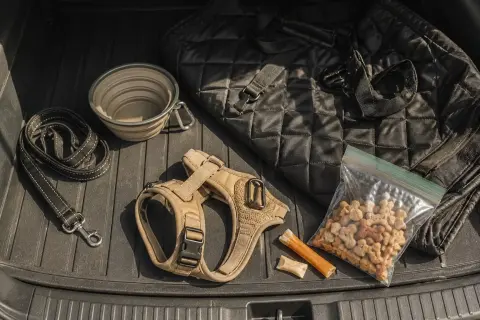
Gear staging (lay it out like a crime board)
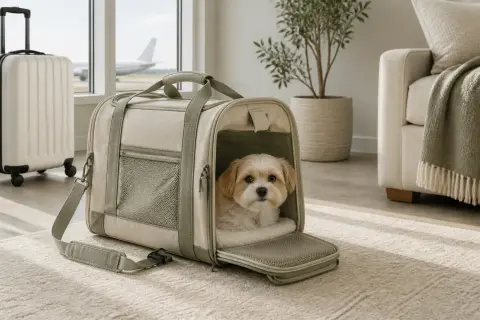
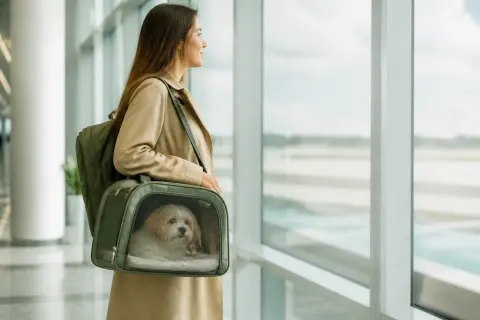
- Carrier or crate — Sherpa, Sleepypod, iCrate, or Revol
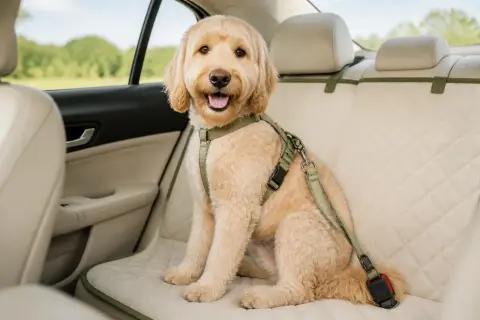
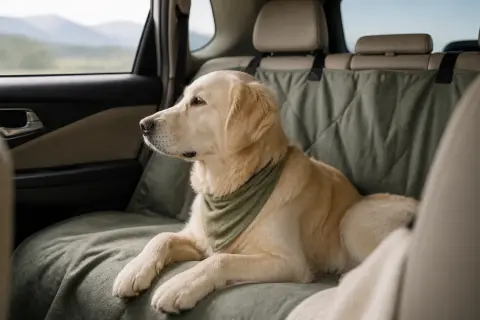
- Car restraint kit — Tru-Fit, cover, barrier
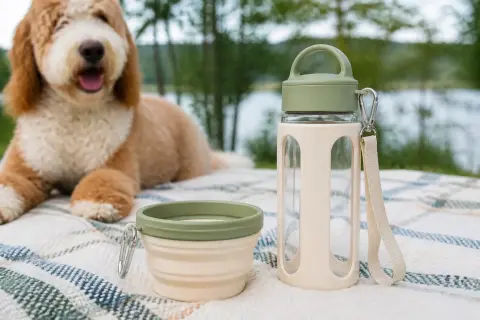
- Bowls and water — Quencher + bottle
- Pads, bags, meds (vet-approved), usual food, familiar blankie
- Cleanup kit and a spare leash/collar
- Documents folder or phone album: vaccines, certificates, booking confirmations
Product deep dives: carriers, car belts, road-trip essentials.
Practice schedule that actually works
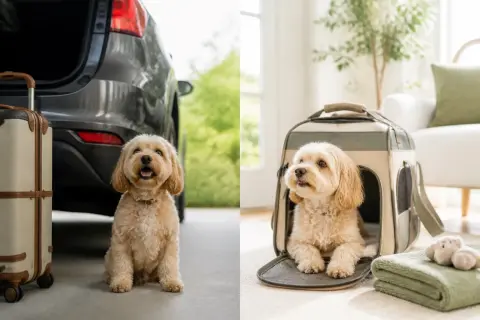
- Days 1–3: Open carrier as furniture; meals nearby; harness on during TV.
- Days 4–6: Short closed-door sits; treat for quiet; release before protest peaks.
- Days 7–9: Carry the carrier around; buckle the harness in a parked car.
- Days 10–12: Neighborhood loops; one errand that ends at nowhere exciting.
- Days 13–14: Longer practice outing with a potty stop and water break — dress rehearsal.
If your dog panics, shrink the ask. Call a trainer or ask your vet about anxiety — do not invent sedation protocols from comment sections.
Food, sleep, and the “keep life familiar” rule
Travel already rearranges the universe. Keep food the same. Keep a familiar bed or blanket. Keep cue words consistent. Novelty is for destinations, not for reinventing dinner the night before departure.
Day-before checklist
- Charge phones; pack chargers
- Confirm pet reservation and seat/cargo details
- Set out tomorrow’s food portions
- Place go-bag by the door like you are serious
- Walk the dog; aim for a calm evening, not a marathon that creates a wired traveler
- Sleep (aspirational, but try)
Morning-of mindset
Leave earlier than pride suggests. Potty right before you load up. Speak like a person who has done this before even if you have not. Dogs borrow our panic. Be the boring pilot.
Our recommendations
Shop travel. Links may earn a commission — advertising disclosure.
- Sherpa carrier or Sleepypod Air for cabin plans
- Kurgo Tru-Fit for cars
- Quencher for water stops
- XL pads for backups
- iCrate for hotel dens when sized right
Hub: Traveling with Dogs.