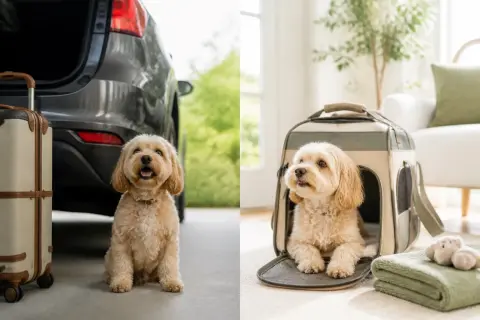
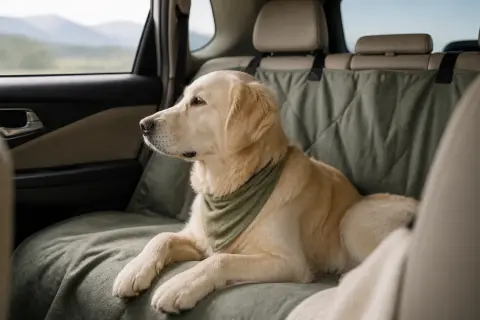
Car calm is trained, not purchased — though the right restraint setup removes half the chaos that invents stress. Dogs who free-roam, fog the windshield, and audition for co-pilot learn that cars are parties. Dogs with a settled harness zone learn that cars are boring transportation. Boring is the goal. Boring is love. Boring is how you arrive without needing a nap carved from pure adrenaline.
This how-to sits under our Complete Guide to Traveling with Dogs. Gear details live in Best Dog Car Seat Belts.
Who this guide is for
Owners of screamers, pacers, droolers, seat-hoppers, and “only calm if we’re going to the park” dogs. Also owners of quiet dogs who still deserve a safe setup — calm is easier when physics is on your side.
Set the physical stage first
Training a moving chaos cloud is harder than training a dog in a defined zone.
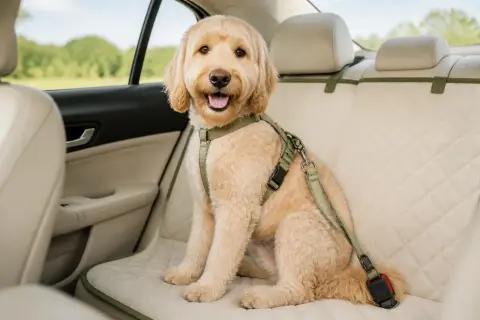
- Clip into a Kurgo Tru-Fit harness
- Add a barrier if front-seat visits are the hobby
- Use a seat cover so slipping fabric is not part of the show
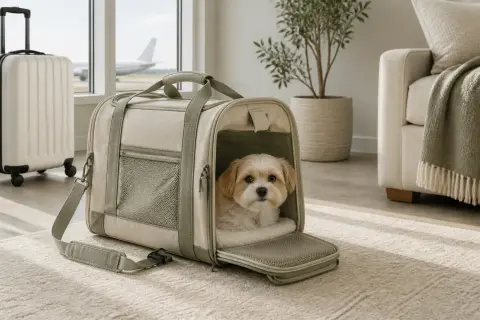
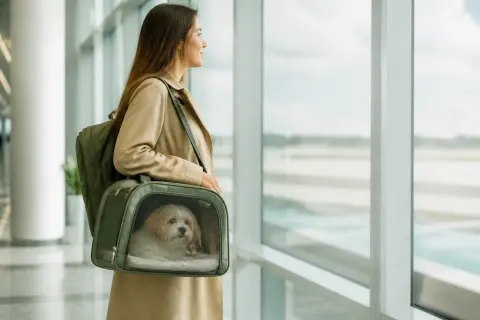
- Small dogs may settle better in a Skybox with a tether
Measure girth. Snug the fit. Take a photo of the setup once it works so future-you can recreate it after laundry day destroys the arrangement.
Why cars make dogs weird
- Cars often predict parks, dogs, or “something exciting”
- Motion can cause nausea that looks like anxiety (and vice versa)
- Restraint feels new and suspicious until it predicts snacks
- Owners tense up, narrate, and accidentally coach drama
- Temperature and stuffy air make everyone crispier
Training progression (steal this)
- Harness on in the house — treats for existing, not for performing circus tricks.
- Parked car, engine off — hop in, sit, treat, hop out. Keep it shorter than a commercial break.
- Engine on, still parked — reward quiet; ignore mild fuss when safe; end before meltdown.
- Thirty-second driveway loops — return home to nothing exciting. Cars can mean “we went nowhere.”
- Neighborhood errands — boring destinations dilute the park association.
- Longer segments — only after shorter ones look emotionally affordable.
End sessions while your dog still has dignity left. Pushing until hysteria teaches hysteria.
Motion sickness and stress notes
Drooling, yawning, whining, licking, and vomiting can be anxiety, nausea, or a rude cocktail of both. Ask your veterinarian before any medication. Fresh air, cooler temps, and an empty-ish stomach help some dogs — follow vet guidance for your animal, not a viral reel.
Pressure wraps like a ThunderShirt help some travelers situationally; they are not sedation and not a substitute for training. If your dog panics to the point of self-injury, get professional help — this is not a “tougher it out” sport.
In-car manners that help
- Speak less; calm energy is quieter than a podcast of reassurance
- Offer a safe chew only if it does not become a choking or resource-guarding plot
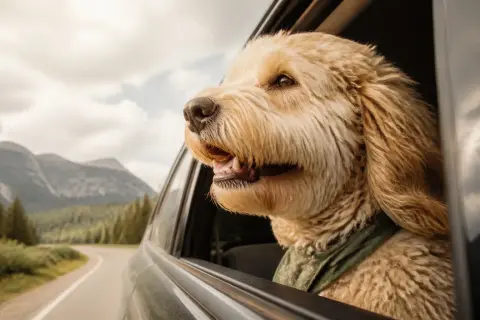
- Crack windows for airflow when appropriate — never unsecured “hanging out” theater
- Stop for potty and water before your dog has to invent a protest language
- Keep kids from poking the traveling dog like a museum exhibit
What not to do
- Do not leave dogs in hot cars
- Do not punish fear; it adds fear
- Do not debut the harness on a six-hour drive
- Do not use collar-only tethers
- Do not assume “they’ll grow out of it” without a plan
Our recommendations
Shop travel. Links may earn a commission — advertising disclosure.
- Tru-Fit Harness — Defined riding zone.
- Backseat Barrier — Fewer cockpit invasions.
- Skybox — Small-dog nest.
- Wander Bench Cover — Stable, cleaner back seat.
- ThunderShirt — Optional calm aid with training.
Pack the wider trip with Best Road Trip Essentials. Hub: Traveling with Dogs.