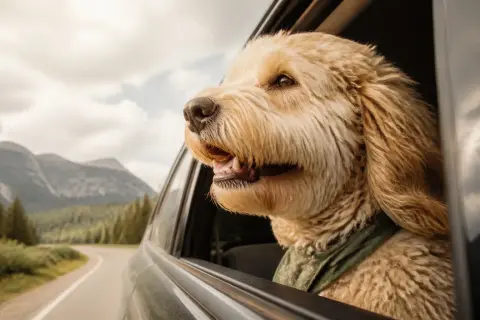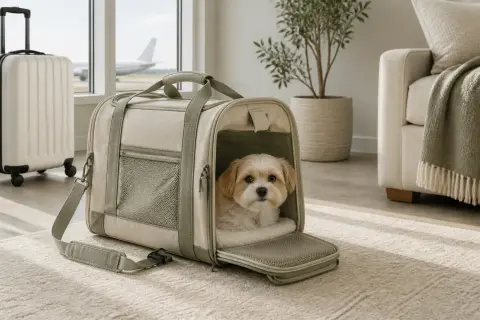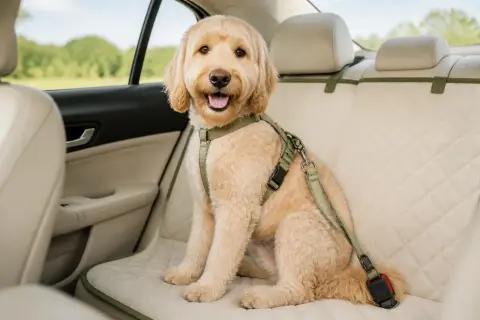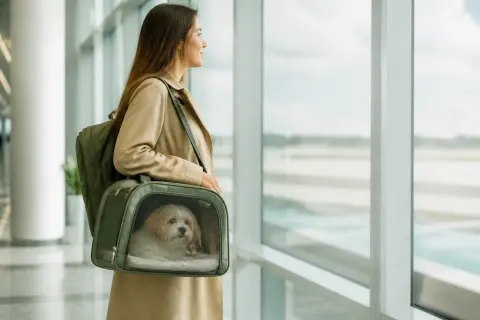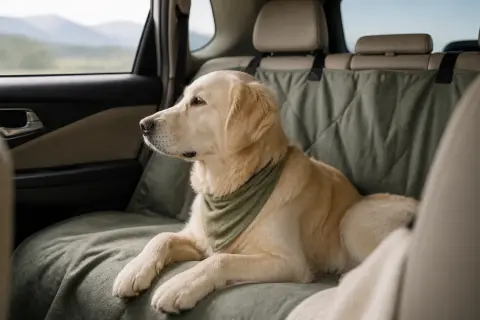
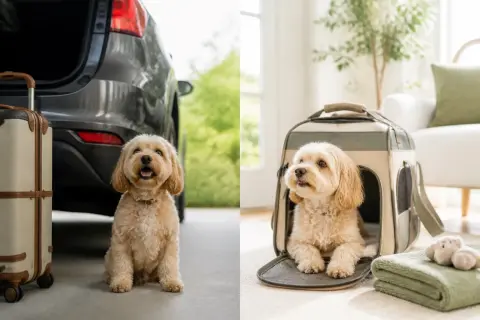
Flying vs. driving is not a vibes contest — it is a match between your dog’s temperament, size, budget, timeline, and tolerance for bureaucracy. The “right” answer is the trip your dog can complete without becoming a cautionary tale you retell for years under the heading “remember when we thought that was a good idea?”
This comparison sits under our Complete Guide to Traveling with Dogs. Prep either path with How to Prep a Dog for Travel.
Who this guide is for
Anyone stuck between “just drive” group chats and “just fly” group chats, especially when the dog cannot vote but will absolutely veto with their nervous system. Also useful when relatives say “bring the dog!” without offering a plan.
When driving usually wins
- Dogs too large or restricted for cabin travel
- Routes with seasonal airline pet embargoes or fuzzy cargo policies
- Dogs who panic in carriers but settle in cars with training
- Flexible timelines and multiple potty-friendly stops
- You want control over breaks, temperature, and pacing
- Multi-dog households that turn cabin math into a spreadsheet of doom
- You would rather spend money on hotels and gas than on fees + uncertainty
Build the car kit with road-trip essentials and car restraints. Teach calm with How to Keep Dogs Calm in the Car.
When flying can make sense
- Cabin-eligible small dogs with solid carrier training
- Long distances where days of driving would fry everyone harder than a two-hour flight
- Airlines and itineraries that clearly accept pets (confirmed, reserved, paid)
- Owners willing to chase paperwork and fees without shortcuts
- A dog who settles in a carrier better than in a moving car (it happens)
Read airline tips and train with a Sherpa or Sleepypod Air early. Carrier shopping: Best Dog Carriers.
Side-by-side snapshot
- Control: driving wins — you choose stops and pacing
- Speed (long haul): flying can win if cabin-eligible and smooth
- Stress variables: flying adds security, noise, policy cliffs, and “out of your hands” segments
- Cost: compare fees + hotels vs. flights + pet fees + Uber pet policies honestly
- Safety: both need restraints/carriers — neither is “set and forget”
- Weather: driving has road risk; flying has embargo and tarmac heat/cold risk
- Recovery: driving lets you abort to a hotel; flying mid-itinerary is stickier
Cost honesty (do the ugly math)
Write two columns. Driving: gas, hotels, food, extra days off work, wear on your soul. Flying: tickets, pet fees, carrier upgrades, ground transport that accepts dogs, possible direct-flight premium. Add a line item called “if this goes badly.” Choose with eyes open.
Shared non-negotiables
- ID, microchip, and contact info updated
- Practice before travel day — carrier or harness, not vibes
- Hydration and potty plans (pack a Quencher)
- Never rely on unverified sedation advice from the internet
- Have a backup plan if weather or policies cancel the pet spot
- Match trip length to training level; pride is not a sedative
Decision shortcuts (still think, though)
- Large dog + long distance + tight deadline: often the hardest combo — consider whether the dog should travel at all this time
- Small calm dog + direct cabin flight + trained carrier: flying can be kind
- Anxious dog + flexible calendar: drive with short days and good restraints
- Unknown airline policy: do not book hope
Hybrid options
Drive to a closer airport. Fly one way and drive back. Meet a pet sitter halfway. “Bring the dog to everything” is not a personality requirement — sometimes the kindest travel plan is a trusted sitter and a postcard.
Our recommendations
Shop travel. Links may earn a commission — advertising disclosure.
- Drive kit: Tru-Fit, seat cover, iCrate or DIGGS Revol
- Fly kit: Sherpa or Sleepypod, pads, Quencher
Return to the Travel hub when you need the full map — then pick the trip your dog can actually finish with their dignity mostly intact.