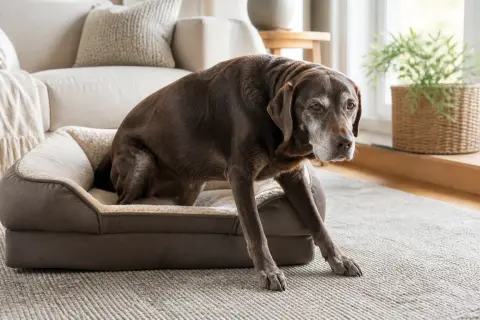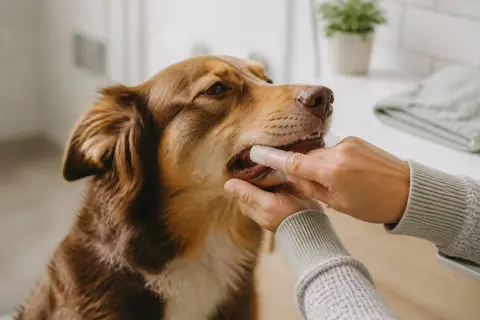
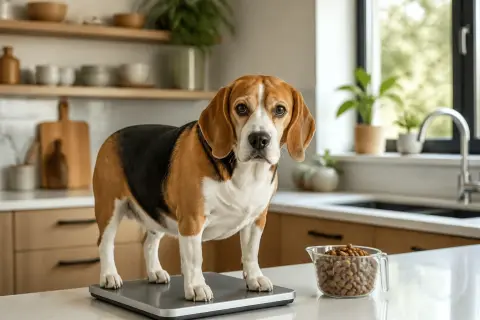
Weight management is the highest-leverage wellness habit most households can improve without buying a complicated stack of products. Extra body fat worsens joint comfort, heat tolerance, anesthesia risk, and inflammatory load. “But they still run” is not a body condition score. Dogs are excellent at looking athletic until stairs, summer walks, or a post-op recovery reveal the truth.
Important: Poochopolis is not a substitute for veterinary care. Unexplained weight loss or gain can signal medical disease. Do not put a dog on a crash diet, homemade restriction plan, or over-the-counter “fat burner.” Ask your veterinarian for a target weight or body condition score — especially for puppies, seniors, and dogs with endocrine disease.
This guide sits under our Complete Guide to Dog Wellness. Joint comfort and weight travel together — see Best Joint Supplements for Dogs only after the clinic agrees supplements belong in the plan. Browse tools in the wellness shop.
Who this guide is for
Owners who suspect their dog is “a little heavy,” who lost the measuring cup months ago, or whose treat habits quietly doubled the calorie budget. Also for multi-dog homes where the vacuum cleaner (the Lab) finishes everyone else’s bowl.
Body condition score (BCS) in plain language
Forget the scale alone for a moment. Learn the hands-on picture your vet uses:
- Too thin: ribs, spine, and hip bones obvious with little covering; exaggerated waist
- Ideal: ribs easy to feel under a slight fat cover; waist visible from above; belly tuck from the side
- Overweight: ribs hard to feel; waist gone or faint; belly looks rounded; fat deposits over the loin or tail base
- Obese: ribs not palpable without pressing hard; no waist; heavy fat deposits; exercise intolerance
Ask your clinic to show you on your dog. Photos from above and the side, taken monthly in the same hallway light, help more than memory.
Measure food like it matters
- Use an actual measuring cup or, better, a kitchen scale for grams.
- Start from the bag’s guidance, then adjust to body condition — bags assume average metabolism and zero treats.
- Count every household feeder. Kids and partners need the same rules.
- If you free-feed, switch to meals so you can track intake.
- Recheck weight or BCS every 2–4 weeks during a reduction plan.
Slow, steady loss beats aggressive cuts that leave a dog scavanging, irritable, and obsessed with the pantry.
Treat calories are real calories
- Training treats add up fast — use tiny pieces or kibble from the daily allotment
- Dental chews (Greenies, Dentastix) count; subtract them from the day’s budget
- Cheesie “just a bite” from the table is often a second dinner
- Pill administration treats matter too — see Pill Pockets and portion awareness
A simple rule that works in many homes: treats ≤ 10% of daily calories unless your vet sets a different target.
Slow feeders for gulpers
Dogs that inhale food get air, regurgitation risk, and zero satiety signals. Slow feeders stretch mealtime, add mild enrichment, and make measured portions feel like more work — useful during weight loss when meals get smaller.
Top pick: Outward Hound Fun Feeder Slo Bowl (Large) — a maze-style bowl for dogs that vacuum meals. Choose a size your dog can navigate without frustration; wash thoroughly so grease does not turn the ridges into a bacteria farm. Puzzle toys can also dispense a portion of the daily kibble for mental work without extra calories.
Exercise that supports weight goals
- Daily walks sized to joints and weather beat weekend heroics
- Sniff walks still burn calories and lower stress
- Swimming or soft-surface work helps some heavy dogs when your vet clears it
- Hot pavement and obesity are a dangerous pair — shorten mid-day summer walks
- If limping appears, do not “walk it off” — see health-change spotting and call the clinic
When to ask the vet
- You cannot feel ribs despite honest measuring
- Weight climbs or drops without diet change
- Increased thirst, urination, or appetite with weight change
- Senior dog gaining fat while losing muscle
- You need a prescription weight-loss diet or calorie target
- Breed predispositions to pancreatitis make rich treats risky
Bring a food diary to the appointment — brand, cups, treats, chews, and who else feeds. Use vet checkup checklists so the visit stays efficient.
A practical 30-day reset
- Week 1: measure every meal; photograph BCS; list all treats.
- Week 2: cut treat calories or swap to kibble rewards; introduce a slow feeder if gulping.
- Week 3: adjust meal size toward the vet’s target; keep walks consistent.
- Week 4: recheck photos/weight; schedule a nurse weight check if stuck.
Our recommendations
Links may earn a commission — see our advertising disclosure.
- Outward Hound Fun Feeder Slo Bowl — Slows mealtime for gulpers during weight plans.
- Greenies Pill Pockets — Handy for meds/supplements; remember the calories.
- Greenies / Dentastix — If you use dental chews, budget them as treats.
A simple decision path
- Unexplained weight change? → Vet exam before DIY restriction.
- Ribs hard to feel? → Measure food, cut treat creep, set a clinic target.
- Gulps meals in seconds? → Add a Fun Feeder-style slow bowl.
- Joints complaining? → Prioritize weight; discuss mobility support separately.
- Need a sustainable system? → Fold habits into a wellness routine.
- Want the full hub? → Complete Guide to Dog Wellness.