
Dog wellness is not a single product, a trendy supplement stack, or a once-a-year appointment you survive and forget. It is the everyday stack of habits that keep a dog comfortable, mobile, and easier to care for across life stages — plus the judgment to call a veterinarian when something is off. Weight, teeth, joints, mental state, and preventive exams reinforce one another. Miss one for long enough and the others usually get harder.
Important: Poochopolis is an educational resource, not a substitute for veterinary care. Supplements, calming aids, and dental products are not treatments or cures. Only a veterinarian can diagnose illness, prescribe medications, or decide whether a product is appropriate for your dog. If your dog is in pain, declining, or acting unlike themselves, contact your vet — do not wait for an article to resolve it.
This guide is the Wellness hub for Poochopolis. Use it to frame life-stage checks, dental care, joints, weight, calming support, and preventive vs. reactive thinking, then branch into supporting guides or the shop wellness picks when you are ready to browse tools. Prefer a focused deep-dive? Jump to joint supplements, calming aids, dental products, weight management, or vet checkup checklists.
What wellness actually means
Wellness is maintenance with intention. It is not “my dog still eats, so they are fine.” A practical wellness stack looks like:
- Body awareness — know your dog’s normal appetite, stool, energy, gait, and resting posture
- Weight honesty — ribs you can feel, waist you can see, treats counted as calories
- Mouth care — brushing beats chews; chews beat nothing; vet dentistry when buildup wins
- Mobility support — gradual fitness, sensible surfaces, and joint help only with vet input
- Mental steadiness — enrichment, predictable routines, and situational calming tools — not sedation as a lifestyle
- Preventive exams — vaccines, parasite control, dental checks, and life-stage lab work on a schedule
- Early escalation — red-flag symptoms get a call; mild trends get notes and a next appointment
If any piece is missing for months, do not buy five products at once. Pick the highest-leverage gap first — usually weight, teeth, or a missed checkup.
Life-stage wellness checks
Needs shift as dogs age. A puppy’s wellness plan is not a senior’s plan with smaller portions.
- Puppies: vaccine series, parasite prevention, socialization windows, growth nutrition, and early dental habits before adult teeth settle
- Adults: annual (or twice-yearly) exams, weight control after the “cute chubby” phase, dental maintenance, and fitness that matches the real week — not one heroic Saturday
- Seniors: more frequent exams, earlier attention to stiffness, appetite changes, vision/hearing shifts, and pain that looks like “just getting old”
- Giant breeds and brachycephalic dogs: often need earlier senior-style vigilance for joints, breathing, and heat sensitivity
Bring notes to appointments. Our vet checkup checklists cover what to ask and what records to pack.
Dental health
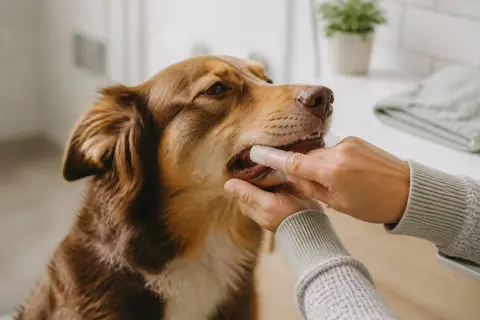
Dental disease is common, painful, and easy to underestimate because dogs rarely complain the way people expect. Bad breath, tartar, red gums, reluctance to chew hard food, and pawing at the mouth are signals — not personality quirks. Daily brushing with a dog-safe enzymatic paste is the gold standard. Water additives and dental chews can support a plan; they do not replace brushing or professional cleanings when a vet recommends them.
Top picks: Virbac C.E.T. Enzymatic Toothpaste with a dual-ended C.E.T. toothbrush for home care; Greenies or Dentastix as chew supports when appropriate for size and chewing style. Full product notes live in Best Dental Care Products.
Joints and mobility
Joint wellness is a mix of healthy weight, controlled exercise, sensible surfaces, and — when your veterinarian agrees — joint-support supplements. Glucosamine/chondroitin/MSM formulas, ASU-containing options like Dasuquin, and eggshell-membrane products like Movoflex are popular categories with different ingredient stories. None of them is a substitute for diagnosing arthritis, injury, or neurologic disease.
Top picks (vet-guided): Cosequin Max Strength Plus MSM, Dasuquin with MSM, and Movoflex Soft Chews. Many owners also discuss omega-3 support such as Nordic Naturals Omega-3 Pet with their clinic. Compare approaches in Best Joint Supplements for Dogs.
Weight and body condition
Extra pounds quietly worsen joints, stamina, anesthesia risk, and inflammatory load. Guessing portions from the bag alone is how “just a little heavy” becomes chronic. Learn a basic body condition score (ribs, waist, tuck), measure food, count treat calories, and use slow feeders when gulping or boredom eating is part of the problem.
Top pick: Outward Hound Fun Feeder Slo Bowl for dogs that inhale meals. Deeper habits live in Best Weight Management Tips.
Calming and mental wellness
Mental wellness is enrichment, training, predictability, and enough physical outlet — not a chew that promises a new personality. Pressure wraps, pheromone products, and calming chews can help situationally for fireworks, travel, vet visits, or separation practice. They are not sedation, not a treatment for aggression or panic disorders, and not a replacement for behavior work when the problem is serious.
Top picks: ThunderShirt Classic, Adaptil Calm On-the-Go Collar, Adaptil Calm Home Diffuser, and Zesty Paws Calming Bites as optional tools after you read the caveats in Best Calming Aids for Dogs.
Preventive care vs. reactive care
Preventive care is scheduled exams, parasite prevention, dental maintenance, and weight control before crisis. Reactive care is waiting for limping, refusal to eat, or an emergency visit. Both matter — emergencies happen even to diligent owners — but reactive-only households pay more in pain, cost, and regret. Frame the tradeoffs in Preventive Care vs. Reactive Care, then build habits with How to Build a Wellness Routine.
When to call the vet (and when to watch overnight)
Use How to Spot Health Changes Early for observation habits. As a rule of thumb — not a diagnosis protocol:
- Seek urgent / emergency care for collapse, trouble breathing, pale or blue gums, seizures, uncontrolled bleeding, bloating with retching, suspected toxin ingestion, or trauma
- Call same day for sudden severe pain, repeated vomiting/diarrhea with lethargy, inability to urinate, or rapid behavior change
- Book soon for gradual weight change, new limping, bad breath with oral pain signs, itching that breaks skin, or “not quite right” for more than a day or two
When in doubt, call the clinic. A triage nurse would rather hear a false alarm than a late emergency.
Our recommendations
Picks below are curated for the wellness shop. Links may earn us a commission — see our advertising disclosure. Confirm sizing, ingredients, and suitability with your veterinarian before starting supplements or calming products.
Joints and mobility support
- Cosequin Max Strength Plus MSM — Widely used glucosamine/chondroitin/MSM soft chews for maintenance conversations with your vet.
- Dasuquin with MSM Soft Chews — ASU-containing joint support often discussed for dogs needing a step beyond basic glucosamine stacks.
- Movoflex Soft Chews — Eggshell-membrane formula for owners comparing alternatives to classic chondroitin blends.
- Nordic Naturals Omega-3 Pet — Fish-oil omega-3s frequently paired with broader wellness and mobility plans under vet guidance.
Calming tools (situational)
- ThunderShirt Classic — Pressure wrap for fireworks, storms, or travel practice — not a cure for behavior disorders.
- Adaptil Calm On-the-Go Collar and Adaptil Calm Home Diffuser — Dog-appeasing pheromone products for home or travel contexts.
- Zesty Paws Calming Bites — Soft-chew calming aid for situational use after checking ingredients and your vet’s advice.
Dental and weight tools
- Virbac C.E.T. Enzymatic Toothpaste + C.E.T. Dual-Ended Toothbrush — Home brushing kit.
- TropiClean Fresh Breath Water Additive — Adjunct to brushing, not a replacement.
- Greenies Regular Dental Treats and Pedigree Dentastix — Dental chews when size and chewing style are appropriate.
- Outward Hound Fun Feeder Slo Bowl — Slows gulpers as part of weight and digestion habits.
- Greenies Pill Pockets — Optional helper for giving vet-prescribed meds or supplements.
A simple decision path
- Overdue for an exam or new concerning symptoms? → Call your veterinarian first; use checkup checklists to prepare.
- Can’t feel ribs / no waist? → Start weight habits (weight guide); ask the clinic for a target body condition.
- Breath smells foul or gums look angry? → Begin or restart brushing; book a dental evaluation (dental guide).
- Stiffness after rest or reluctance on stairs? → Vet exam before supplement shopping (joint guide).
- Situational fear (storms, travel, vet visits)? → Training + optional tools (calming guide); escalate if panic or aggression.
- Want a sustainable system? → Build daily/weekly/seasonal habits (routine guide).
- Always waiting until something breaks? → Read preventive vs. reactive.
Explore the Wellness cluster
- Best Joint Supplements for Dogs
- Best Calming Aids for Dogs
- Best Dental Care Products
- Best Weight Management Tips
- Best Vet Checkup Checklists
- How to Spot Health Changes Early
- How to Build a Wellness Routine
- Preventive Care vs. Reactive Care
When you are ready to browse products in one place, open the wellness category in Shop.