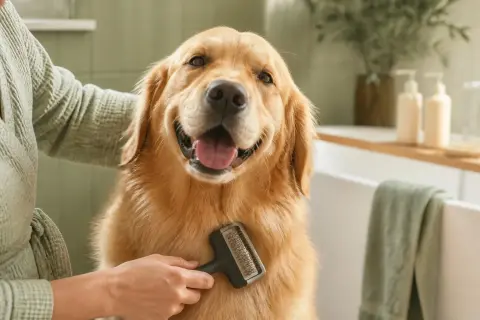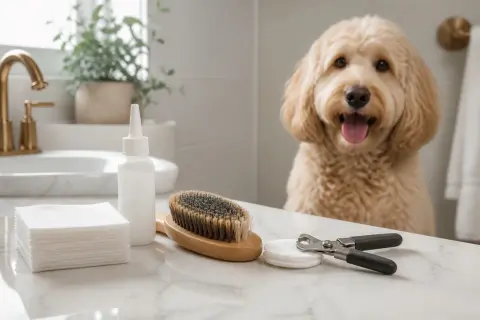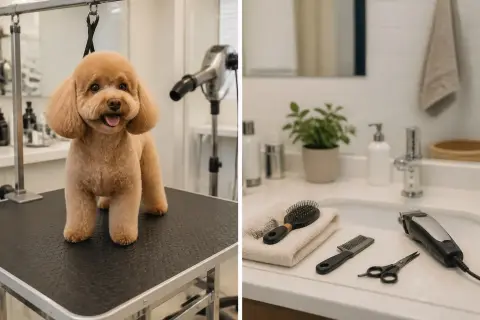
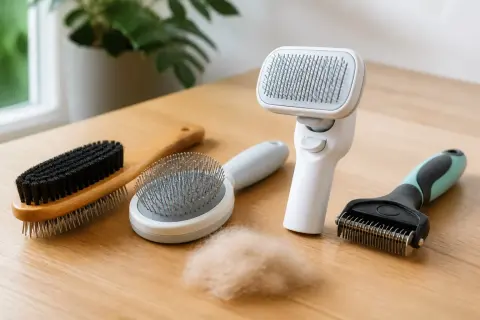
The right dog brush is less “spa accessory” and more “furniture defense system with feelings.” Match the tool to the coat, use light pressure, and stop when skin says no — deshedding tools remove loose hair, not live dignity.
This guide sits under our Complete Guide to Dog Grooming. Long-coat drama lives in Best Grooming Tools for Long Coats; routines live in Best At-Home Grooming Routines.
Who this guide is for
Households vacuuming tumbleweeds, owners whose “weekly brush” became a quarterly archaeological dig, and anyone staring at a wall of Amazon brushes like they are choosing a personality. You need one everyday brush and, for many dogs, one undercoat helper — not a drawer museum.
Slickers for everyday coats
Slicker brushes with fine angled pins lift loose hair, tease early tangles, and make most coats look like someone lives here who cares. Self-cleaning models earn their keep because peeling fur out of bristles by hand is how brushing habits die.
Everyday default: Hertzko Self-Cleaning Slicker — huge social proof, retract button, works on long and short coats when you use feather-light strokes.
Frequent-brusher upgrade feel: Swihauk Self-Cleaning Slicker — same job, push-button fur dump, friendly starter tool for dogs and multi-pet homes.
Keep sessions short. Brush with the lay of the coat. Treats fund cooperation. If pins scratch thin-skinned spots (armpits, belly), lighten up or switch tools — pain invents bathroom refugees.
Deshedding tools for undercoat season
When slickers fill up twice and the sofa still looks flocked, reach for undercoat tools on a dry coat.
- FURminator Large Long Hair — Category classic for large long-haired double coats; match size carefully.
- SleekEZ 5 Inch — Simple USA-made blade; short gentle strokes collect surprising shed.
- Maxpower Planet Deshedding Rake — Budget double-sided rake for thick coats and lighter mats.
Never dig into skin. Never “just one more aggressive pass.” Stop if you see irritation. Wrong size or rough technique turns a helpful tool into a hot-spot factory.
Coat matching without folklore
- Short single coats — soft slicker or rubber curry; light touch, less often
- Double coats — slicker plus undercoat tool in shed season
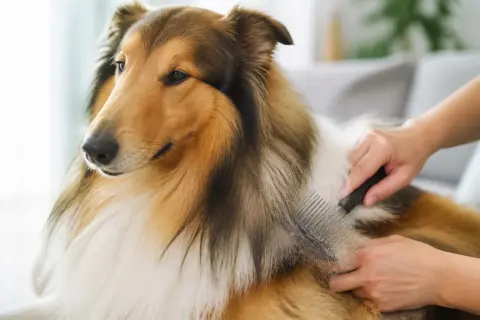
- Long / silky — slicker and comb; daily or near-daily to prevent mats
- Curly / wool — frequent combing; often a groomer for the real shape
Shaving a double coat for summer is usually a bad idea — ask a groomer who knows the breed before you invent climate policy with clippers.
Technique that keeps dogs willing
- Start with a calm dog and a dry coat
- Section thick coats; work line by line on long fur
- Hold the skin taut near mats; never rip through
- End before protest peaks — leave wanting more
- Follow heavy deshed days with a lint roller truce for your clothes
Mats that hug skin need a pro or careful dematting tools — see long-coat tools. Painful mats are a groomer call, not a YouTube challenge.
Quick answers owners actually ask
- How often? Short coats: a few times a week. Long/curly: daily or near-daily on friction zones.
- Wet or dry? Deshed tools on dry coats. Baths come after a detangle pass when possible.
- Puppy start? Thirty-second sessions with treats beat twenty-minute wrestling debuts.
Fold brushing into a calendar you will keep — Best At-Home Grooming Routines.
Our recommendations
Shop grooming. Links may earn a commission — advertising disclosure.
- Hertzko Self-Cleaning Slicker — Everyday workhorse.
- Swihauk Self-Cleaning Slicker — Easy cleanup for frequent sessions.
- FURminator Large Long Hair — Serious undercoat (when sized right).
- SleekEZ 5 Inch — Simple deshed blade.
- Maxpower Planet Rake — Thick-coat budget helper.
Pair brushing with a sane bath plan in Best Dog Shampoos, then return to the Grooming hub.