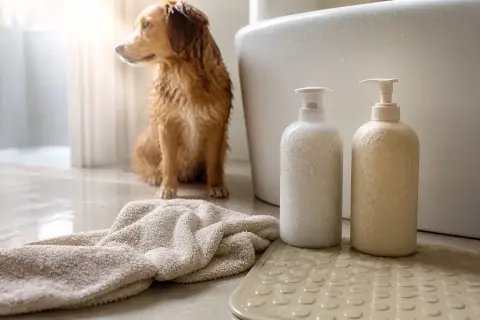
Dog shampoo is not a personality perfume — it is chemistry for skin that is not human. The goal is clean without stripping, rinse without residue, and a dog who still trusts the bathroom afterward. Human shampoo can irritate, dry, and leave “fancy” smells sitting on a coat that needed gentleness more than spa branding.
This guide sits under our Complete Guide to Dog Grooming. Bath technique lives in How to Bathe a Dog; brush first with picks from Best Dog Brushes.
Who actually needs which bottle
Most dogs need a gentle everyday cleanser for “mud event / smell event / vet said so” days. Heavy shedders may like a deshedding formula as a bath-day assist — not a miracle eraser for skipping brushes. Combination coats (different textures on one dog) benefit from formulas built for mixed fur. Itchy or sensitive dogs need soothing ingredients and a vet’s opinion if itch is chronic.
Everyday gentle cleansers
Start here unless your vet prescribed something specific. Gentle cleansers clean dirt and odor without turning the coat into straw or the skin into a science fair.
Top gentle pick: Burt’s Bees Skin Soothing Dog Shampoo — everyday baths when you want calm ingredients and less drama on sensitive-leaning skin.
Combination coats: TropiClean PerfectFur Combination Coat Shampoo — aimed at dogs whose coat is not one texture from nose to tail.
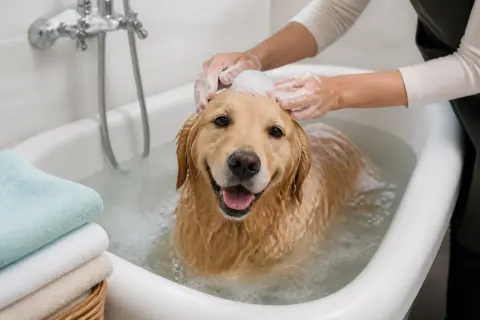
Lather less than pride suggests. Rinse more than optimism suggests. Residue is how “clean” becomes itchy two days later.
Deshedding shampoos (assist, not substitute)
FURminator Ultra Premium deShedding Shampoo can help loosen dead coat on bath day — especially paired with a proper dry-brush session afterward. It does not replace an undercoat tool or a slicker. Think of it as bath support for dogs who shed like they are sponsored by tumbleweeds.
Brush before the soak when possible so water does not cement mats. After towel-dry, finish with a Hertzko or deshed tool from Best Dog Brushes.
How often is “enough”
- Most healthy dogs: every few weeks to months depending on lifestyle and coat
- Mud athletes and skunk philosophers: as needed, then back to normal
- Skin conditions: follow the vet’s product and schedule, not the influencer calendar
- Puppies: lukewarm water, short sessions, gentle formula; keep it positive
Over-bathing strips oils. Under-bathing invents couch legends. Aim for “dog smells like a dog who goes outside,” not “candle aisle.”
What not to pour on a dog
- Human shampoo and conditioner as a default
- Dish soap “just this once” as a lifestyle
- Essential-oil cocktails from comment sections
- Anything that stings eyes, burns skin, or was meant for cars
Between full baths, Earth Rated unscented wipes handle paws and spot messes. Ears get their own product conversation — see the hub’s ear notes and ask your vet before flooding canals.
Skin red flags (stop the spa, start the clinic)
Hot spots, raw patches, relentless scratching, hair loss, or odor that returns immediately after a bath belong with a veterinarian. Shampoo is not antibiotics. Switching bottles while infection grows is how “we tried everything” starts.
Practical bath-day tips that prevent callbacks
- Brush first — water tightens mats
- Lukewarm water; protect the face with wipes instead of a face-flood
- Rinse until hands feel no slippery film
- Dry double coats to the skin; damp undercoat smells like regret
- Keep sessions short for puppies and first-timers — end on a win
Full choreography: How to Bathe a Dog. Between baths, stick to the rhythm in Best At-Home Grooming Routines.
Our recommendations
Shop grooming. Links may earn a commission — advertising disclosure.
- Burt’s Bees Skin Soothing — Gentle everyday clean.
- TropiClean PerfectFur — Combination-coat baths.
- FURminator Deshedding Shampoo — Shed-season bath assist.
- Earth Rated Unscented Wipes — Between-bath cleanup.
Walk through the soak step-by-step in How to Bathe a Dog, then return to the Grooming hub.