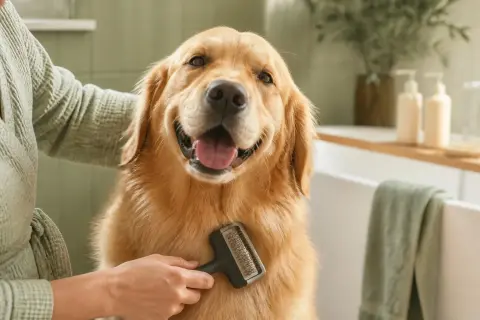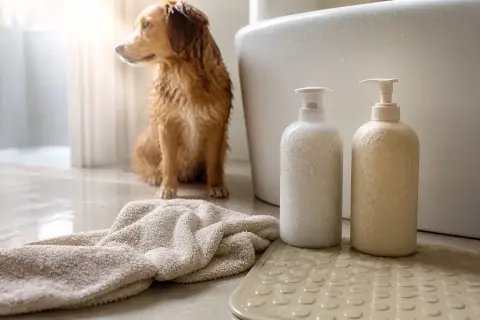
Professional vs. at-home grooming is not a loyalty test — it is a job split. You can brush like a champion and still hand breed cuts to someone with a table, a dryer, and insurance. You can love your groomer and still wipe paws, tip nails, and catch mats on Tuesday so the salon visit is maintenance, not rescue archaeology.
This comparison sits under our Complete Guide to Dog Grooming. Build home habits with Best At-Home Grooming Routines; learn baths and nails in How to Bathe a Dog and How to Trim Dog Nails Safely.
What each side does best
- Home: daily brushing, light baths, nail tips, ear checks, wipe-downs, early mat prevention
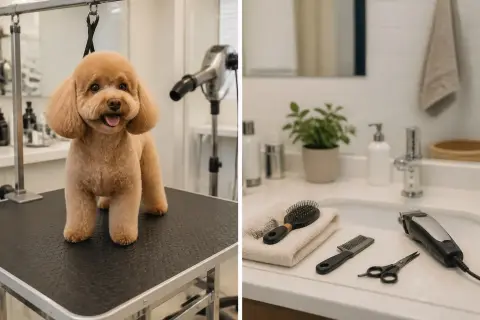
- Pro: breed-standard cuts, sanitary trims, dense dematting, nail work on fighters, finishing with equipment you do not own
- Vet: skin disease, infected ears, pain, sedation trims when behavior or medical need requires it
Confusing those lanes is how DIY clipper haircuts and untreated hot spots are born.
When pros earn the fee
Pay the groomer when the coat needs a shape you cannot safely invent, when mats sit against skin, when nails are black and your confidence is lower than the quick, or when your dog treats the bathroom like a horror set. Pros also earn the fee for curly and wool coats that mat between appointments if home brushing slips — the salon is cheaper than shaving a felted doodle out of kindness later.
Good groomers welcome owners who brush between visits. Bring notes: skin spots, ear history, and “please do not shave the double coat for summer vibes.”
When home care is enough (or mostly enough)
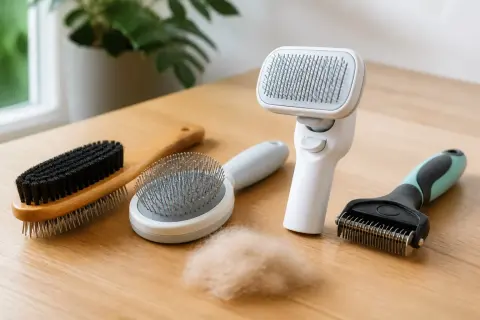
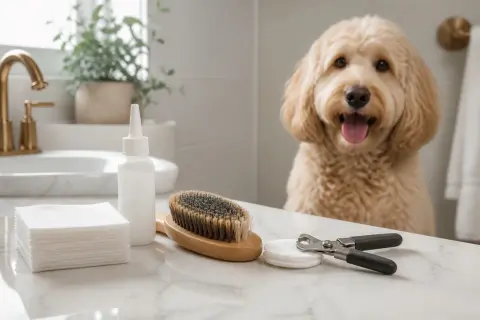
Short-coated dogs with mild shed, owners who nail a weekly rhythm, and households that only need tidy — not a haircut — can live happily with a slicker, shampoo, and nail tool. Stock a Hertzko or Swihauk, a gentle shampoo like Burt’s Bees, and guarded clippers or a grinder.
Long coats still need serious home brushing even with salon appointments — long-coat tools and brush guide.
Hybrid schedules that work
- Every 4–8 weeks: pro groom for cut breeds; home brush most days
- Every 6–12 weeks: bath/deshed visit for heavy shedders; home undercoat tools between
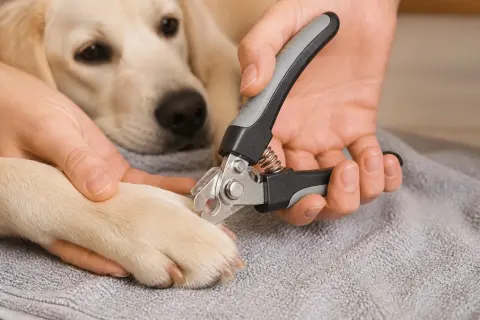
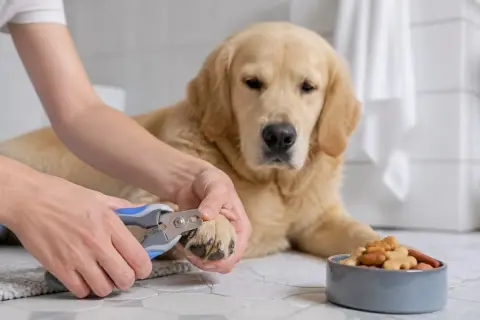
- As needed: nail-only appointments if home trims stall
- Always: wipe paws, check ears, watch skin — wipes and ear wash when appropriate
Skip “I’ll fix the mats the night before the appointment.” Groomers would like a dog, not a rescue mission with teeth.
Cost, time, and honesty
Home gear costs less per year if you use it. Salon visits cost more per hour and buy skill, equipment, and your Saturday morning. Count your time and your dog’s stress — a cheap bad home haircut that requires a corrective shave is not a savings.
Red flags either place
- Pain ignored; skin cut “by accident” repeatedly
- Pressure to shave double coats for fashion
- No questions about health, vaccines, or behavior
- At home: continuing through yelps because “we have to finish”
Trust discomfort. Switch groomers. Call the vet. Stop the session.
How to brief a groomer like an ally
- Share skin, ear, and anxiety history up front
- Say what you brush at home and where mats form
- Ask for a coat plan between visits — not just a pretty exit photo
- Request nail length preferences and face/ear shaping notes
Your home kit and their table should argue on the same side. Brush picks: Best Dog Brushes. Bath how-to: How to Bathe a Dog.
Our recommendations
Shop grooming for the home half. Links may earn a commission — advertising disclosure.
- Hertzko / Swihauk — Between-salon brushing
- Maxpower rake — Mat prevention on thick coats
- Burt’s Bees shampoo — Home bath weeks
- gonicc clippers — Tip maintenance between pro visits
Return to the Grooming hub for the full map — then assign each job to the person (or professional) who can do it kindly.