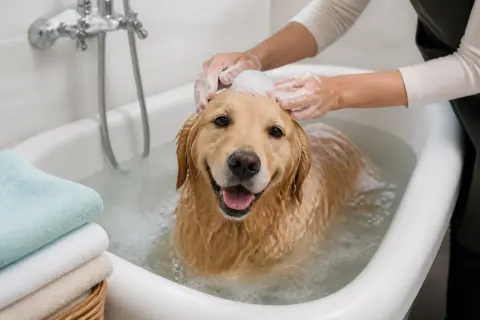
Bathing a dog is 20% shampoo and 80% logistics. Water temperature, non-slip footing, cotton in the ears (optional, never deep), and a towel strategy matter more than the bottle’s marketing paragraph. Done well, baths clean skin and coat. Done poorly, they invent fear, leftover soap, and a dog who treats tubs like betrayal.
This how-to sits under our Complete Guide to Dog Grooming. Product picks: Best Dog Shampoos. Brush before you soak with help from Best Dog Brushes.
Who this guide is for
First-time bathers, owners whose last attempt involved three towels and a personal reckoning, and anyone bathing a dog who has opinions about bathrooms. Puppies need shorter, happier sessions. Seniors need warmth and non-slip security. Double coats need thorough drying — damp undercoats are how “musty dog” becomes a lifestyle.
Set the stage before the soak
Gather everything first. Mid-bath shopping trips are how wet dogs redecorate hallways.
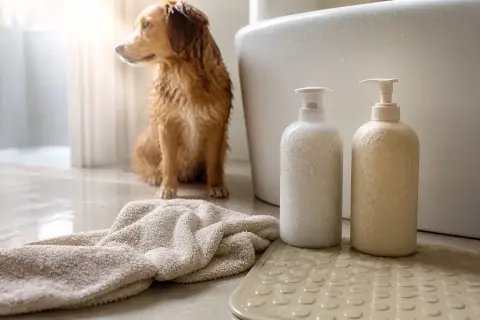
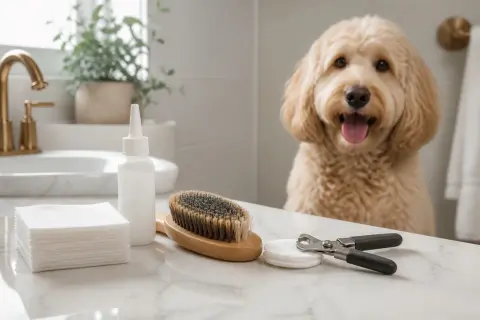
- Dog-safe shampoo — Burt’s Bees, TropiClean PerfectFur, or FURminator deshedding as fits the job
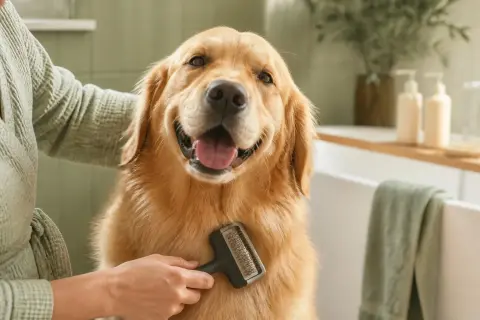
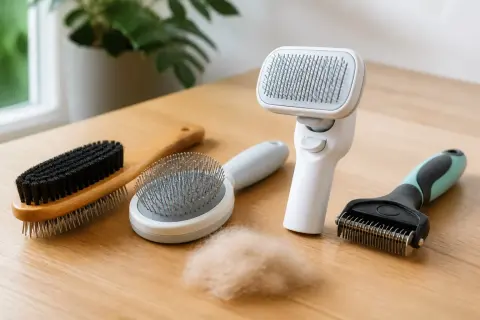
- Slicker for pre- and post-brush — Hertzko or Swihauk
- Non-slip mat, towels, treat bag, optional handheld sprayer
- Cotton for outer ear openings if you use it — never shove into the canal
- Wipes for face touch-ups — Earth Rated unscented
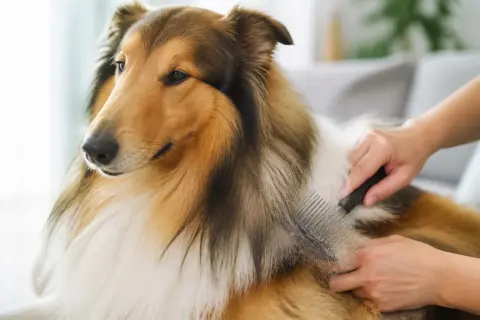
Brush out mats first. Water tightens tangles. Long coats: see long-coat tools before you turn on the tap.
Water, wet-down, and the calm voice
Use lukewarm water. Wet thoroughly to the skin — topcoat lies about how wet you are. Speak like a boring pilot. Dogs borrow your panic. Keep a hand on the dog for balance without pinning them into a fight.
Shampoo like a person who rinses
- Dilute shampoo in a bottle of water if the coat is thick — spreads better, rinses easier
- Start at the neck and work back; save the head for careful last
- Avoid eyes and inner ears; wipe the face instead of flooding it
- Massage to the skin; do not just polish the outer fluff
- Rinse until the water runs clear and your hands feel no slippery film
Residue causes itch. “One more rinse” is usually correct.
Dry without creating a swamp dog
Towel press — do not circular-rub mats into existence. Use a dog-safe dryer on low heat/distance if your dog accepts it, or air-dry in a warm room while brushing. Double coats must dry at the skin. Damp undercoat smells like regret by Tuesday.
Finish with a brush once mostly dry. Deshed tools can collect the bath-loosened fluff — SleekEZ or FURminator when appropriate.
Frequency and exceptions
Bathe when dirty, stinky, or directed by a vet — not on a perfume calendar. Skin disease needs prescribed products. After skunk or oil disasters, ask a pro or vet for the right chemistry; dish soap folklore has limits.
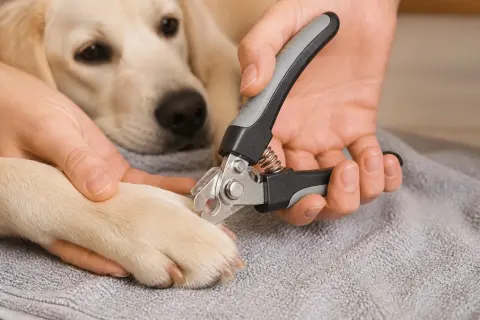
Between baths, wipe paws and messes. Keep nails and ears on their own schedule — at-home routines.
Stop and call for help when
- Skin is raw, bleeding, or intensely itchy
- The dog panics hard enough to risk injury
- Ears look infected after bathing
- You cannot dry a dense coat before nightfall in a cold house
Groomers exist for a reason — pro vs. home.
Our recommendations
Shop grooming. Links may earn a commission — advertising disclosure.
- Burt’s Bees Skin Soothing — Gentle everyday baths
- TropiClean PerfectFur — Mixed coats
- FURminator Deshedding Shampoo — Shed-season assist
- Hertzko slicker — Pre/post brush