Safe nail trims are a skill of tiny bites, good light, and knowing when to stop — not a once-a-season act of bravery. The quick (the living pink part with blood vessels and nerves) is the plot twist. Hit it and you get bleeding, yelping, and a dog who files your hands under “threats.” Miss the habit and nails click, curl, and change how a dog stands.
This how-to sits under our Complete Guide to Dog Grooming. Tool compare: Best Nail Clippers for Dogs. Build it into a schedule with Best At-Home Grooming Routines.
Who should try this at home
Owners who can handle paws calmly, dogs who accept treats for weird rituals, and nails that are not already grown into pads. If your dog freezes, snaps, or has black nails that terrify you, start with a groomer or vet tech demo — then practice handling at home without cutting.
Find the quick first
On clear or white nails, the quick looks pinkish inside the nail. Leave a visible margin of white/horn beyond it. On black nails, you cannot see the quick easily — trim microscopic slices and look at the cut face. As you near the quick, a darkish dot or soft gray center often appears in the cross-section. That is your “one more tiny bite and stop” signal. When in doubt, stop early and file.
Angle the clipper so the cut follows the nail’s natural tip — do not take a huge perpendicular chunk from halfway up the nail like you are pruning a rose bush.
Tools and backup plan
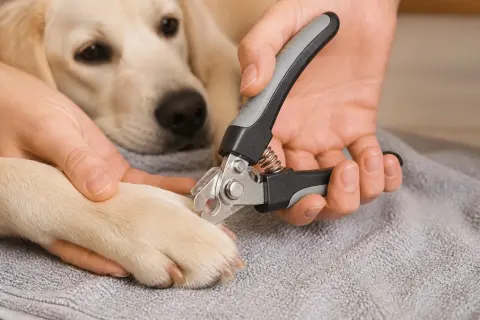
- Guarded clippers: gonicc with guard — beginner depth limiter
- Grinder: Casfuy 2-speed — gradual file for anxious dogs or finishing tips
- Styptic powder within reach — for the day the quick wins anyway
- Flashlight and treats — underrated medical equipment
Desensitize grinders: run the motor nearby with treats before it touches a nail. Clippers: practice the “click” on dry spaghetti while the dog gets chicken, then progress to actual toes.
Step-by-step trim
- Pick a calm moment; non-slip floor; good light
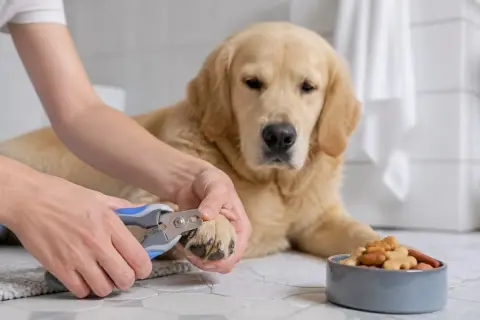
- Hold the paw gently; expose one nail without wrestling the whole dog
- Identify the quick (or plan tiny black-nail slices)
- Clip or grind a small tip; reward; breathe
- Check the cut face; decide if another micro-trim is safe
- Smooth sharp edges with the file or grinder
- Stop while the dog still likes you — finish other nails another day if needed
Dewclaws count. They do not wear down on walks and love to curl.
If you quick the nail
- Stay calm — your panic is contagious
- Apply styptic powder with firm pressure; wait
- Offer water and a break; do not chase the rest of the nails today
- Watch for continued bleeding or limping — call a vet if it will not stop or the dog is in real pain
One quicked nail is a lesson. Repeating the same aggressive cut is a hobby you should quit.
How short is short enough
Nails should clear the floor when the dog stands square — or come close without clicking constantly. Aim for frequent small trims (weekly or every other week) so the quick recedes over time. Rare huge trims keep the quick long forever.
Outsource without shame
Groomers and clinics trim nails every day. Fearful biters, seniors with pain, and corkscrew nails deserve professionals — see Professional vs. At-Home Grooming.
Our recommendations
Shop grooming. Links may earn a commission — advertising disclosure.
- gonicc Clippers with Guard — Controlled beginner cuts
- Casfuy Nail Grinder — Gradual filing and finishing
Keep the coat and bath side honest via the Grooming hub.