
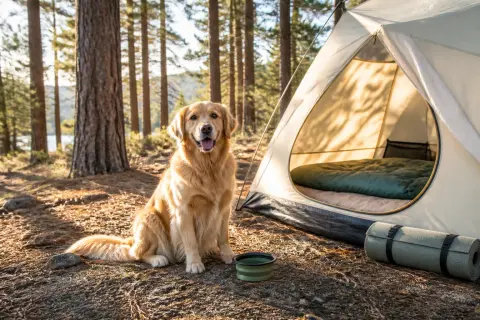
Camping with a dog is not “bring the dog.” It is a sleepover in the woods with a roommate who thinks every rustle is a career opportunity. The brochure shows a Golden in a camp chair. The overnight shows zipper hour, a kibble bowl that is technically a wildlife buffet, and you whispering please just lie down at 1:14 a.m. like it is a negotiation.
This is the first-overnight protocol we actually run: nearby site, practiced tent, leash as a personality, food locked like it matters, and a night plan that does not involve hoping. The packing-list version of this story already lives in Best Camping Tips with Dogs. This post is the weekend as it happens — playful on purpose, picky where the woods are unforgiving.
Links may earn a commission. We still pack the gear we would take on a real Friday. Full notes: advertising disclosure.
The short version (for humans who packed a dog like a lantern)
- Make the first trip boring on purpose. Close to home. Short. Easy exit. Save the epic for after you have slept.
- Practice the tent in the yard. Zippers, crinkly pads, and “this is your bed now” should not debut three hours from a vet.
- Night is the real test, not the hike. LED collar, short leash, potty, back in. Quiet hours are not a suggestion from people who hate joy. They are how you get invited back.
- Dog food counts as wildlife food. Bowls are not décor. Tie-outs are not a babysitter.
Your dog is a roommate, not camp decor
A dog at camp has a job list: settle in a new denscape, ignore other campfires, not interview the neighbors’ cooler, sleep (eventually), and hike tomorrow without being a wreck. That is a lot of jobs. Treat them like a teammate with needs — water, shade, a known bed, a way to be contained that you have practiced — not like a scenic extra for the photo.
If they have never spent a night away from the usual sofa, the woods are an advanced class. Start with a backyard tent night or a driveway car-camp. The outdoors hub is the bigger frame. This post is the overnight.
Book a site you can leave
First camps should have cell service, a bathroom you do not need a map for, and a drive home that does not feel like a dare. Confirm dog rules before you fall in love with the photos: leash length, quiet hours, pet fees, whether dogs may be left “just to grab ice.”
Skip the remote epic. Skip stacking a huge trail day on a first sleepless night. Conditioning for dirt lives in hiking safely and trail vs. park days. Camping is a sleep skill first.
Check heat, bugs, ticks, wildlife alerts, fire restrictions. Have a rainy-day plan that is not hope. Mid-day tents bake; shade and water still win — keeping dogs cool outside applies at camp, not only on trails.
Practice night before you drive
Pitch the tent at home. Get in it. Zip it. Feed a chew. Do a fake midnight potty on a leash with a headlamp. If they panic at nylon sounds in the driveway, they will not suddenly become a wilderness monk at a KOA.
Crate-trained dogs often sleep better in a familiar crate in the vestibule or the car than loose in a tent they can redecorate with toenails. Loose-in-the-tent dogs need a known pad and a human who is not going to scold them for existing at 2 a.m. Decide the sleep architecture before you are exhausted.
The overnight, hour by hour
Arrival — claim the square
Leash on before the door opens. Potty. Water. Then set camp: their bed, their bowl station, a towel for the vestibule, the first-aid kit where you can grab it without a scavenger hunt. A Front Range harness plus a 6-foot leash is the default we actually wear around other people’s marshmallows. Retractables at camp are how you invent new friends against their will.
Do not “let them settle off-leash while we unpack.” Unpacking is when squirrels file a motion and other dogs appear like pop-ups.
Afternoon — decompress, do not invent a marathon
A sniffy loop around the campground is better than a heroic first hike. They need to map the smells. You need to notice the neighbor’s unattended steaks. Offer water often from a bottle you will actually carry — H2O4K9 — into a Quencher that packs flat and does not pretend to be a ceramic statement.
If you day-hike out of camp, keep it shorter than your ego. Carry the first-aid kit on the trail, not only in the car. Pads tear. Foxtails happen. A dusty kit from three summers ago is a mood, not a plan.
Dinner — lock the buffet
Human food and dog food live in the same security system the land requires: bear box, locked car, hung bag — follow the posted rules, not the vibe. Pick up kibble immediately. A bowl left “for later” is an invitation. Do not leave the dog at the picnic table while you walk to the spigot in bear or raccoon country. “Just a minute” is how camp stories start badly.
Treats count. Chews count. The greasy pan counts. If wildlife can smell it, it is not “fine on the table because we’re right here.”
Zipper hour — the actual exam
This is the part the brochure skips. Charge the LED collar before you leave home. Short leash. Headlamp pointed at the ground, not at the entire loop. Potty. Back in. Same cue you practiced in the yard: go potty, back to bed. No investigative tours of site 14.
Barking at every rustle is a training problem you brought with you. It is not a camping feature. If they cannot settle at a busy loop, that is data for next time — quieter site, earlier bedtime, shorter day — not a reason to lecture the dog at volume.
If they pace or dig, more scolding is not the protocol. Shorter tomorrow, more evening sniff, familiar bed, lights down. You can also be the boring one and go to sleep. They take notes.
Morning — leave the site better than the brochure
Potty on leash. Breakfast in the same locked-food discipline. Pack out every bag. Check the pad, the paws, the ears, the collar light. Shake the tent like you mean it. A first overnight that ends with you still liking each other is a win. A first overnight that ends with a summit photo and a wrecked dog is a different hobby.
Tie-outs, crates, and the myth of “they’ll be fine”
Tie-outs look convenient. They become wrap, choke, lunge, and chewed-line stories. If you use one, you are present, it is short, it is on a harness, and the campground allows it. Many do not. A practiced crate in the car or vestibule is the calmer default for a lot of dogs. “I’ll just pop to the bathhouse” is how unsupervised dogs write plot.
Off-leash at camp is not a personality. It is a rule check. Default leash unless a designated area says otherwise. Do not let them say hi to every picnic table. Other people’s dinner is not a meet-and-greet.
Rain, heat, and the unheroic backup
Towel the vestibule so the tent does not become a mud wallow. Short covered sniffs beat a soaked scramble. Elevated or car rest while they dry. If storms escalate, leave. First camps should not require a TED Talk about grit.
Heat: tents are ovens. Shade, water, timing. Cooling gear helps on warm campground walks and still loses to “we sat this one out.” Water play is excellent until it is too long or unsupervised — jackets when boats or current enter the chat: life jackets.
What we pack (the short kit)
The full checklist is in the camping tips guide. The kit we actually throw in the bin:
- Harness + 6-ft leash — campground manners hardware
- LED collar — zipper-hour visibility
- Bottle + collapsible bowl — water you will actually offer
- Dog first-aid kit — pads, tweezers, a reason to turn around early
- Known bed or pad, towel, bags, their food in a lockable container, a chew that is not a wildlife piñata
Shop the rest in the outdoor catalog. Hiking add-ons: hiking gear.
If you only change one thing
Practice one night in the tent at home, then book a nearby, boring site. The woods will still be the woods. Your dog will still have opinions. You will just be less surprised when the zipper happens.
Camp like you brought a roommate. Because you did. Pack out the bags. Lock the kibble. Light the collar. Then let the morning be ordinary — coffee, a sniff, a dog who slept enough to be decent on the way home.