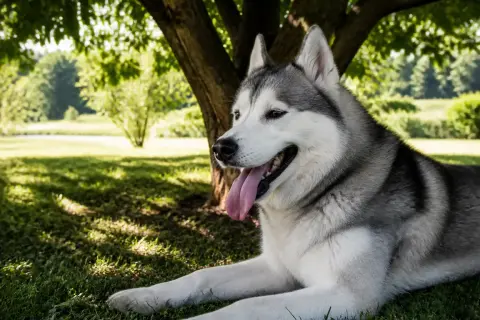
Keeping dogs cool outside is mostly timing, shade, water, and honesty about heat — not a single product. Cooling vests and fancy bottles help at the margins. They do not cancel a blacktop walk at 2 p.m. in July humidity.
This guide sits under our Complete Guide to Dogs Outdoors. For gear deep-dives, see Best Dog Cooling Vests and Best Outdoor Water Bottles.
Who this guide is for
Anyone walking, hiking, traveling, or playing outside in warm weather — especially with thick coats, dark coats, brachycephalic breeds, seniors, overweight dogs, or high-drive athletes that will “push through” past safe limits. If a heat advisory is in effect, this guide’s answer is often: stay inside.
Why dogs overheat
Dogs primarily cool by panting. Thick coats, short airways, humidity, direct sun, and exercise stack risk fast. Brachycephalic breeds, seniors, overweight dogs, and dark-coated athletes need earlier turnarounds than “they’ll be fine” optimism allows. Swimming and sprinklers help some dogs — they also count as work, not a free cooling pass.
Heat stroke warning signs
- Heavy, continuous panting that does not ease with rest in shade
- Thick drool, glazed or anxious expression
- Bright red or pale gums; wobbliness; vomiting; collapse
- Refusal to keep walking or sudden disorientation
- Body feeling extremely hot; frantic or oddly quiet behavior
If you suspect heat stroke: move to shade/AC, cool with room-temperature water (not ice shock), offer small drinks if alert, and contact a vet urgently. This is not a wait-and-see moment. This guide is not medical advice — when in doubt, treat it as urgent.
Who is at higher risk
- Brachycephalic breeds — Bulldogs, Pugs, French Bulldogs, and similar mixes
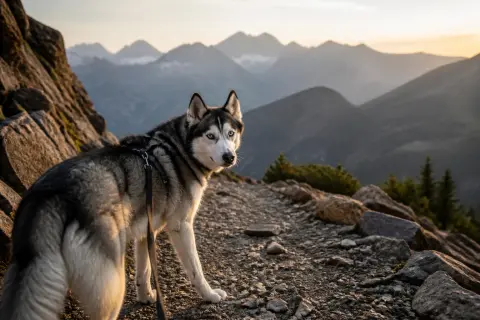
- Thick double coats — Huskies, Malamutes, many shepherds and collies in summer
- Dark coats — more sun absorption on exposed routes
- Seniors and puppies — less reserve and slower recovery
- Overweight dogs — extra insulation and workload
- High-drive athletes — will keep going if you do not abort
- Dogs on certain medications or with heart/respiratory issues — ask your vet for individual limits
Pavement test (do this every warm day)
- Place the back of your hand on the asphalt or sidewalk for seven seconds.
- If it is too hot for your hand, it is too hot for paws.
- Choose grass, dirt, or another time of day — or boots after indoor practice.
- Remember: shaded pavement can still be hot; test the actual surface you will walk.
- Trailhead parking lots are often the hottest part of an otherwise “nice” hike.
Optional paw protection for hot approaches: Ruffwear Grip Trex (sold in pairs — buy two pairs). Links may earn a commission — see our advertising disclosure.
Timing and route choices
- Prefer early morning or late evening in warm seasons
- Choose shaded trails over exposed parking-lot loops
- Shorten mileage when humidity is high even if the thermometer looks “okay”
- Build abort points into the route so turning around is easy
- Skip peak-heat fetch in unshaded yards — play is still work
Shade and rest
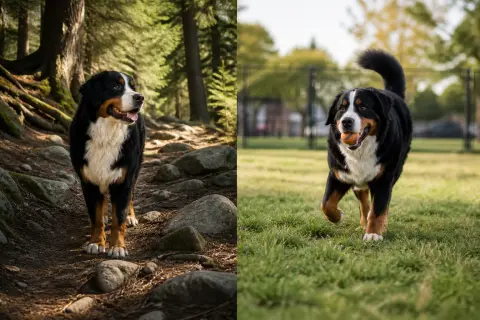
Build shade into the plan: tree cover, pop-up shade at events, a car with real AC (never leave dogs in hot vehicles). Rest before your dog is crashing. Park fetch in full sun is still work — see Trail Days vs. Park Days when deciding outing intensity.
Car safety
- Never leave dogs in parked cars “for a minute” in warm weather — cabin temps spike fast
- “Windows cracked” is not a cooling plan
- If you must run an errand, take the dog with you into AC or leave them home
- After a hot hike, cool the car before loading a panting dog if you can
- Road-trip water: keep a bottle and bowl in the cabin, not only in a hot trunk
Water first, always
Carry water you trust and offer it on breaks. Do not rely on streams as the plan.
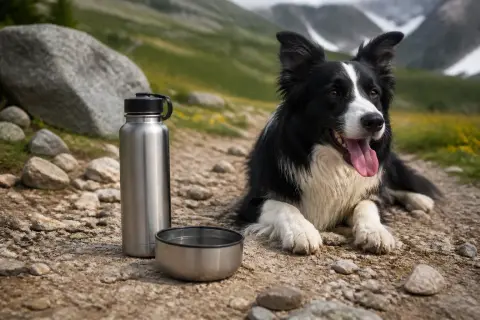
Top picks: H2O4K9 25 oz, PupFlask Large, or a simple Kurgo Gourd for short walks — plus a collapsible bowl.
Full bottle comparison: Best Outdoor Water Bottles.
Cooling product tiers
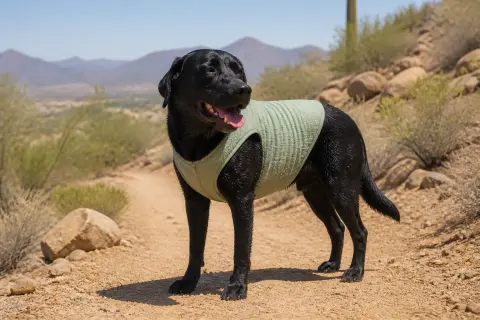
Evaporative vests work when soaked, wrung, worn, and re-wet as they dry. They reduce heat load on warm days. They do not make extreme heat safe. Humidity reduces how well evaporation works — timing and shade still win.
- Premium vest: Ruffwear Swamp Cooler Vest
- Cooling + leash control: Ruffwear Swamp Cooler Harness
- Mid-tier vest: Canada Pooch cooling vest
- Lighter wrap: Hurtta Cooling Wrap
- Budget starter: Microfiber budget cooling vest
Full how-to: Best Dog Cooling Vests. Shop the set in outdoor.
Post-overheat care notes (high-level)
- Get to shade or AC; stop exercise immediately
- Cool with room-temperature water; avoid extreme ice shock unless a vet directs otherwise
- Offer small amounts of water if the dog is alert — do not force large gulps into a distressed dog
- Contact a veterinarian urgently if you see heat-stroke signs; do not wait for “they seem a little better”
- After a scare: plan easy recovery days, review what stacked (heat + pavement + mileage), and lower the next outing’s ambition
- This is not a substitute for professional veterinary care
What not to do
- Do not leave dogs in parked cars “for a minute” in warm weather
- Do not force peak-heat training because a vest is on
- Do not assume swimming fully cancels heat — swimming is exercise too
- Do not ignore early fatigue to finish a Strava loop
- Do not muzzle a dog tightly in heat in a way that blocks panting (emergency muzzles need extreme care — when in doubt, avoid)
- Do not skip the pavement test because “we’ve always done this route”
A simple cool-day decision path
- Heat advisory / extreme humidity? → Indoor enrichment or tiny shaded potty trips only.
- Warm but manageable? → Early start, shade route, water packed, optional cooling vest.
- Pavement too hot? → Grass/dirt routes or boots; otherwise skip.
- Dog already panting hard at the trailhead? → Abort or drastically shorten.
- Need trail gear beyond cooling? → hiking gear + hike safely.
For the Outdoor hub, return to The Complete Guide to Dogs Outdoors or browse outdoor shop picks.