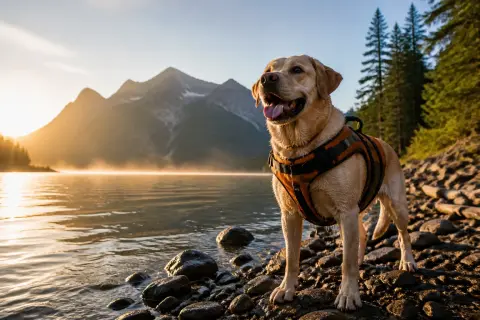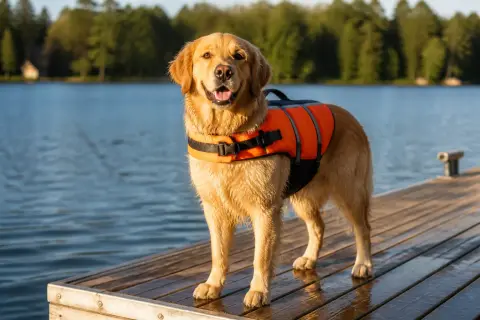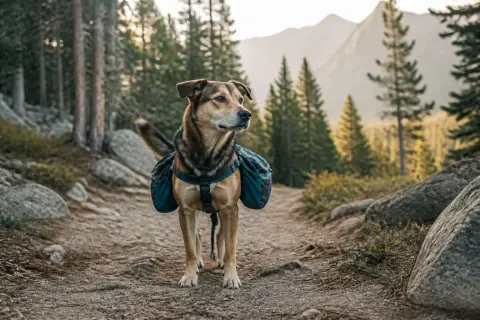
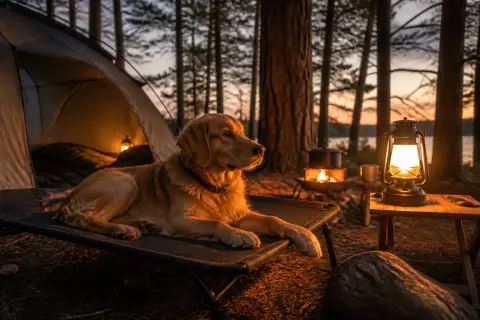
Camping with dogs is less about Instagram sunsets and more about logistics: sleep, wildlife food discipline, water, tie-outs, and recovering from the day’s miles. A first overnight goes smoother when you practice crate or tether routines at home and pack like your dog is a teammate with needs — not a decorative accessory.
This guide sits under our Complete Guide to Dogs Outdoors. For trail fitness and etiquette, pair it with How to Hike Safely with Dogs. Gear lives in the outdoor shop.
Who this guide is for
First-time car campers and tent campers bringing a dog overnight, plus experienced hikers who want fewer 2 a.m. surprises. Backcountry rules vary widely — always check local regulations for leashes, food storage, and where dogs may sleep. If your dog has never spent a night away from their usual bed, practice before you drive three hours into the woods.
Before you book the site
- Confirm dog rules: leash length, quiet hours, pet fees, and whether dogs may be left unattended
- Practice nights in the tent or van at home so zipper sounds are not brand new at 11 p.m.
- Know your dog’s recall and leash manners around strange campfires and other dogs
- Pick a first trip with short hikes and easy exits — not a remote epic
- Check seasonal hazards: heat, bugs, ticks, wildlife alerts, fire restrictions
- Have a rainy-day plan that is not “hope the weather holds”
Gear packing checklist
- Hydration: bottles plus collapsible bowls — see outdoor water bottles
- Sleep: familiar bed or an elevated cot that keeps dogs off cold/damp ground
- Control: sturdy leash/harness; long line only where allowed and supervised
- Light: hands-free light for you plus an LED collar for the dog on midnight potty trips
- Cleanup: bags, towel, and a plan for muddy paws in the tent vestibule
- First-aid basics: paw tape, tweezers, a real kit, vet info, and an emergency exit plan
- Familiar comfort: a worn t-shirt or known toy can reduce first-night pacing
- Food storage: sealed containers that match local wildlife rules — dog food counts
Links below may earn a commission — see our advertising disclosure.
Elevated cot idea: a breathable raised bed such as the Coolaroo Original Elevated Dog Bed helps on warm nights and keeps dogs off wet ground — useful as a camp bed when foam mattresses get filthy.
Night visibility: ILLUMISEEN LED Dog Collar so you can spot a black dog at 2 a.m. without waking the whole loop.
First aid: Vet-approved dog first aid kit for the car and camp bin.
Trail control: Ruffwear Front Range Harness plus a 6 ft heavy-duty leash.
Sleep: elevated cot vs. foam
- Elevated cot: cooler airflow, dries faster after rain or swim, stays cleaner off dirt — less pressure relief than thick foam
- Familiar foam / home bed: better for seniors and dogs that need joint cushion; bring a waterproof liner or accept camp grime
- Hybrid: cot for day lounging at camp, familiar pad in the tent at night
Decide tent vs. vestibule vs. car sleep before you are exhausted. If your dog paces or digs at night, shorter days and more evening decompression walks usually help more than scolding.
Food storage and wildlife discipline
- Store human and dog food as required locally (bear boxes, locked cars, hung bags — follow the land rules)
- Pick up leftover kibble immediately; bowls are not décor
- Keep treats in the same secure system as dinner food
- Do not leave dogs unattended at the picnic table “just for a minute” in bear or curious-wildlife country
- Never let dogs investigate carcasses or dens “because they’re interested”
- Inspect paws and ears after brushy days for foxtails and ticks
Night visibility and quiet hours
Midnight potty trips are when dogs vanish into the dark and when campground neighbors learn to hate you. Use an LED collar, keep the leash short, and practice a calm “go potty / back to bed” routine at home first. Respect quiet hours — barking at every rustle is a training problem, not a camping feature.
Tie-out caution
Tie-outs can seem convenient and become hazards: tangle, choke risk, sudden lunges toward wildlife or other campers, and chewed lines. If you use one, supervise, keep it short enough to prevent wrapping around trees/furniture, and prefer a harness over a collar for any tether. Many campgrounds restrict or ban unsupervised tethering — follow posted rules.
A better default for many sites: leash + you present, or a secure crate setup you have practiced.
Campground etiquette
- Leash defaults unless a designated off-leash area says otherwise
- Do not let your dog “say hi” to every picnic table
- Pack out waste — yes, even in the woods near camp
- Keep food smells managed; other campers’ dogs and wildlife notice
- If your dog cannot settle at busy loops, choose quieter sites next time
Rainy-day plans
- Towel + vestibule wipe-down so the tent does not become a mud wallow
- Short sniff walks under cover instead of a heroic soaked scramble
- Elevated cot or car crate for drying off the ground
- Indoor enrichment backups for multi-day rain (snuffle work, chews, training games)
- Know the nearest exit if storms escalate — first camps should not be remote epics
Hydration and heat at camp
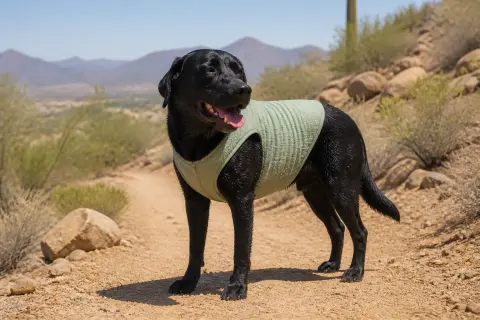
Camp is not automatically cool. Mid-day tents bake. Offer water often, create shade, and avoid peak-heat busywork. Cooling vests can help on warm campground walks — see Best Dog Cooling Vests — but shade and timing still win.
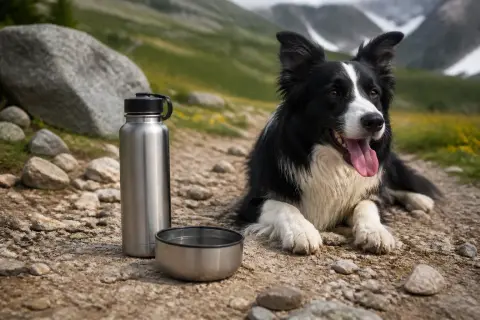
Handy camp hydration: H2O4K9 25 oz or PupFlask Large plus a Quencher or PetBonus silicone bowls.
Day-hike add-ons from camp
If you day-hike out of camp, bring trail control and fitness habits from hiking gear and hike safely. Do not stack a huge trail day on top of a first sleepless camp night. Carry the first-aid kit on the hike, not just in the car.
Our camp kit recommendations
Browse matching gear in the outdoor shop.
- Sleep: Coolaroo Elevated Dog Bed
- Night visibility: ILLUMISEEN LED collar
- First aid: Dog first aid kit
- Control: Front Range Harness + 6 ft leash
- Water: H2O4K9 / PupFlask + Quencher or PetBonus bowls
A simple first-camp decision path
- First overnight ever? → Nearby, short, practice tent night first.
- Hot forecast? → Shade + water plan; shorten hikes; read keep cool outside.
- Wildlife area? → Food storage discipline and leash defaults.
- Big trail day planned? → Condition first; keep day one conservative.
- Dog anxious at night? → Familiar bed, LED collar for calm potty trips, shorter day, more evening decompression.
- Rain in the forecast? → Towels, vestibule plan, and an easy exit.
For Outdoor framing and product tiers, return to The Complete Guide to Dogs Outdoors. Choosing trail vs. park energy before the trip? See Trail Days vs. Park Days.