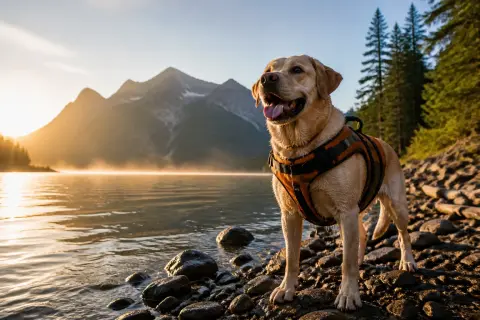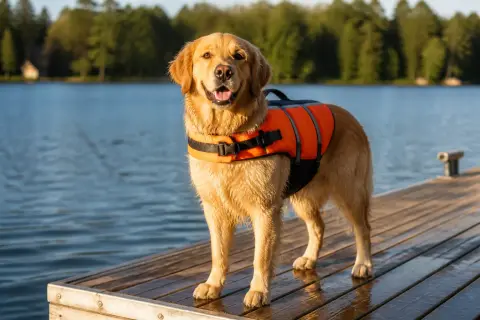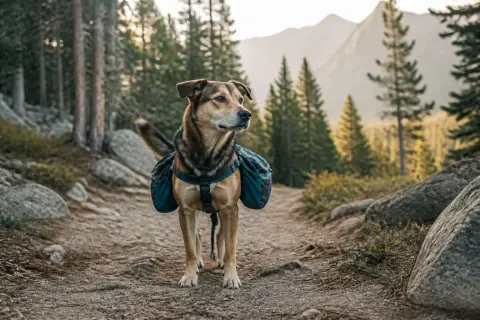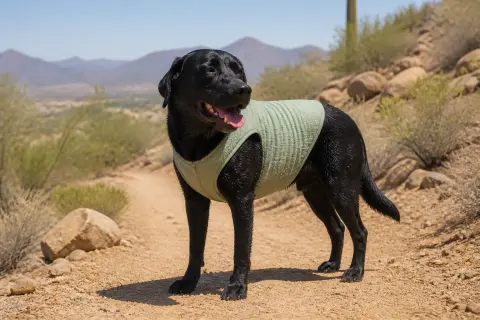
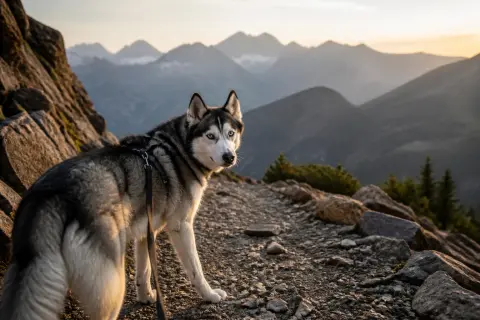
Safe dog hiking is mostly boring habits done early: build fitness gradually, carry water, watch weather, protect paws, and treat wildlife and trail etiquette as non-negotiable. Gear helps — harnesses, boots, bowls — but it cannot invent conditioning or undo a mid-day heat decision.
This how-to sits under our Complete Guide to Dogs Outdoors. For product deep-dives, see Best Hiking Gear for Dogs and Best Outdoor Water Bottles.
Who this guide is for
Owners moving from neighborhood walks into real trail mileage — and experienced hikers who want a clearer pre-hike checklist. Puppies, seniors, and recovering dogs need shorter plans and earlier turnarounds than adult athletes. If you are choosing between a trail day and a park day, start with Trail Days vs. Park Days.
Build fitness before the epic
- Increase distance and elevation over weeks, not one heroic Saturday
- Include heat-aware shorter walks if summer is your season
- Skip heavy packs until adult dogs are conditioned; keep pack weight ≤ ~25% of body weight when you do add one
- Puppies: short adventures, soft surfaces when possible, no loaded packs while growth plates are open
- Seniors: shorter loops, more breaks, earlier turnarounds
- Watch next-day stiffness — it is feedback, not a badge of honor
Sample progressive training week
Adapt distances to your dog’s current baseline — this is a pattern, not a prescription:
- Mon: easy neighborhood walk; note energy and paw comfort
- Tue: short trail or dirt path at an easy pace (shorter than weekend goal)
- Wed: rest or sniff-only stroll
- Thu: moderate walk with a light hill or stairs if joints tolerate it
- Fri: rest or park sniff (not chaotic wrestle-fests before a big Saturday)
- Sat: longer trail day still under your dog’s proven distance
- Sun: recovery — easy park or nothing day; check paws and stiffness
Bump weekend mileage only when the next day still looks good. Stacking hard park play with hard trails is how soft-tissue injuries sneak in — see Trail Days vs. Park Days.
Turnaround criteria (decide before you start)
- Pre-chosen turnaround time or mileage — not “we’ll see how we feel at the ridge”
- Heat climbing, humidity spiking, or dog panting hard at the trailhead → shorten or abort
- Limping, lagging, obsessive paw licking, or unusual quiet → end the summit bid
- Water reserve dropping below a comfortable return buffer → turn around
- Weather change (storm, lightning, sudden cold wind) → prioritize exit over ego
- Dog already struggling in the first mile → do not “see how the next mile goes”
Trail etiquette and leash manners
- Leash where required; yield on singletrack without turning every pass into a greeting
- Use a fixed-length leash — retractables tangle and steal control on real trail
- Step aside for horses and give them space
- Pack out waste — yes, even off-trail “nobody will see it”
- Keep voice and dog calm near overlooks and crowded junctions
- If your dog cannot pass politely yet, choose quieter routes while you train
- Bike and runner passes: short leash, step off trail, let them clear before releasing tension
Control defaults: Ruffwear Front Range Harness plus a 6 ft heavy-duty leash. Links may earn a commission — see our advertising disclosure.
Paws, pads, and surfaces
Hot pavement trailheads, abrasive volcanic rock, ice melt, and long scree chew pads up. Check paws at breaks. If surfaces are harsh, consider boots after indoor practice.
Optional top pick: Ruffwear Grip Trex Dog Shoes — sold in pairs (buy two pairs for four paws).
Also watch for foxtails, ice balls between toes in winter, and limping that appears only on the downhill — turn around early rather than “toughing out” the loop.
Wildlife by region mindset
You do not need a field guide memorized — you need a habit: know the local short list before you go, then leash and exit when curiosity peaks.
- Snake country: leash defaults on warm rocky shoulders; do not let dogs nose under logs
- Bear / mountain lion country: food discipline at breaks; keep dogs close; follow posted guidance
- Moose / elk areas: give wildlife a wide berth; dogs that chase create dangerous chase-backs
- Tick regions: check ears, collars, and armpits after every brushy day
- Algae / cyanobacteria alerts: skip the “refreshing” lake if local warnings say so
- Everywhere: no carcass investigations, no dens, no “interesting smells” off-trail unsupervised
Weather honesty
Heat and humidity are the silent trip-enders. Start early, seek shade, carry more water than pride suggests, and turn around while your dog still looks strong. Cooling vests help as tools — they do not justify dangerous mid-day miles. Read How to Keep Dogs Cool Outside and Best Dog Cooling Vests.
Cold, wind, and wet rock change traction and fatigue too. Lightning and exposed ridges are human problems that become dog problems when you push “just a little farther.” Dusk finishes call for visibility gear such as an ILLUMISEEN LED collar.
Hydration and control gear (keep it simple)
A comfortable harness and water you trust cover most day hikes.
- Harness: Ruffwear Front Range
- Leash: Twoear 6 ft heavy-duty
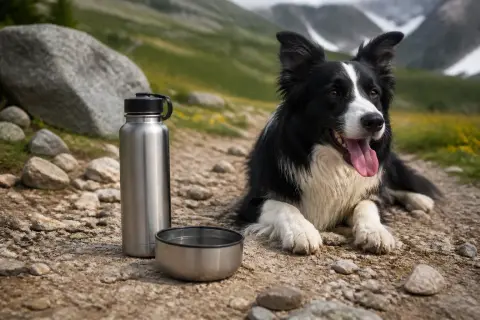
- Water: H2O4K9 25 oz or PupFlask Large plus a collapsible bowl
- Optional pack: Ruffwear Approach only for fit adults within load limits
- First aid: Vet-approved dog first aid kit
Browse more in the outdoor shop.
First-aid mindset (not a vet substitute)
- Watch for limping, obsessive paw licking, lagging behind, or unusual panting
- Carry tweezers, gauze, a compact towel, and your vet’s emergency number
- Know when to abort: heat stress, injury, or disorientation ends the summit bid
- After big days, schedule recovery — park play the next morning is not always kind
- If you are unsure whether something is urgent, treat it as urgent and shorten the day
- Restock anything you use from the kit before the next hike
Recovery protocols after big days
- Offer water on schedule; do not wait for frantic thirst alone
- Check paws for cuts, grit, and torn pads; rinse if needed
- Easy next day: sniff walk or rest — not another epic or chaotic dog-park wrestle
- Watch for delayed stiffness, reluctance to jump, or limping the following morning
- If heat was a factor, prioritize shade/AC and calm rest; escalate to a vet if warning signs persist — see keep cool outside
A simple pre-hike checklist
- Weather and heat plan set?
- Water + bowl packed (with return reserve)?
- Harness/leash solid; waste bags packed?
- Distance matches recent conditioning?
- Paw/boot plan for the surface?
- Turnaround time chosen before you start?
- First-aid kit and vet number accessible?
- Recovery day planned afterward?
Camping overnight after a hike? Read Best Camping Tips with Dogs. Water adventure instead of dirt trail? See Best Dog Life Jackets.