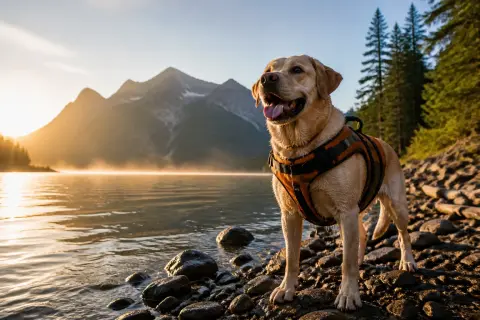
Outdoor time is one of the best parts of living with a dog — and one of the easiest places to get surprised. Heat, cold water, sharp trail, wildlife, and “they’ve always been fine” assumptions catch even experienced owners. Outdoor readiness is not about buying every gadget. It is about matching fitness, weather, terrain, and gear to the day you are actually taking.
This guide is the Outdoor hub for Poochopolis. Use it to frame water safety, heat management, hiking, hydration, and camping, then branch into supporting guides or the shop outdoor picks when you are ready to buy. Prefer a focused deep-dive? Jump to life jackets, hiking gear, cooling vests, or trail days vs. park days.
What outdoor readiness actually means
A dog that thrives at the neighborhood park is not automatically ready for a rocky 6-mile hike in July. Outdoor readiness is a stack of habits:
- Fitness for the plan — build distance and elevation gradually; skip heroic first weekends
- Gear that fits — harnesses, flotation, and boots only work when sized by girth or paw, not guesswork
- Weather honesty — heat, humidity, and cold change the entire outing
- Water access — for drinking and for cooling; do not rely on “we’ll find a stream”
- Paw and recovery awareness — hot pavement, abrasive rock, and next-day stiffness are part of the sport
- First-aid mindset — know when to abort, and carry basics before you need them
If any one of those is missing, shorten the day. Gear cannot invent conditioning your dog does not have yet.
Breed and body-type notes
Breed is a hint, not a rule — but body type changes risk profiles outdoors:
- Brachycephalic breeds (Bulldogs, Pugs, French Bulldogs): overheat and tire fast; prioritize shade, short sessions, and life jackets with strong chin flotation for water days
- Deep-chested / barrel-chested dogs: may ride low in water and need careful life-jacket fit; see Best Dog Life Jackets
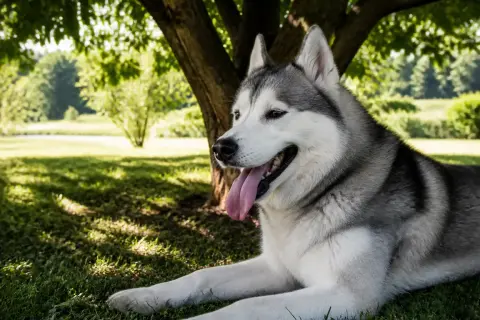
- Double-coated northern breeds (Huskies, Malamutes, many collies): thick coats are not heatproof; cooling strategy and early starts matter more than “they’re from Siberia”
- Short-legged / long-backed dogs (Dachshunds, Corgis, Bassets): shorter mileage, careful scramble approaches, and earlier turnarounds
- Giant breeds and seniors: joints pay for rocky downhills; pad rest days and skip heavy packs
- High-drive herding and sporting dogs: will push past safe limits if you let them — you own the abort call
Water safety
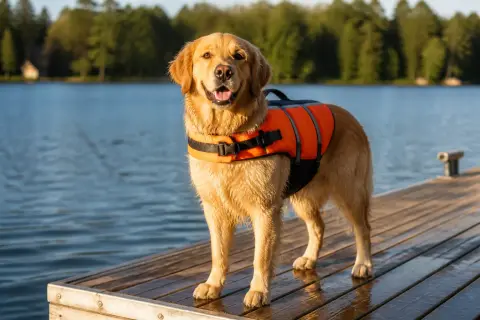
Not every dog is a natural swimmer. Bulky chests, short legs, brachycephalic airways, seniors, and first-timers can tire fast — especially in current or when climbing back into a boat. A life jacket is flotation and a grab handle, not a permission slip to ignore conditions.
Practice in shallow water first. Teach a dock or boat “wait” before leaping. Watch chin position and rear buoyancy; if the chin dips or the rear sinks, prioritize jackets with better head flotation. Activity matters too: calm pool laps are different from river current, SUP balance, or open-water boat days.
Top pick: Ruffwear Float Coat Dog Life Jacket — premium fit and a real lift handle for boats, docks, and open water. Mid-range and budget options (including Kurgo Surf n’ Turf, VIVAGLORY, and Outward Hound) live in our Best Dog Life Jackets guide.
Heat management
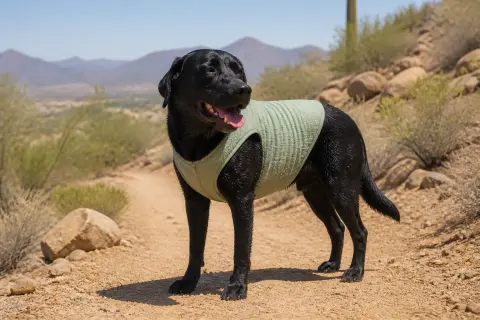
Dogs cool primarily by panting. Thick coats, short noses, humidity, and black pavement stack the risk quickly. Cooling vests help when used correctly (soak, wring, re-wet), but they are tools — not miracles. Humidity slows evaporative cooling; arid days dry vests faster and need more re-soaks. Pavement that burns your hand burns paws.
Top pick: Ruffwear Swamp Cooler Dog Vest — evaporative cooling for warm hikes when you also bring shade strategy and water. Deeper heat guidance lives in How to Keep Dogs Cool Outside and Best Dog Cooling Vests.
Hiking essentials
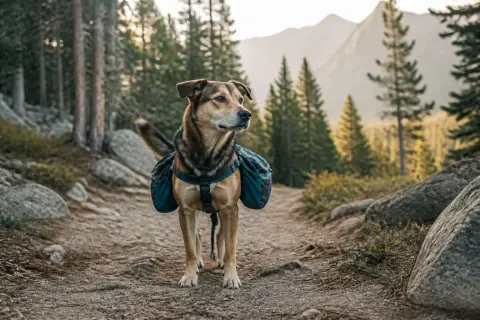
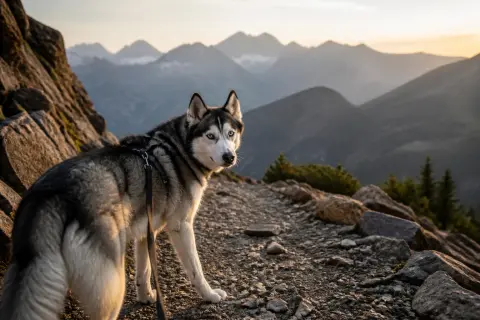
Trail days ask more of joints, paws, and attention than park loops. Start with a comfortable harness, a fixed-length leash (retractables tangle and steal control on real trail), a hydration plan, and an honest distance. Packs are optional and only for conditioned adults within safe load limits. Boots earn their keep on hot asphalt approaches, abrasive rock, ice melt, and long scree — practice indoors first.
Top pick: Ruffwear Front Range Dog Harness — padded everyday-to-trail control. Add the Approach Hiking Pack only when your dog is fit and you keep pack weight at or under about 25% of body weight. Pair with a sturdy 6 ft heavy-duty leash for trail passes. Full kit notes: Best Hiking Gear for Dogs and How to Hike Safely with Dogs.
Paw care on trail and pavement
Pads are the weak link on ambitious days. Hot parking-lot approaches, volcanic rock, salt, ice balls between toes, and long downhill scree all chew paws. Check pads at every break. Trim hair between toes in winter snow country. Carry a simple first-aid kit with gauze and tweezers; torn pads end trips early.
- Do the hand-on-pavement test before summer walks
- Consider Ruffwear Grip Trex boots (sold in pairs — buy two pairs) after indoor practice
- Watch for limping that appears only on the downhill — turn around early
- After big days, rinse grit, check for cuts, and plan an easier next day
Hydration on the go
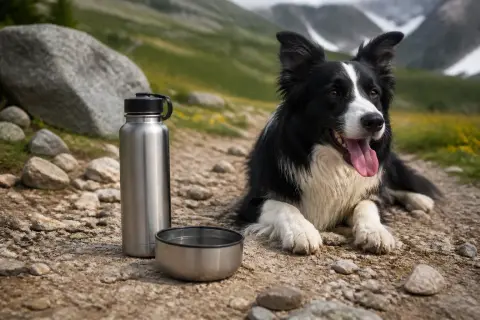
If you wait until your dog is desperately thirsty, you already waited too long — especially in heat. Carry water you trust, plus a bowl that packs flat. Streams can be contaminated; treat them as a last resort, not the plan. Multi-dog households and large breeds need more capacity than a single mini walk bottle. If you also re-wet a cooling vest, budget extra water for that soak loop.
Top picks: H2O4K9 25 oz Bottle for durable day capacity, Kurgo Gourd for short walks, and a Ruffwear Quencher or budget silicone bowl for drinking. Details in Best Outdoor Water Bottles.
Seasonal planning
- Spring: mud, ticks, foxtails starting; leash manners around nesting wildlife; build mileage gradually after winter
- Summer: heat and humidity own the calendar — early starts, shade routes, cooling tools, pavement honesty
- Fall: often the best trail window; watch hunting seasons and cooler evenings after warm days
- Winter: ice melt, snowball toes, shorter daylight; visibility gear for dusk walks; boots when salt or ice demand them
Seasonal gear swaps beat one “forever kit.” A cooling vest and LED collar matter in different months than a float coat and elevated camp cot.
First-aid mindset (not a vet substitute)
Carry basics before you need them: tweezers, gauze, a compact towel, your vet’s emergency number, and a kit sized for trail days. Know heat-stress signs, limping, lagging, and unusual panting as abort signals. After overheating or injury, prioritize shade/AC, calm recovery, and professional care when something looks urgent — do not “finish the loop” out of stubbornness.
Top pick: Vet-approved dog first aid kit for the car and daypack. Deeper hike protocols live in How to Hike Safely with Dogs.
Camping basics
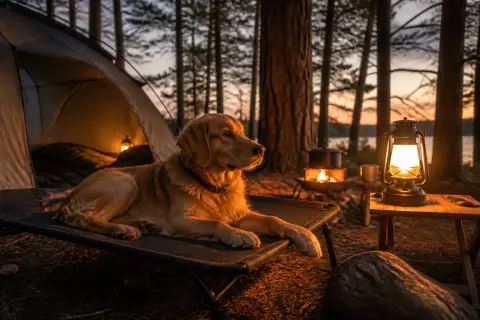
Camp with dogs is logistics: sleep setup, wildlife food discipline, night visibility, tie-out caution, and a recovery plan after big days. Bring familiar bedding or an elevated cot, pack water for people and dogs, add a lit collar for midnight potty trips, and never assume “they’ll sleep under the stars” without a practice night.
Start with Best Camping Tips with Dogs before a first overnight. An elevated option like the Coolaroo Original Elevated Dog Bed keeps dogs off cold or damp ground; an ILLUMISEEN LED collar helps you spot them at night.
Trail days vs. park days
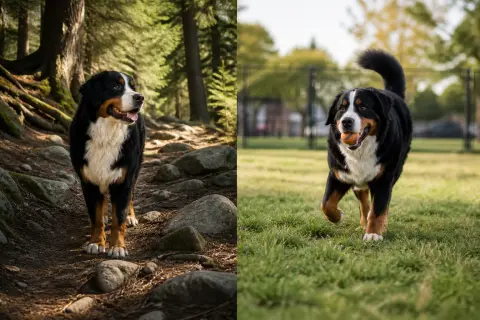
Parks excel at social play and short bursts. Trails excel at mileage, sniff enrichment, and shared adventure — with more heat, paw, wildlife, and etiquette risk. Choosing the wrong day type is how dogs get overworked or under-stimulated. Social risk, training stage, and recovery status matter as much as weather.
Use Trail Days vs. Park Days when you are deciding which outing matches today’s weather, fitness, and recovery.
Our recommendations
Picks below are curated for the outdoor shop. Prices are recent Amazon snapshots and change often. Links may earn us a commission — see our advertising disclosure.
Water safety
- Ruffwear Float Coat — Premium flotation and grab handle for boats, rivers, and open water.
- Kurgo Surf n’ Turf — Mid-range life jacket for regular supervised water days without Float Coat pricing.
- Hurtta Life Savior — Strong hard-to-fit / deep-chest option.
- VIVAGLORY Ripstop Life Vest or Outward Hound Granby Splash — Budget-friendly calm-water starters (confirm size in cart).
Heat and cooling
- Ruffwear Swamp Cooler Vest — Soak-and-wear evaporative cooling for warm trails.
- Ruffwear Swamp Cooler Harness — Cooling plus leash control for hot walks.
- Canada Pooch cooling vest — Strong mid-tier evaporative option.
- Hurtta Cooling Wrap — Wrap-style coverage when a full vest feels like too much gear.
- Microfiber budget cooling vest — Affordable soak-and-wear starter for short warm walks.
Hiking and trail control
- Ruffwear Front Range Harness — Everyday-to-trail padded harness.
- Twoear 6 ft heavy-duty leash — Fixed-length control that beats retractables on trail.
- Ruffwear Approach Hiking Pack — For conditioned adults within the ~25% body-weight load rule.
- Ruffwear Grip Trex Shoes — Sold in pairs (buy two pairs for four paws) for hot/sharp/salty surfaces.
- Dog first aid kit — Car and daypack basics for paw and scrapes.
- ILLUMISEEN LED dog collar — Visibility for dusk trailheads and camp nights.
Hydration and camp sleep
- H2O4K9 25 oz — Durable stainless day bottle with travel bowl.
- PupFlask Large — Higher capacity for bigger drinkers and longer days.
- Kurgo Gourd — Simple 2-in-1 for short outings.
- Ruffwear Quencher or PetBonus silicone 2-pack — Packable bowls.
- Coolaroo Elevated Dog Bed — Breathable camp cot off cold or damp ground.
A simple decision path
- Boating, rivers, or weak swimmer? → Life jacket first (guide); Float Coat if you want premium, Surf n’ Turf for mid-range.
- Hot forecast / thick coat / short nose? → Shade, timing, water first; add cooling vest as a tool (cool-outside guide).
- Trail mileage over park play? → Harness + fixed leash + hydration + gradual fitness (hike safely).
- Dog will carry gear? → Only conditioned adults; keep pack ≤ ~25% body weight; empty-pack walks first.
- Hot pavement, salt, or sharp rock? → Consider boots; practice indoors first.
- Dusk walks or camp nights? → LED collar for visibility.
- First overnight? → Read camping tips before you book the site.
Explore the Outdoor cluster
- Best Dog Life Jackets
- Best Hiking Gear for Dogs
- Best Dog Cooling Vests
- Best Outdoor Water Bottles
- Best Camping Tips with Dogs
- How to Hike Safely with Dogs
- How to Keep Dogs Cool Outside
- Trail Days vs. Park Days
When you are ready to browse products in one place, open the outdoor category in Shop.