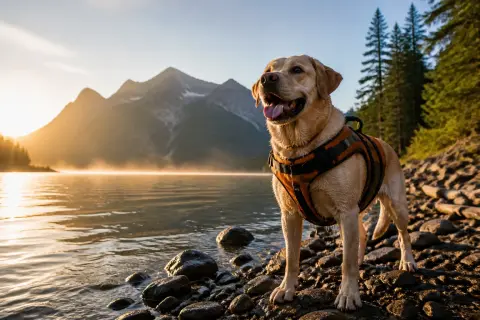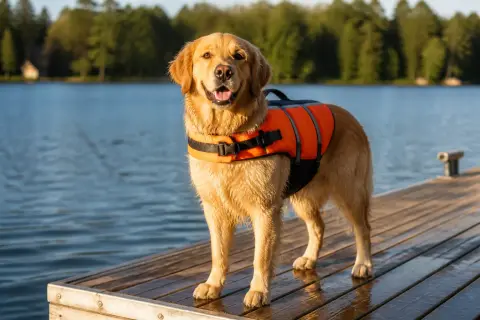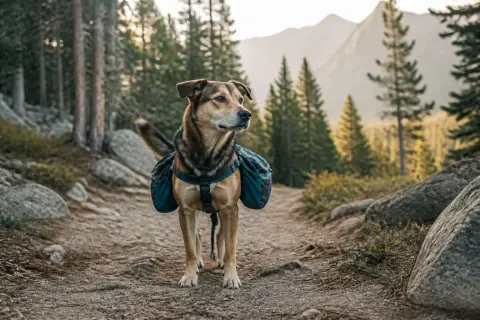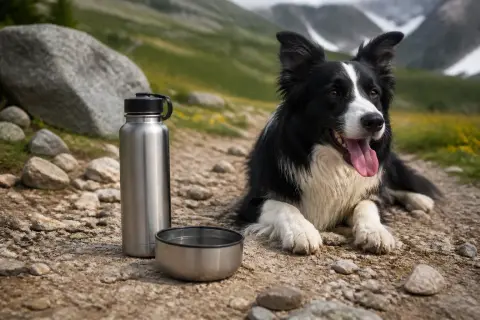
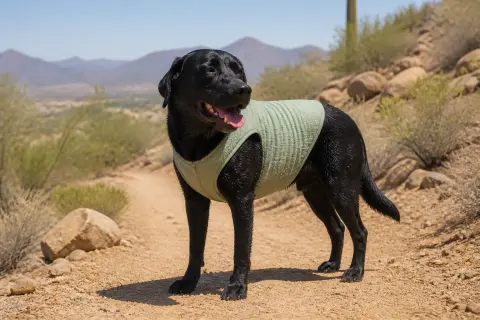
Cooling vests can help dogs handle warm weather — when you treat them as evaporative tools, not magic air conditioners. The fabric works by holding water and letting airflow pull heat away. If the vest dries out, the benefit fades. If the day is extreme, no vest replaces shade, water, and better timing.
This guide sits under our Complete Guide to Dogs Outdoors and pairs with How to Keep Dogs Cool Outside. Shop matching gear in outdoor.
Who this guide is for
Owners hiking or walking in warm weather with thick coats, dark coats, heat-sensitive dogs, or brachycephalic breeds that still need carefully timed short outings. If you are facing a heat advisory, skip the flex hike entirely — indoor enrichment beats a soaked vest on dangerous pavement.
Who benefits most
- Thick double coats on warm trail or errand days
- Dark-coated dogs that absorb sun
- Heat-sensitive or brachycephalic dogs on carefully timed short outings
- Active dogs that still need miles when the forecast is merely warm, not brutal
- Dogs that pant early on neighborhood asphalt approaches to trailheads
- Seniors and overweight dogs that overheat sooner than lean athletes
Skip heroic mid-day desert miles just because a vest is in the pack. Vests reduce heat load; they do not rewrite physiology.
How evaporative cooling works
- Soak the vest or harness in water.
- Wring out excess so it is damp, not dripping into every car seat.
- Put it on your dog and keep air moving — walking helps.
- Re-wet as it dries. Arid climates need more frequent re-soaks than humid ones.
- Combine with shade breaks and drinking water — the vest is one layer of the plan.
That soak-wring-wear loop is the whole product category. If you forget to re-wet, you are mostly wearing wet-looking fabric.
Humidity caveats
Evaporative cooling needs dry air to pull heat away. In sticky high humidity, vests help less and may feel like a warm wet blanket if you never re-wet with cooler water or never reach shade. On humid days:
- Prioritize early starts, shade routes, and shorter mileage over “more vest”
- Still offer drinking water on a schedule
- Do not treat a damp vest as permission for peak-heat training
- Watch heat-stroke signs earlier — see How to Keep Dogs Cool Outside
Breed and body notes
- Double coats: vests help on warm walks; they do not make mid-day July epics safe
- Brachycephalic breeds: short carefully timed outings only; vest is a tool, not a pass
- Dark coats: sun absorption is real — shade and timing matter as much as fabric
- Thin single coats: may need less coverage; a wrap can be enough for short warm errands
- Deep chests / hard-to-fit: size by girth; a loose cooler shifts and covers poorly
Coverage levels compared
- Full cooling vest — most panel coverage for trail days when you already have a separate harness
- Cooling harness — cooling + leash control in one piece for neighborhood and light trail miles
- Cooling wrap — lighter coverage for short warm walks when a full vest feels like too much gear
- Budget microfiber vest — basic soak-and-wear for short outings; expect more frequent re-soaks and less refined fit
Do not stack so much gear that shoulders cannot move or heat traps under unnecessary layers.
Vest vs. cooling harness
- Cooling vest — best when you already have a preferred hiking harness or pack and want cooling as a separate layer
- Cooling harness — best for warm neighborhood miles and light trails when you want one piece for cooling + leash control
Our cooling picks
Prices are Amazon snapshots and change often. Links may earn a commission — see our advertising disclosure.
Best cooling vest
Top pick: Ruffwear Swamp Cooler Dog Vest (Sage Green, XL) — three-layer evaporative design with UPF-rated outer fabric for warm hikes and sunny walks. Size by girth so panels cover without armpit rub.
Best cooling harness
Top pick: Ruffwear Swamp Cooler Dog Harness — evaporative cooling plus leash attachment for hot neighborhood miles and light trails when you do not want a separate vest and harness.
Best mid-tier vest
Top pick: Canada Pooch Cooling Vest — strong evaporative option when you want Swamp Cooler-class function without locking into one brand.
Best wrap-style coverage
Top pick: Hurtta Cooling Wrap — lighter wrap coverage for short warm walks and dogs that dislike full vests.
Best budget microfiber
Top pick: Microfiber Budget Cooling Vest — affordable soak-and-wear starter for short warm errands; re-wet often and size carefully.
When a cooling vest is not enough
- Peak heat and humidity — move the outing to early morning or evening; indoor enrichment wins
- No shade plan — parking-lot walks with zero cover still cook dogs
- Insufficient drinking water — bring bottles; see outdoor water bottles
- Heat-stroke warning signs — heavy panting, glazed look, wobble, bright gums, collapse: stop, cool, and get vet help
- Hot pavement — if you cannot hold your hand on it, paws should not either; consider boots, grass routes, or another time
- Dog already struggling at the trailhead — abort; do not “see how the first mile goes”
- Vest dried out and you have no re-wet water — you are now carrying fabric, not cooling
- Brachycephalic dog on a “just this once” mid-day flex — do not; physiology does not negotiate
Fit and care tips
- Measure girth; a loose cooler shifts and covers poorly.
- Rinse after salty or muddy days; dry fully between uses.
- Do not layer so much gear that shoulders cannot move on trail.
- Use the harness version for short hot walks; use the vest when you already have a preferred hiking harness/pack setup.
- Pack a spare water bottle specifically for re-wetting the vest on arid trails.
- Budget microfiber pieces need more frequent re-soaks — treat them as short-outing tools.
Our recommendations (tiered)
Browse all of these in the outdoor shop.
- Best premium vest: Ruffwear Swamp Cooler Vest
- Best cooling harness: Ruffwear Swamp Cooler Harness
- Best mid-tier: Canada Pooch cooling vest
- Best wrap: Hurtta Cooling Wrap
- Best budget: Microfiber budget cooling vest
A simple decision path
- Warm walk, want one piece? → Swamp Cooler harness.
- Trail day with separate harness/pack? → Swamp Cooler vest (or Canada Pooch mid-tier) over your hiking harness.
- Short warm errand, light coverage? → Hurtta wrap or budget microfiber.
- Extreme heat advisory? → Skip the flex hike; prioritize shade, water, AC, and rest.
- Need hydration kit too? → Pair with water bottles and bowls.
- Choosing park vs. trail in heat? → Trail Days vs. Park Days.
For heat-stroke signs, timing, and shade strategy, read How to Keep Dogs Cool Outside. For full outdoor framing, return to The Complete Guide to Dogs Outdoors.