Puppy training tips that work are boring in the best way: short sessions, fast pay, clear criteria, and an exit before the baby brain melts into zoomie soup. You are not delivering a TED Talk. You are stacking tiny wins so “sit,” “name,” and “come” feel like games with a salary.
This guide sits under our Complete Guide to Walking & Training. Step-by-step foundations live in How to Start Puppy Training. Treat timing: Best Treats for Training Sessions. Early leash manners connect to loose-leash tools.
Who this guide is for
New puppy households, foster folks restarting basics, and anyone whose “training plan” became a weekend guilt spiral. If your puppy is under six months, assume shorter attention than your ambition. Adults who never learned manners can use the same tips — just scale criteria, not lecture length.
Short sessions beat marathon lectures
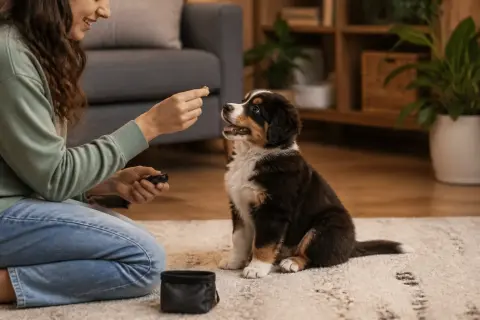
Three minutes of brilliant practice beats thirty minutes of mutual resentment. Train before meals when food is interesting. End on a success. Leave the puppy hunting for the next round like a cliffhanger.
- One skill per mini-session — name game or sit, not both plus loose leash plus circus
- Count reps: five to ten good reps, then party and break
- If the puppy disconnects, you went long or the environment got too spicy — make it easier
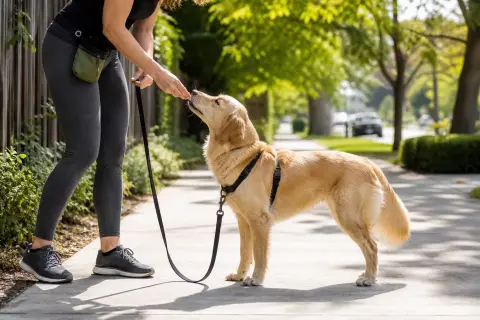
- Mark the exact moment of success — clicker like the PetSafe Clik-R or a crisp verbal marker — then deliver food fast
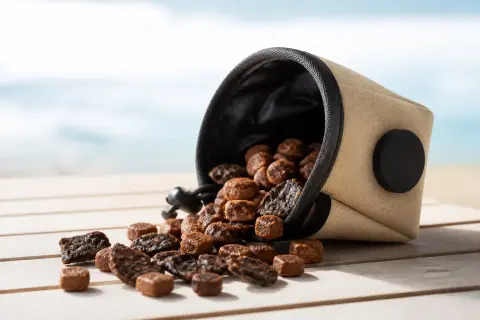
Carry soft bits in a Mighty Paw pouch or EzyDog SnakPak. Soft everyday reinforcers: Blue Buffalo Bits. Jackpots: crumbled Vital Essentials liver.
Environment is the invisible curriculum
Train in the kitchen first. Then the hallway. Then the quiet yard. Then the sidewalk with one distraction. Jumping to the dog park as “socialization class” is often flooding with better branding. Success in easy places funds bravery in harder ones.
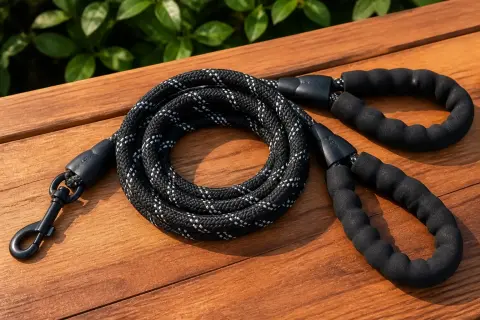
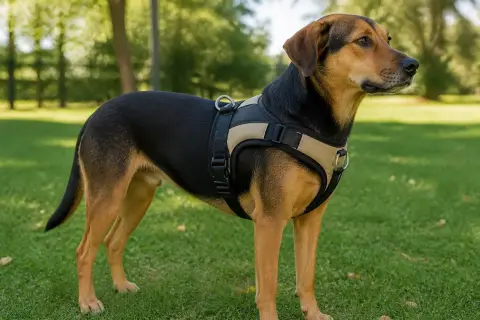
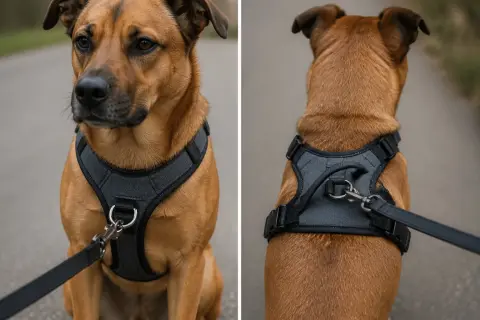
Harness and leash introductions belong in happy contexts. A dual-clip starter like the Ruffwear Front Range or adjustable Blue-9 Balance with a 6ft leash beats collar wrestling. Gear guides: harnesses and leashes.
Pay attention to what you accidentally hire
- Jumping gets pets → you hired a jumper
- Pulling makes the walk continue → you hired a sled team
- Whining gets the door open every time → you hired an opera
Want different employment? Change the paycheck. Sit for greetings. Soft leash for forward motion — details in How to Stop Pulling on Walks. Front-clip help when needed: PetSafe Easy Walk and clip comparison.
Recall lite and long-line honesty
Practice “come” with a party every time early on — never call them into something unpleasant if you can avoid it. Use a long line like the Tuff Pupper 30ft outdoors before you trust off-leash hope. Name recognition first; recall is name with distance and distraction.
Sleep, potty, and training are roommates
An overtired puppy fails cues and invents shark mode. Potty needs interrupt sessions — that is logistics, not defiance. Keep bags handy on every outdoor training walk: Earth Rated or Amazon Basics.
Family rules beat secret curricula
One cue word per behavior. One payoff plan. If half the household pets jumping and the other half scolds it, the puppy learns slot-machine optimism. Post a three-line fridge note: sit for greetings, soft leash for walks, name means look-not-lecture.
Kids can help with supervised treat delivery once the adult sets criteria. Kids should not invent new cues mid-chaos. Adults own the leash near roads — a 6ft leash and fitted harness are not toys.
Capture calm like it is a trick
- Mark and treat when four paws hit the floor during greetings
- Pay the puppy for settling on a mat while you prep dinner
- End play before shark mode; restart after a sip of water and a sit
Calm is trainable. It is also fragile when everyone practices the opposite for likes. Treat guide: Best Treats for Training Sessions.
Walk manners without burning the puppy out
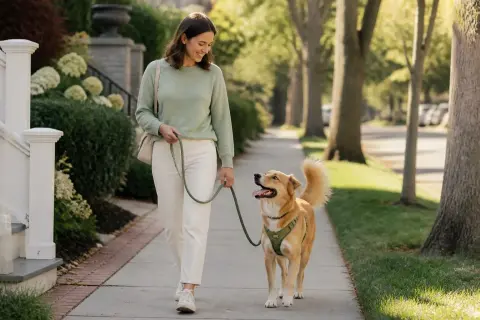
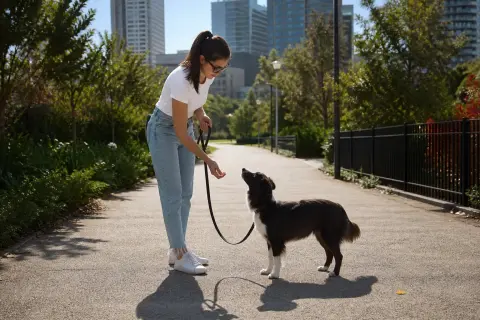
Five brilliant minutes on a 6ft leash beat a twenty-minute drag that teaches the wrong job. Carry soft Bits, mark check-ins, and end before shark mode. If pulling shows up early, peek at How to Stop Pulling on Walks and front-clip options in Front-Clip vs. Back-Clip — then return to short sessions here.
When to get help early
- Growling over food or toys that escalates
- Fear that freezes or panics past gentle exposure
- Bite inhibition that is not improving with management
A good positive-reinforcement trainer is cheaper than rewriting fear later. Pain and illness still belong at the vet first.
Our recommendations
Shop walking & training. Links may earn a commission — advertising disclosure.
- PetSafe Clik-R — Precise markers for short sessions.
- Blue Buffalo Bits — Soft, quick reinforcers.
- Mighty Paw Treat Pouch — Timing insurance.
- Ruffwear Front Range — Happy harness introduction.
- Tuff Pupper 30ft — Outdoor recall practice.
Next: How to Start Puppy Training, then back to the hub.