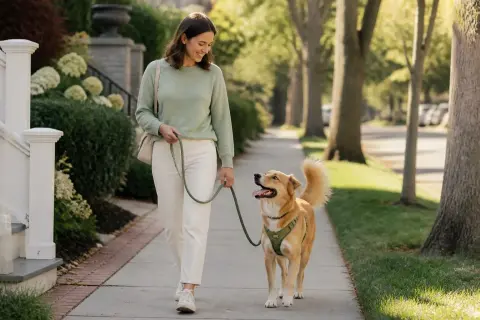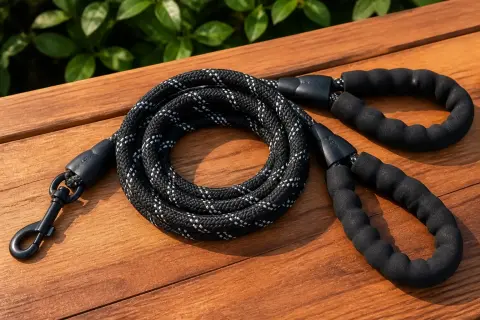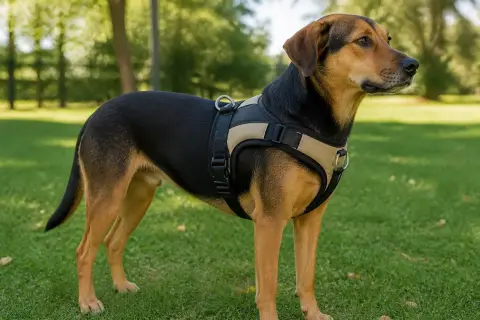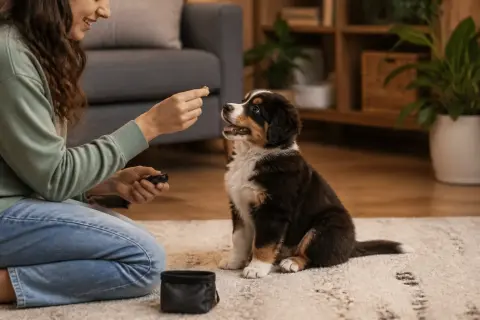
Stopping pulling on walks is not about winning a strength contest with a mammal who thinks forward motion is a career. It is about changing the employment contract: dragging no longer makes the world interesting, and a soft leash does. Gear can help you hold the conversation. Reinforcement finishes it.
This how-to sits under our Complete Guide to Walking & Training. Tool stack: Best Tools for Loose-Leash Walking. Clip choice: Front-Clip vs. Back-Clip. Harness and leash picks: harnesses and leashes.
Who this guide is for
Anyone whose shoulder files a complaint after every block, dogs who invented sled-dog cosplay without snow, and households who already own a “no-pull” harness but still reward lunges by continuing the adventure. Puppies can learn early — see How to Start Puppy Training — and adults can relearn with patience and better pay.
Stop reinforcing the tow-truck job
Audit the paycheck. If a tight leash still moves toward the sniff, tree, or friend, you are employing a tow truck. New policy:
- Tight leash: stop walking, or calmly change direction — become boring
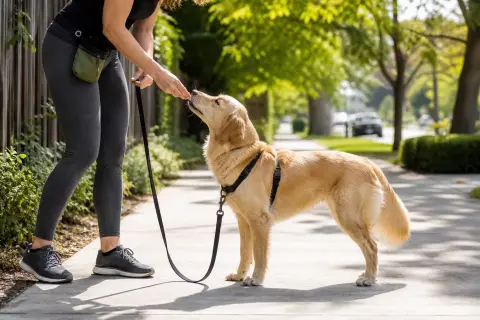
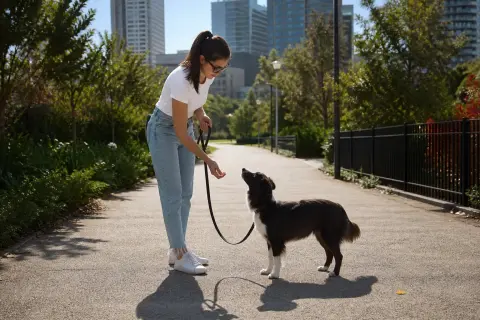
- Soft leash / check-in: mark and treat, then move forward like the universe makes sense
- Sniff breaks: grant them on a cue when the leash is soft — enrichment on purpose, not stolen via lunge
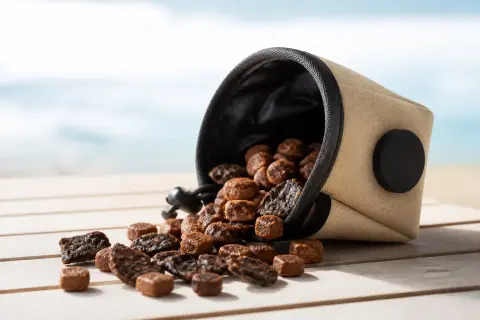
Use a clicker such as the PetSafe Clik-R or a sharp “yes,” then deliver soft bits from a Mighty Paw pouch or EzyDog SnakPak within a second. Everyday pay: Blue Buffalo Bits. Squirrel-level jackpots: Vital Essentials liver.
Gear that buys you a clearer conversation
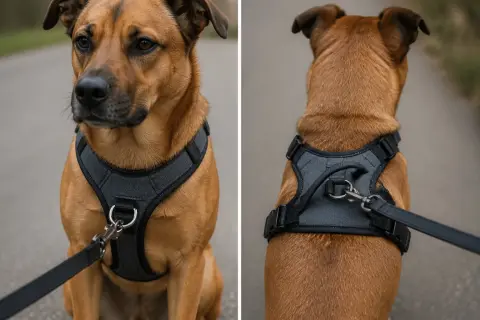
Fit a harness so throat pressure exits the chat. For pullers mid-rehab, clip in front: PetSafe Easy Walk, or the front ring on a Ruffwear Front Range / Blue-9 Balance. Fixed length matters — a TwoEar 6ft teaches consistent rules better than a retractable soap opera.
Front-clip is leverage, not manners in a box. Details: clip comparison. Full toolkit: loose-leash tools.
Practice progression (boring first)
- Stage 1: indoor soft-leash steps with heavy treats
- Stage 2: quiet driveway or empty lot — five great minutes beat a disastrous mile
- Stage 3: one low-distraction block; U-turn every surge; party every check-in
- Stage 4: add known triggers slowly; upgrade treat value before you upgrade distance
Long-line check-in games in safe fields — Tuff Pupper 30ft — help dogs learn “near me pays” without sidewalk pressure. Short sessions win; see training tips even for adult rehab.
Common failure modes
- Expecting a harness to replace reinforcement
- Practicing only on the worst route at the worst hour
- Inconsistent rules between family members
- Skipping bags and ending up mid-lunge crisis — keep Earth Rated or Amazon Basics on the kit
Treat strategy deep dive: Best Treats for Training Sessions.
When pulling is not “just manners”
Sudden onset, yelping, limping, or frantic panic needs a vet. Reactivity toward dogs or people needs a qualified trainer — do not “socialize through” aggression. Pain and fear wear costumes that look like stubbornness.
Two handlers, one policy
Write the rules: stop or U-turn on tight; treat on soft; sniff breaks on cue only. If one walker trains and the other jogs through every surge “to tire them out,” you are running two competing employers. Share the pouch protocol and which clip you are using that week — front on Easy Walk / Front Range / Blue-9, or back once manners appear.
Kids hold leashes only with adult backup near traffic. Strength is not a training method.
Weather, distractions, and honesty
Wind, skateboards, and the neighbor’s beagle are advanced coursework. Shrink distance, upgrade treats, and shorten the route before you invent a harsher tool. Rain walks still need bags and a pouch that closes — wet liver crumbs are a different sport.
- Hot pavement: shorter loops, more shade check-ins, same soft-leash rules
- Night walks: reflective harness trim helps; manners still need pay
- Multi-dog passes: increase distance first, ask for look second
If your dog explodes past a threshold, you found the threshold — train below it. Tool refresher: loose-leash tools.
A realistic week-one goal
Not a perfect heel. Aim for more soft-leash steps than last week, faster check-ins, and fewer blocks where your arm does cardio alone. Celebrate boring walks. Boring is the product.
Film one quiet block on day one and day seven. Progress is easier to believe on video than in sore-shoulder folklore. Treat upgrades for harder weeks: Best Treats for Training Sessions. Puppy-era prevention: How to Start Puppy Training.
Our recommendations
Shop walking & training. Links may earn a commission — advertising disclosure.
- PetSafe Easy Walk — Front-clip assist while you retrain pay.
- Ruffwear Front Range — Dual-clip daily harness.
- Blue-9 Balance — Switchable front/back training fit.
- TwoEar 6ft — Fixed-length honesty.
- Blue Buffalo Bits — Soft check-in pay.
- PetSafe Clik-R — Mark the soft leash.