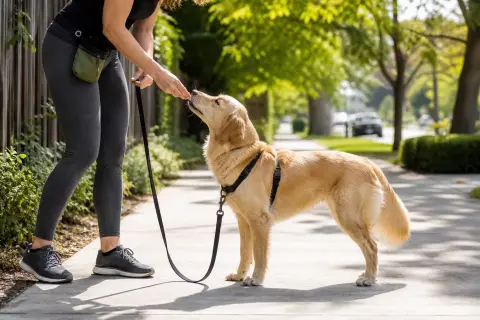
Loose-leash walking tools are conversation aids — not magic amulets. The real lesson is simple and stubborn: soft leash pays with forward motion; tow-truck tension pays with boredom or a direction change. Gear can make the conversation clearer while you retrain the paycheck.
This guide sits under our Complete Guide to Walking & Training. Behavior how-to: How to Stop Pulling on Walks. Clip debate: Front-Clip vs. Back-Clip. Product siblings: harnesses and leashes.
Who this guide is for
Shoulder-sore humans, dogs who treat walks like Iditarod auditions, and households who bought three “no-pull” products without changing what they reward. If the leash is tight most of the block, you need tools plus a new pay scale — not just louder “heel” folklore.
Front-clip leverage without magic
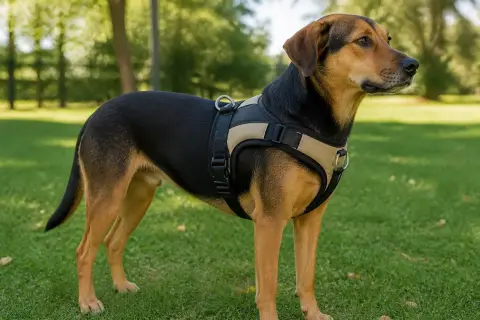
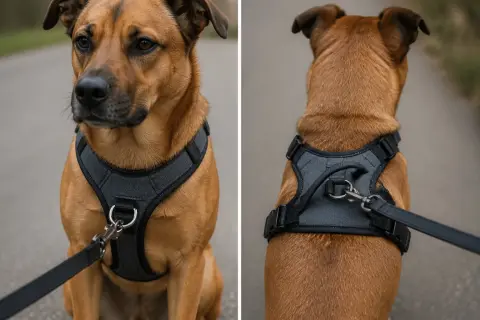
Front-clip harnesses steer a surging dog sideways instead of letting every lunge stretch your arm into a tow rope. That leverage buys you a moment to mark softness and pay. It does not install manners while you scroll your phone.
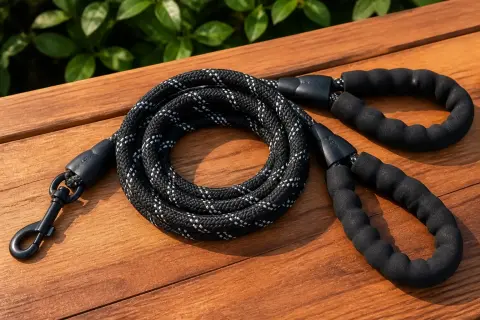
Dedicated no-pull assist: PetSafe Easy Walk — chest strap redirects forward pressure; fit carefully so it does not ride into armpits. Pair with a fixed TwoEar 6ft leash.
Dual-clip everyday options: use the front ring on a Ruffwear Front Range or Blue-9 Balance during training blocks, then switch to back clip when manners show up. Same jacket, two conversation modes.
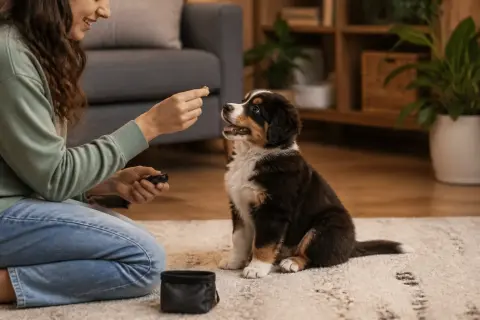
Introduce gear with treats so the harness predicts walks, not wrestling. Pouch: Mighty Paw or EzyDog SnakPak Pro.
Reinforcement delivery is a tool too
If treats live in your kitchen, your timing is a rumor. Soft, tiny bits like Blue Buffalo Bits keep the dog checking in. Save crumbled Vital Essentials liver for hard distractions. A PetSafe Clik-R marks the millisecond the leash softens — then food arrives before the dog invents a new hobby.
Treat strategy deep dive: Best Treats for Training Sessions. Puppy pacing: Best Puppy Training Tips.
Long lines for “near me” without sidewalk chaos
Sometimes you need space to practice check-ins where six feet feels like a cage fight. A Tuff Pupper 30ft in a safe field lets the dog roam, then get paid for returning or staying in a loose radius. Do not practice long-line chaos on crowded sidewalks — that is how leash manners and pedestrians both lose.
The micro-skills that make tools work
- Name → look → treat until checking in is a habit
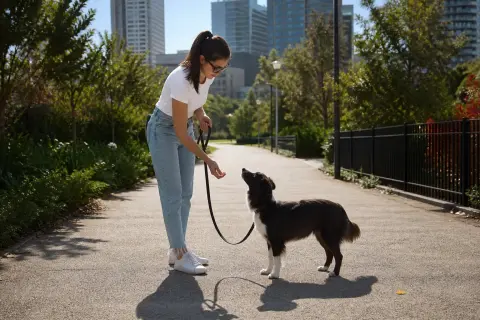
- Step only on a soft leash — freeze or U-turn on a tight one
- Sniff breaks on cue so enrichment is scheduled, not stolen via lunge
- Start in boring places — squirrels are graduate school
Foundations for young dogs: How to Start Puppy Training. Full pulling reset: stop pulling.
What usually does not fix pulling alone
- Retractable leashes that teach elastic rules
- Yelling “heel” without a paid alternative behavior
- Switching harness brands weekly without changing reinforcement
- Exercise-only plans — tired dogs can still drag if dragging pays
Management plus training beats gadget roulette. Keep bags on the kit — Earth Rated or Amazon Basics — because cleanup pauses are still impulse-control practice.
Build a door-hook kit you will actually grab
- Harness on a hook at human height — Front Range, Blue-9, or Easy Walk as fits the job
- 6ft leash coiled beside it — not buried in the “other jacket”
- Pouch pre-loaded with soft bits and a clicker
- Bags clipped on — Earth Rated or Amazon Basics
Friction kills habits. If assembling the kit takes four rooms, you will skip reinforcement on the days you need it most. Foundations for new dogs: How to Start Puppy Training.
Measure progress without perfection theater
Count soft-leash steps on one boring block. Film a twenty-second clip weekly. Celebrate more check-ins, not a show-ring heel. If this week’s walk is 40% soft and last week was 10%, you are winning — even if Instagram still looks chaotic.
Treat upgrades for harder blocks: Best Treats for Training Sessions.
Hands, shoulders, and handler mechanics
Hold the leash with soft elbows — locked arms turn every sniff into a tug-of-war you volunteered for. Gather slack without reeling like a fishing influencer. Two hands beat one when distractions spike. If your shoulders scream after every walk, the dog is not the only one who needs a new plan.
Handler drills count as training. Practice the U-turn alone in your hallway if you must. Then add the dog.
When tools are not enough
Reactivity, panic, or aggression need a qualified trainer or behavior professional. Sudden pulling with yelps needs a vet visit — pain is not “dominance.” Front-clip gear should never replace medical care.
Our recommendations
Shop walking & training. Links may earn a commission — advertising disclosure.
- PetSafe Easy Walk — Front-clip leverage for pullers.
- Ruffwear Front Range — Dual-clip daily driver.
- Blue-9 Balance — Adjustable front/back training harness.
- TwoEar 6ft — Fixed-length honesty.
- EzyDog SnakPak Pro — Hands-free pay.
- PetSafe Clik-R — Mark the soft leash.
Return to the Walking & Training hub for the full map.